TDK Corporation: From Ferrite Pioneers to Electronic Component Leaders
Founded on the cutting edge of material science, TDK has evolved from a specialized manufacturer of magnetic materials into a global powerhouse of electronic components. The company's journey reflects the broader evolution of the electronics industry, moving from the era of analog magnetic recording to the sophisticated world of MEMS sensors and power electronics.
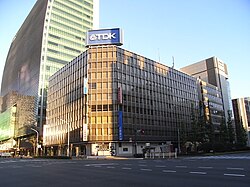
The company was established in Tokyo, Japan, on December 7, 1935, by Kenzo Saito. Its primary purpose was to manufacture ferrite—an iron-based magnetic material recently invented by Takeshi Takei and Yogoro Kato. In its early years, TDK focused on ferrite cores, producing five million units by 1945, which were essential for reducing the weight and size of radio receivers used by the Imperial Japanese military.
The Era of Magnetic and Optical Media
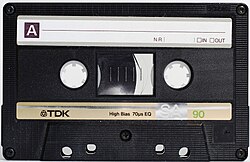
As the electronics market expanded, TDK leveraged its expertise in magnetic materials to enter the consumer recording market. The company began producing magnetic tape in 1952 and 1957, followed by the launch of compact cassette tapes in 1966. This marked the beginning of an extensive portfolio that eventually included various videotape formats, blank CD-Rs, and recordable DVD discs.
TDK's global footprint grew rapidly during this period, establishing a New York City office in 1965 to begin U.S. operations and a Frankfurt office in 1970 to enter the West German market.

The Transition Away from Recording Media
By the late 1990s, industry trends began to shift. TDK started a gradual withdrawal from the compact cassette market, phasing out lines such as the MA-X, AR (Acoustic Response), AD (Acoustic Dynamic), and SA-X between 1997 and 2002. The MA (Metal Alloy) line followed in 2004, and the SA (Super Avilyn) and D (Dynamic) lines were finally withdrawn in 2011.
In 2004, TDK became the first media manufacturer to join the development of BD (Blu-ray) post-DVD technology. However, the company eventually exited the recording media business entirely in late 2007, selling its flash, optical, and magnetic tape divisions to Imation for $300 million. While Imation initially licensed the "TDK Life on Record" brand for 25 years, they agreed to relinquish this license and cease selling TDK-branded products by the end of 2015.
Diversification into Electronic Components
While recording media dominated the public image, TDK was simultaneously diversifying into high-tech components. In 1980, the company developed multilayering technology to create inductors and chip capacitors—essential components used in smartphones, laptops, and personal computers.
The 1980s and 90s saw further expansion through strategic acquisitions and internal development:
- 1986: Acquired SAE Magnetics to introduce high-density recording heads.
- 1990s: The Mass Storage Division developed thin-film heads, magnetoresistance (MR) heads, and brushless DC spindle motors.
- Late 90s/Early 2000s: Brief venture into the video game industry via TDK Core in Japan and TDK Mediactive in the U.S. and Europe.
Modern Focus: Sensors, Power, and Innovation
Since 2005, TDK has aggressively acquired manufacturers of sensors, power supplies, and passive components. Today, the company focuses on a sophisticated portfolio of actuators and electronic components across several specialized brands:
- InvenSense: Provides MEMS (Micro-Electro-Mechanical Systems) microphones and multi-axis motion tracking devices.
- Chirp Microsystems: Develops MEMS-based ultrasonic Time-of-Flight sensors for robotics, drones, AR/VR, and IoT.
- Faraday Semi: Produces point-of-load DC-DC converters.
- Tronics: Specializes in high-stability MEMS accelerometers.
- ICsense: Develops custom ASICs (Application Specific Integrated Circuits).
Beyond electronics, TDK continues to explore sustainable energy. In 2017, the company partnered with GenCell to develop an ammonia-based fuel solution.
Key Facts
- Founded: December 7, 1935, in Tokyo, Japan.
- Founder: Kenzo Saito.
- Core Invention: Ferrite (iron-based magnetic material).
- Major Pivot: Sold recording media business to Imation in 2007 for $300 million.
- Current Specializations: MEMS sensors, HDD heads, power supplies, and passive components.
- Key Technologies: Multilayering for capacitors and inductors, and Time-of-Flight ultrasonic sensors.
| Era | Primary Focus | Key Products/Milestones |
|---|---|---|
| 1935 – 1950s | Magnetic Materials | Ferrite cores for radio receivers |
| 1952 – 2007 | Recording Media | Magnetic tape, Compact Cassettes, CD-R, DVD |
| 1980 – Present | Electronic Components | Chip capacitors, Inductors, HDD heads |
| 2005 – Present | Advanced Sensors & Power | MEMS, ASICs, DC-DC converters, Ammonia fuel |
Frequently Asked Questions
What is ferrite and why was it important to TDK?
Ferrite is an iron-based magnetic material. TDK was founded specifically to manufacture this material, which allowed for the reduction of volume and weight in radio receivers, particularly those used by the military during the early 1940s.
Does TDK still make cassette tapes?
No. TDK gradually withdrew from the compact cassette market between 1997 and 2011 and sold its entire recording media business to Imation in 2007.
What happened to the "TDK Life on Record" brand?
The brand was part of the $300 million sale to Imation in 2007. Imation held a license to use the brand for 25 years but agreed to relinquish it and stop selling TDK-branded products by the end of 2015.
What are MEMS and how does TDK use them?
MEMS stands for Micro-Electro-Mechanical Systems. TDK uses this technology through brands like InvenSense and Chirp Microsystems to create miniature microphones, motion tracking devices, and ultrasonic Time-of-Flight sensors for use in drones, robotics, and smartphones.
What is TDK's current business focus?
TDK now focuses on the development and sale of electronic components, including HDD heads and suspension, power supplies, passive components, and a wide array of sensors and actuators.