Taraxacum: The Biology, Utility, and Diversity of Dandelions
The genus Taraxacum, most commonly known as dandelions, comprises a group of resilient perennial plants found on every continent except Antarctica. While often viewed as mere garden weeds, these plants are complex biological organisms with a rich history of human use, ranging from traditional cuisine to cutting-edge industrial rubber production.
From a scientific perspective, dandelions belong to the family Asteraceae. Their evolutionary timeline dates back to the Miocene epoch, approximately 16.2 million years ago. Today, the genus is characterized by its remarkable adaptability and a highly complex classification system.

Key Facts
- Global Presence: Found worldwide, except in Antarctica.
- Edibility: The entire plant—leaves, stems, flowers, and roots—is edible and nutrient-dense.
- Industrial Use: Certain species, like T. kok-saghyz, are used to produce natural rubber.
- Dispersal: Seeds use a hair-like pappus for wind-driven (anemochorous) dispersal.
- Diversity: Includes approximately 60 sections and 2,800 microspecies.
Botanical Description
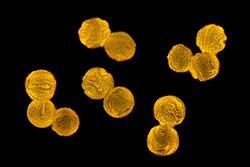
Dandelions are easily identified by their basal rosette—a circular arrangement of leaves growing from a central taproot. These leaves typically range from 5 to 25 centimeters in length and are simple and lobed. A defining characteristic of the genus is the production of a white, milky latex that exudes from the stems and leaves when broken.
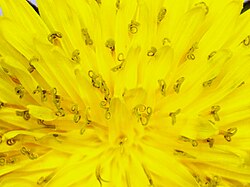
The flower heads, which range from yellow to orange, are composed entirely of ray florets. These heads are supported by a hollow, usually leafless stem called a scape, which can rise 1 to 10 centimeters or more above the ground. These flowers are diurnal, meaning they open during the day and close at night.
Seed Development and Dispersal
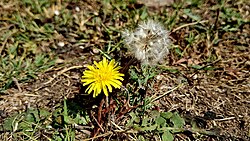
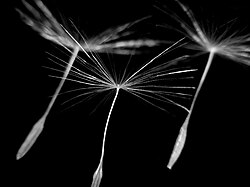
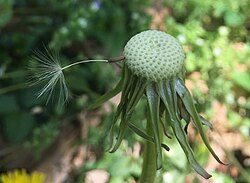
As the flower head matures, it transforms into a spherical seed head, often referred to as a "blowball" or "clock." This head contains numerous single-seeded fruits known as cypselae (similar to achenes). Each cypsela is attached to a pappus, a structure of fine hair-like material that enables the seed to be carried over long distances by the wind.
Classification and Species Diversity
The classification of Taraxacum is notably complex. By 2015, researchers had revised the group to include 60 sections and roughly 2,800 microspecies, 30 of which are known to reproduce sexually.
| Species | Common Name / Note | Key Feature |
|---|---|---|
| T. officinale | Common Dandelion | Widespread, various forms |
| T. kok-saghyz | Kazakh/Russian Dandelion | High natural rubber producer |
| T. californicum | California Dandelion | Endangered species |
| T. japonicum | Japanese Dandelion | Lacks ring of downward leaves under head |
| T. albidum | White-flowered Japanese Dandelion | Hybrid of T. coreanum and T. japonicum |
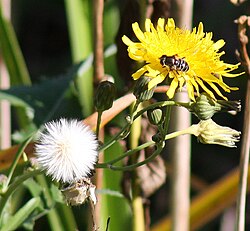
It is common to confuse dandelions with other plants, such as the Hawksbeard, which also features similar flower heads and seeds.
Human and Industrial Applications

Culinary Uses
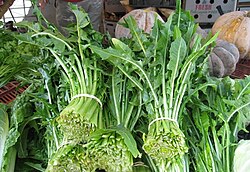
Dandelions are highly nutritious, providing calcium, iron, and vitamins A, C, and K. Because they are perennials with a deep taproot, the greens can be harvested repeatedly. While raw greens are rich in nutrients, they contain water-soluble sesquiterpenes, which impart a bitter taste that increases as the plant matures.
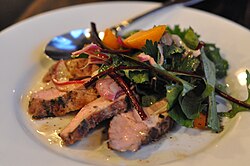
To manage this bitterness, the greens are often blanched or paired with strong flavors. They are staples in various global cuisines, including Italian, Greek, Chinese, Korean, Lebanese, and traditional Kashmiri cooking. In the Southern United States, they are traditionally served with a hot bacon dressing.
Natural Rubber Production
One of the most significant industrial applications of the genus is the production of natural rubber. While wild dandelions have low latex content, Taraxacum kok-saghyz produces industrially useful amounts. This species was utilized during World War II and has since been optimized by the Fraunhofer Institute for Molecular Biology and Applied Ecology (IME) in Germany.
Modern cultivars of the Russian dandelion produce latex of a quality comparable to that of rubber trees. This has led to collaborations with companies like Continental AG for prototype tires and significant investments from the Linglong Group Co. Ltd. to make dandelion rubber commercially viable.
Frequently Asked Questions

Are all parts of the dandelion edible?
Yes, the entire plant—including the roots, stems, leaves, and flowers—is edible and rich in essential nutrients like vitamins A and K, calcium, and iron.
Why are dandelion leaves bitter?
The bitterness is caused by water-soluble sesquiterpenes. This bitterness typically increases as the leaves mature and after the plant has bloomed.
How do dandelion seeds travel so far?
Each seed (cypsela) is attached to a pappus, a fine, hair-like structure that catches the wind, allowing for anemochorous (wind-aided) dispersal over long distances.
Can dandelions really be used to make tires?
Yes. Specifically, the species Taraxacum kok-saghyz produces a high-quality latex that can be processed into natural rubber, which is currently being tested for use in commercial tires.
How many species of dandelions exist?
The genus is highly diverse; as of 2015, it is classified into approximately 60 sections and about 2,800 microspecies.