Ta'addudiyya Policy: Political and Economic Pluralism in Syria
Under the leadership of Hafez al-Assad, Syria underwent a strategic shift in governance and economic management through a policy known as Ta'addudiyya. Derived from the Arabic word for "pluralism," this policy was designed to broaden popular participation and modernize the state's approach to both politics and the economy without fully transitioning to a competitive democratic system.
Key Facts
- Ta'addudiyya refers to the policy of pluralism introduced to increase popular participation in governance.
- The National Progressive Front, formed in 1972, ended the one-party system by creating a coalition of socialist parties.
- While pluralism was introduced, power remained centralized within the president and his al-Jama'a (inner circle of influential supporters).
- Economic pluralism aimed to balance the public sector with increased private investment and joint ventures.
- The policy coincided with infiraj (economic opening) and austerity measures starting around 1986.
Political Pluralism and Governance
Hafez al-Assad maintained that the political climate in Syria was not conducive to competitive elections. Consequently, while he did not seek them, he implemented Ta'addudiyya to integrate non-Ba'athist political groups into the governance structure. This move was intended to make the regime more responsive to public opinion compared to previous administrations.
The most significant outcome of this political shift was the end of the absolute one-party system. In 1972, the government established the National Progressive Front, a coalition of socialist parties. Although the Ba'ath Party remained the most dominant and influential force in the country, it no longer governed in total isolation.
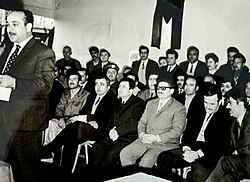
Despite these changes, the core of Syrian power remained rigidly centralized. The president and his al-Jama'a—the inner circle of supporters who exerted the greatest influence on final decisions—continued to hold ultimate control. For Assad, the goal was limited pluralism rather than full democratization.
Economic Pluralism and Reform
The concept of Ta'addudiyya extended beyond politics into the realm of al-ta`addudiyya al-iqtisadiyya, or economic pluralism. This shift was partly a reaction to the failed, aggressive economic policies of Salah Jadid, which had failed to produce meaningful development.
Beginning around 1986, the government combined the return of infiraj (a policy of economic opening) with austerity measures. This new approach sought to stimulate the economy by encouraging private investment and reducing state dependency. Key reforms included:
- The liberalization of trade and prices.
- The abolition of government subsidies on various consumer goods.
- An increased emphasis on joint ventures.
While the public sector was traditionally viewed as the primary engine of the economy, the slogans of Ta'addudiyya shifted the focus toward a greater balance between public and private sectors. These liberal reforms eventually deepened, encouraging private companies to take a more active role in the Syrian economy.
Summary of Ta'addudiyya Policy
| Dimension | Previous State | Under Ta'addudiyya |
|---|---|---|
| Political System | One-party system (Ba'ath) | Coalition (National Progressive Front) |
| Power Structure | Rigidly Centralized | Centralized but more responsive to public opinion |
| Economic Focus | Aggressive state-led policies | Balance of public, private, and joint ventures |
| Market Control | Heavy subsidies and state control | Price liberalization and private investment |
Frequently Asked Questions
What does the term Ta'addudiyya mean?
Ta'addudiyya is an Arabic term meaning "pluralism." In the context of Syrian history, it refers to the policy of allowing multiple political and economic entities to participate in the state's governance and economy.
Did Ta'addudiyya lead to democracy in Syria?
No. While the policy increased popular participation and ended the one-party system, democratization was not the ultimate goal of Hafez al-Assad, and power remained centralized within the presidency and the al-Jama'a.
What was the National Progressive Front?
Formed in 1972, the National Progressive Front was a coalition of socialist parties that allowed non-Ba'athist groups to be part of the government, though the Ba'ath Party remained the most powerful member.
How did economic pluralism change the Syrian economy?
Economic pluralism shifted the focus from a purely public-sector economy to one that balanced state control with private investment, joint ventures, and the liberalization of trade and prices.
What is the relationship between Ta'addudiyya and infiraj?
Both were part of a broader effort to open the country. While Ta'addudiyya provided the framework for pluralism, infiraj specifically referred to the economic opening and liberal reforms that became more pronounced around 1986.