Hafez al-Assad: The Architect of Modern Syrian Autocracy
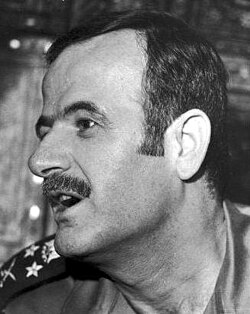
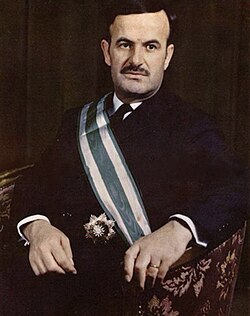
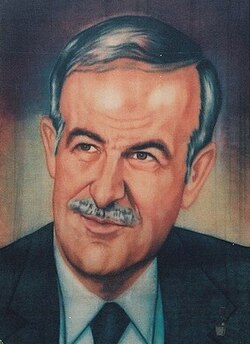
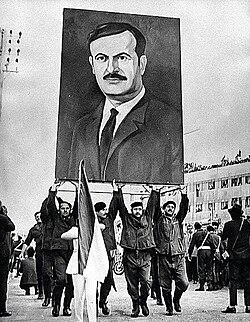
Hafez al-Assad was a pivotal figure in 20th-century Middle Eastern politics, serving as the President of Syria from 1971 until his death in 2000. A military officer turned statesman, Assad transformed Syria into a centralized autocracy through the Arab Socialist Ba'ath Party, a political movement emphasizing Arab nationalism and socialism. His tenure was defined by a rigorous consolidation of power, strategic military engagements, and the establishment of a dynastic succession that lasted until the regime's collapse in 2024.
Key Facts
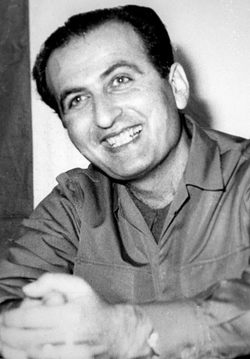
- Presidency: Served as President of Syria from March 12, 1971, to June 11, 2000.
- Political Affiliation: Leader of the Arab Socialist Ba'ath Party.
- Military Background: Former Colonel General and commander of the Syrian Arab Air Force.
- Dynastic Succession: Succeeded by his son, Bashar al-Assad.
- Major Conflicts: Key participant in the Six-Day War, Yom Kippur War, and Lebanese Civil War.
- Regime End: The Ba'athist rule established by Assad ended with the ouster of the regime in December 2024.
Early Life and Military Ascent
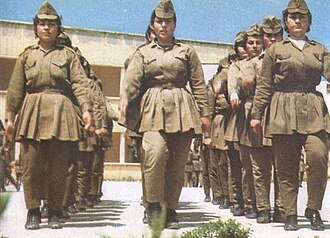
Born on October 6, 1930, in Qardaha, Hafez al-Assad grew up in a period of significant political instability under the French Mandate for Syria and the Lebanon. His father, Ali, was a respected local figure who eventually adopted the surname "al-Assad" (meaning "the lion").
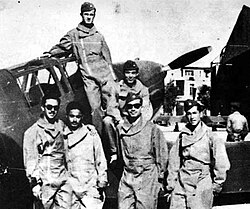
Assad's path to power began at the Homs Military Academy, where he entered the Syrian Arab Air Force. In the 1950s, he expanded his expertise through training in Egypt and the Soviet Union, where he mastered the MiG-17 fighter jet. During this time, he viewed his military career not as an end, but as a gateway to political influence.
The Rise of the Military Committee
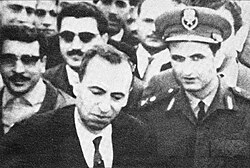
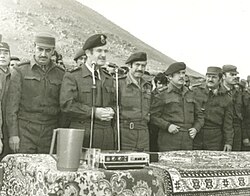
Assad became a key member of the Military Committee, a clandestine group of officers including Salah Jadid and Muhammad Umran. This committee sought to resurrect the Ba'ath Party after it had been dissolved during the United Arab Republic (UAR) era. Through strategic alliances and internal party maneuvering, Assad helped orchestrate the 1963 coup d'état that brought the Ba'ath Party to power.
The Path to Absolute Power
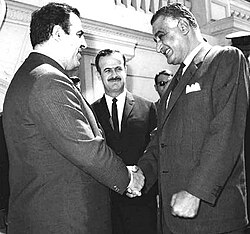
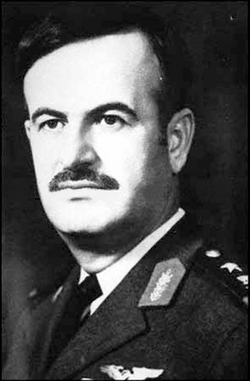
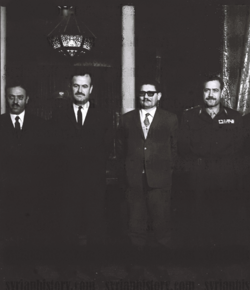
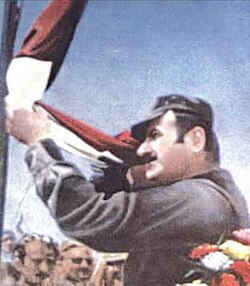
The years following the 1963 coup were marked by intense internal power struggles. Assad initially operated under the leadership of Salah Jadid, but the two eventually clashed over the direction of the state. This "duality of power" ended in 1970 when Assad seized control in a bloodless coup, serving briefly as Prime Minister before being elected President in March 1971.
Consolidating the State
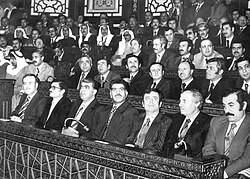
Once in power, Assad institutionalized his control over the Syrian state. He integrated the military and the Ba'ath Party, ensuring that loyalty to his person was the primary requirement for advancement. While he liberalized parts of the economy in the early 1990s through the Al-Ta`addudiyya Al-Iqtisadiyya campaign to attract Gulf state investment, he maintained strict state ownership of major companies.
Military Conflicts and Foreign Policy
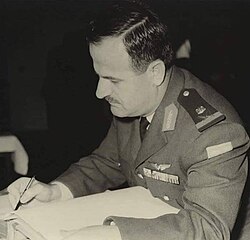
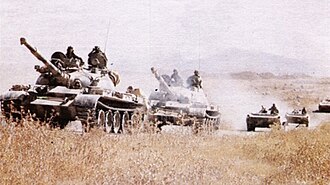
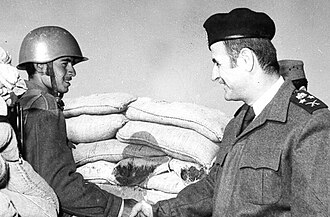
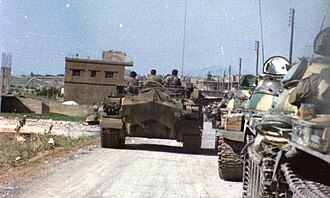
Assad's foreign policy was characterized by a desire to make Syria a regional power. He played a central role in the 1973 Yom Kippur War, aiming to recover the Golan Heights from Israel. Following the conflict, he successfully regained the city of Quneitra.
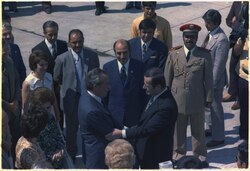
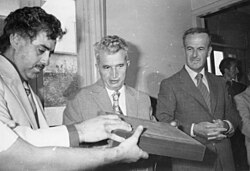
Beyond Israel, Assad intervened heavily in the Lebanese Civil War, viewing Lebanon as a vital sphere of Syrian influence. His diplomatic reach extended to the United States, evidenced by his 1974 meeting with President Richard Nixon, and to the Soviet bloc, maintaining close ties with leaders like Romania's Nicolae Ceaușescu.
Internal Repression and the Hama Massacre
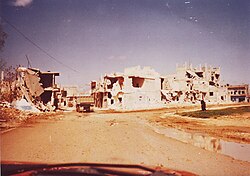
Assad's rule was not without violent opposition. In the late 1970s and early 1980s, an Islamist uprising threatened his grip on power. This culminated in the 1982 Hama massacre, where the Syrian army bombarded the city of Hama to crush the rebellion, leaving behind widespread devastation and a legacy of state terror.
Dynastic Succession and Death
As he aged, Assad focused on ensuring his family's continued hold on power. His first choice for successor was his brother, Rifaat, but after a failed coup attempt by Rifaat in 1983–1984, he was exiled. Assad then groomed his eldest son, Bassel, who died in a car crash in 1994. Consequently, Assad turned to his younger son, Bashar, a medical student in the UK with no political experience.
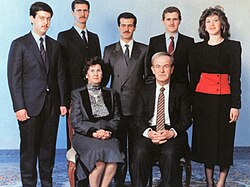
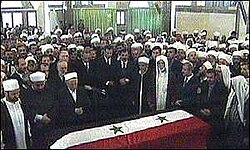
Hafez al-Assad died of a heart attack on June 11, 2000. His death triggered a period of mourning across several Arab and Islamic nations. Bashar al-Assad succeeded him, maintaining the autocratic structure until the regime was overthrown on December 8, 2024, after which Bashar and his family were granted asylum in Moscow.

| Role | Period | Key Focus |
|---|---|---|
| Minister of Defense | 1966–1972 | Military consolidation and party influence |
| Prime Minister | 1970–1971 | Transition to presidency |
| President of Syria | 1971–2000 | Autocratic rule and regional power projection |
| Secretary General (Ba'ath Party) | 1971–2000 | Ideological control and party leadership |
Frequently Asked Questions




How did Hafez al-Assad come to power?
Assad rose through the military and the Ba'ath Party's Military Committee. After participating in the 1963 coup, he eventually ousted his rival, Salah Jadid, in a 1970 coup d'état, becoming the de facto leader before his official election as president in 1971.
What was the significance of the Hama massacre?
The 1982 bombardment of Hama was a brutal response to an Islamist uprising. It served to eliminate internal opposition and signal that the regime would use extreme violence to maintain its survival.
Who succeeded Hafez al-Assad?
He was succeeded by his son, Bashar al-Assad. This succession was controversial within the ruling class because Bashar had no prior political experience and was a medical student at the time of his selection.
What happened to the Assad regime in 2024?
The regime, which had lasted since the 1963 coup, was overthrown on December 8, 2024. Bashar al-Assad and his family fled Syria and were granted asylum in Russia.
What was Assad's role in the Yom Kippur War?
Assad planned and led Syria's involvement in the 1973 war to reclaim the Golan Heights. While the war did not result in a full recovery of the territory, Syria did regain control of Quneitra.