Systematics: The Science of Biological Diversification and Evolutionary Relationships
Systematics is the scientific study of the diversification of living forms, spanning both past and present organisms. By analyzing the relationships among living things through time, systematists seek to reconstruct the evolutionary history of life on Earth. These complex relationships are typically visualized as evolutionary trees, also known as phylogenies or phylogenetic trees.
A phylogeny consists of two primary components: the branching order, which illustrates group relationships (often represented graphically as cladograms), and the branch length, which indicates the amount of evolutionary change. These tools allow scientists to study the distribution of organisms—a field known as biogeography—and the evolution of specific anatomical or molecular traits.
The term originates from the Latin systema (of Ancient Greek origin), meaning the systematic arrangement of organisms. This concept was famously utilized by Carl Linnaeus in his seminal work, Systema Naturae.
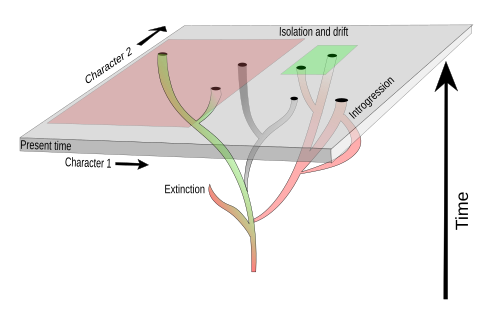
Key Facts
- Core Purpose: To understand the evolutionary history and diversification of all life forms.
- Primary Tools: Uses phylogenetic trees and cladograms to map relationships.
- Taxonomy Relation: Taxonomy is the specific branch of systematics focused on naming, describing, and classifying organisms.
- Modern Methods: Current research relies heavily on molecular biology and computer programming.
- Scope: Applies to both extant (living) and extinct organisms.
Branches of Biological Systematics
To better understand the nuances of biological relationships, systematics is divided into three specialized branches:
- Numerical Systematics (Biometry): The application of biological statistics to identify and classify animals.
- Biochemical Systematics: The classification of animals based on the analysis of cellular materials, including the cytoplasm, organelles, and the nucleus.
- Experimental Systematics: The identification of animals based on evolutionary units, such as hybridization, genetic divergence, and mutations.
Applications of Modern Systematics
The insights gained from these branches are applied across various scientific and environmental domains:
- Diversity Studies: Differentiating between extinct and living creatures through the creation of detailed phylogenies and cladograms.
- Documentation: Establishing scientific names, species descriptions, taxonomic orders, and comprehensive evolutionary histories.
- Conservation: Explaining global biodiversity to inform conservation efforts.
- Biological Control: Manipulating the natural world by intentionally introducing diseases or natural predators to control specific populations.
Systematics vs. Taxonomy
While often used interchangeably, systematics and taxonomy have distinct meanings. In 1970, Michener et al. clarified that systematic biology is the overarching field that encompasses naming, describing, preserving collections, classifying, investigating evolutionary histories, and considering environmental adaptations.
Taxonomy is the specific subset of systematics concerned with the identification, description, naming (nomenclature), and classification of organisms. While North Americans frequently use the term "taxonomy," Europeans often prefer "systematics" or "biosystematics" to describe the study of biodiversity as a whole.
Historically, the field has evolved from phenetics—which determined relationships based on overall similarity without distinguishing between ancestral (plesiomorphies) and derived (apomorphies) traits—to cladistics. Cladistics rejects ancestral traits to more accurately resolve the phylogeny of organisms over time.
Taxonomic Characters
Systematists use specific taxonomic characters to infer phylogenetic relationships. These attributes provide the evidence necessary to build evolutionary trees.
| Character Category | Examples of Evidence |
|---|---|
| Morphological | External morphology, internal anatomy, embryology, and karyology. |
| Physiological | Metabolic factors, body secretions, and genic sterility. |
| Molecular | DNA/RNA sequences, amino acid sequences, and DNA hybridization. |
| Behavioral | Courtship rituals and other ethological isolating mechanisms. |
| Ecological | Habitats, food sources, and parasite-host relationships. |
| Geographic | Biogeographic distribution and sympatric-allopatric population relationships. |
Frequently Asked Questions
What is the difference between a cladogram and a phylogenetic tree?
A cladogram specifically represents the branching order to show group relationships, whereas a phylogenetic tree includes both the branching order and branch length, the latter of which represents the amount of evolutionary change.
Who are the key figures in the history of systematics?
Carl Linnaeus, known as the father of taxonomy, coined the term "systematic," while Augustin Pyramus de Candolle coined the term "taxonomy." John Lindley also provided early definitions of systematic botany in 1830.
What is the difference between plesiomorphies and apomorphies?
Plesiomorphies are shared ancestral traits, while apomorphies are derived traits. Cladistics focuses on apomorphies to resolve evolutionary histories, whereas phenetics looked at overall similarity regardless of trait origin.
How is molecular biology used in modern systematics?
Modern systematists use molecular characters such as DNA and RNA sequences, amino acid sequences of proteins, and restriction endonuclease analyses, often processed through computer programs, to determine relationships between taxa.
What is biological control?
Biological control is an application of systematics involving the intentional introduction of natural predators or diseases to manipulate and control the natural world.