Syriac Orthodox Church
The Syriac Orthodox Church is an autocephalous (self-governing) Christian communion within the Oriental Orthodox family. Rooted in the ancient city of Antioch, this church preserves a rich spiritual and linguistic heritage, utilizing Classical Syriac—a dialect of Aramaic—in its sacred rites. Founded by the Apostles Peter and Paul in the 1st century, the church has evolved through centuries of theological development and geopolitical shifts to become a global faith community.
Today, the church is led by the Patriarch of Antioch and All the East, with its current headquarters located at the Cathedral of St. George in Damascus, Syria. With approximately 1.5 million members worldwide, the majority of its faithful reside in India, while significant communities exist across the Middle East and the Western diaspora.
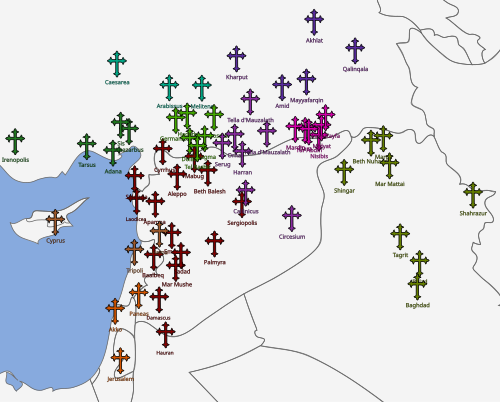
Key Facts
- Founder: Apostles Peter and Paul.
- Origin: 1st century Antioch, Roman Empire.
- Scripture: The Peshitta Bible.
- Liturgy: West Syriac tradition, specifically the Liturgy of Saint James.
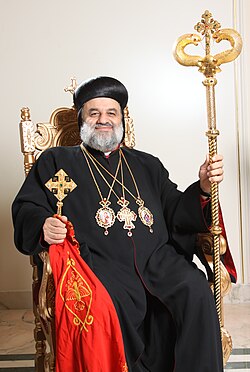
- Current Leader: Patriarch Ignatius Aphrem II.
- Membership: Approximately 1.5 million people globally.
- Primary Language: Classical Syriac.
Historical Journey
Early Foundations and Independence
The church traces its origins to the apostolic era in Antioch. While it branched from the broader Church of Antioch, it established its independence in 512. Throughout the Middle Ages, the church maintained a strong presence in regions including Cilicia, Palestine, Syria, Lebanon, Cyprus, and Mesopotamia.
The Middle Ages to the 20th Century
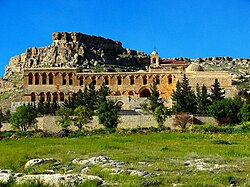
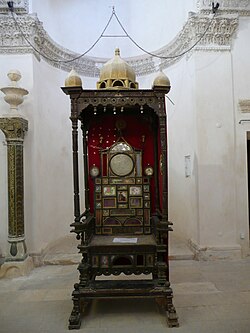
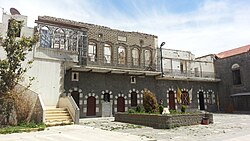
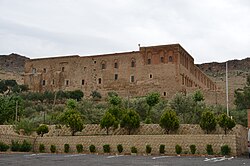
For centuries, the Mor Hananyo Monastery served as the administrative heart and headquarters of the church until 1932. This period saw the church navigate complex relationships with surrounding empires and other Christian denominations.
The Seyfo Genocide and Modern Challenges
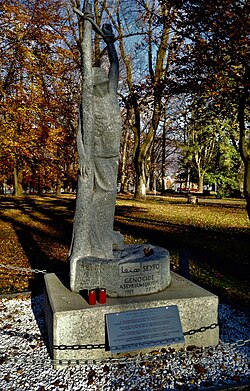
Between 1914 and 1918, the Syriac community suffered the Seyfo, a genocide that devastated its populations in the Ottoman Empire. In more recent history, the Syrian Civil War has caused significant damage to cultural and religious sites, including the St. Mary Church of the Holy Belt.
Church Governance and Leadership
The church follows an episcopal polity, meaning it is governed by a hierarchy of bishops. The supreme authority is the Patriarch of Antioch.
Ecclesiastical Hierarchy
- Patriarch: The spiritual leader of the entire communion.
- Maphrian or Catholicos: A high-ranking prelate, particularly significant in the Indian context.
- Archbishops and Bishops: Overseers of specific dioceses or vicariates.
- Corepiscopos and Priests: The primary clergy serving local parishes.
- Deacons: Including various ranks such as the Mshamshono (full deacon), Archdeacon, and Subdeacon.
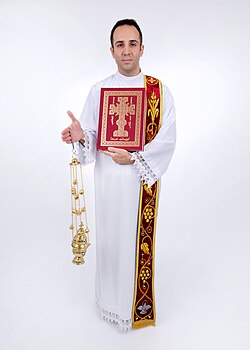
Worship, Doctrine, and Sacraments
Theology and Scripture
The church adheres to Oriental Orthodox theology, which is characterized by a miaphysite understanding of the nature of Christ. Its primary biblical text is the Peshitta, the standard version of the Bible in the Syriac tradition.
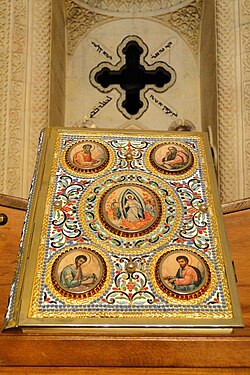
The Seven Sacraments
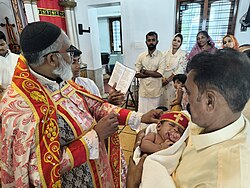
The spiritual life of the faithful is centered around seven living sacraments:
- Baptism: The initiation into the faith.
- Chrismation: The anointing with Holy Muron (sacred oil).
- Holy Communion: Regarded as the "Queen of the Sacraments."
- Confession: The act of repentance and forgiveness.
- Marriage: The sanctification of the union between partners.
- Unction: The anointing of the sick for healing.
- Ordination: The appointment of clergy to their respective ranks.
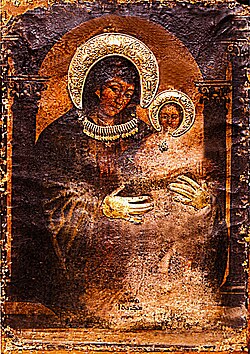
Liturgical Life
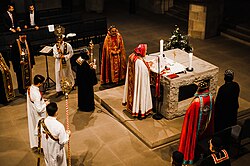
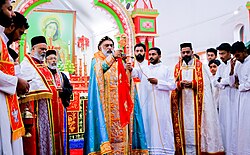
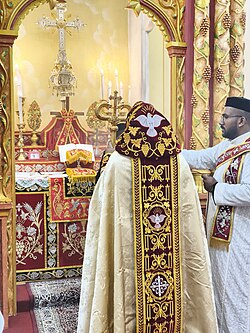
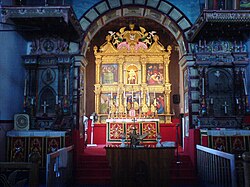
The church follows a rigorous daily prayer cycle, including the Ramsho (Evening), Sootoro (Night), Lilyo (Midnight), and Saphro (Morning) prayers, followed by prayers at the third, sixth, and ninth hours. The primary celebratory service is the Liturgy of Saint James.
Global Presence and Demographics
Regional Distribution
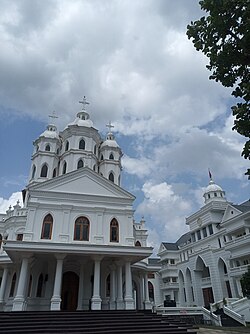
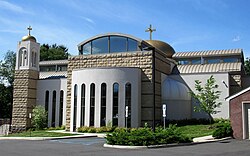
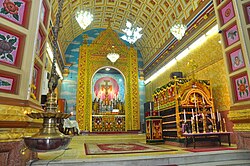
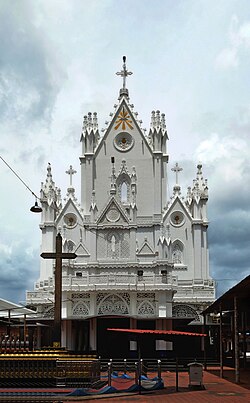
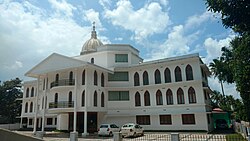
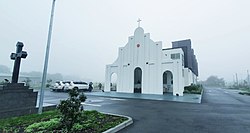
While the headquarters remain in Syria, the church has a vast international footprint. In India, the Jacobite Syrian Christian Church represents a massive portion of the total membership (approximately 1.2 million). The church also maintains vicariates in North America, South America, Europe, and Oceania.
| Region | Key Areas/Dioceses | Notable Presence |
|---|---|---|
| Middle East | Syria, Iraq, Lebanon, Turkey, Jordan | Historical heartland and Patriarchal seat. |
| India | Kerala and surrounding regions | Largest concentration of members (1.2 million). |
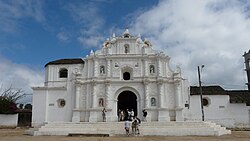
| Americas | USA, Canada, Brazil, Argentina, Guatemala | Growing diaspora communities. |
| Europe | Germany, Sweden, UK, Switzerland, Spain | Significant refugee and migrant populations. |
Frequently Asked Questions
What is the difference between the Syriac Orthodox Church and other Orthodox churches?
The Syriac Orthodox Church is part of the Oriental Orthodox communion, which differs from the Eastern Orthodox Church primarily in its Christology (miaphysitism) and its use of the Syriac language rather than Greek.
What is the Peshitta?
The Peshitta is the standard version of the Bible used by the Syriac Orthodox Church, written in Classical Syriac.
Where is the church's headquarters located?
Since 1959, the headquarters have been located at the Cathedral of St. George in Damascus, Syria.
What is the significance of the Seyfo?
The Seyfo refers to the genocide that occurred between 1914 and 1918, during which many Syriac Christians were persecuted and killed within the Ottoman Empire.
How many members does the church have in India?
Approximately 1.2 million of the church's 1.5 million total members are located in India.