Swedenborg's Theology: Divine Revelation and Spiritual Regeneration
Emanuel Swedenborg presented a unique vision of the Christian faith, claiming in The Heavenly Doctrine that the teachings of the Second Coming of Jesus Christ were revealed to him. He viewed his work not as traditional theology—a discipline he felt often obfuscated the truth—but as a revelation based on actual spiritual experiences. In 1748, he formally discarded philosophy, asserting that it "darkens the mind, blinds us, and wholly rejects the faith."
The core of Swedenborg's system is the concept of regeneration, or the transformation of a human being from a materialistic existence to a spiritual one. He argued that the Bible describes this process of rebirth, suggesting that the creation myth in Genesis is not a historical account of Earth's origin, but a symbolic representation of man's regeneration occurring in six steps.
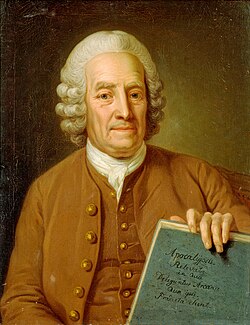
Key Facts
- Foundation: His theological framework was established in Arcana Cœlestia (Heavenly Mysteries), published between 1749 and 1756.
- The Trinity: He rejected the "Trinity of Persons," arguing instead that the Divine Trinity exists within one person: the Lord Jesus Christ.
- Salvation: He opposed the doctrine of sola fide (faith alone), insisting that salvation requires the conjunction of both faith and charity.
- Marriage: He taught that true "marriage love" continues into the spiritual world, while incompatible partners are separated and given new, compatible mates.
- Moral Law: He viewed the Decalogue (Ten Commandments) as the eternal moral foundation of religion, mirrored in the book of Revelation.
The Nature of the Divine and the Trinity
Swedenborg challenged the traditional interpretation of the Trinity as three distinct persons. He argued that this concept was not present in early Apostolic writings and was instead introduced via the First Council of Nicaea and the Athanasian Creed. Citing Colossians 2:9, he maintained that the Divine Trinity exists in One Person, the Lord Jesus Christ.
According to his writings, the Son of God entered the world specifically to address the spread of evil. Swedenborg believed that the "Trinity of Persons" doctrine was a primary reason why other religions opposed Christianity, as he found the concept incomprehensible.
Faith, Charity, and Salvation
A significant point of contention in Swedenborg's work is his rejection of sola fide (faith alone) and sola gratia (by grace alone). These doctrines, championed by Protestant Reformers such as Martin Luther, John Calvin, and Ulrich Zwingli, suggest that justification is granted by God's grace or faith regardless of a person's behavior.
Swedenborg argued that faith and charity are inseparable. In his view, the purpose of faith is to lead an individual toward a life of charity. He asserted that salvation is only possible through the conjunction of the two, exercised by performing "good works" or "good uses" out of a willing desire to do good. He believed the separation of faith from charity was a theological error that mirrored the mistaken division of God into three persons.
Marriage and Conjugial Love
Despite remaining a bachelor, Swedenborg wrote extensively on marriage, most notably in Marriage Love (1768). He viewed creation as a series of pairings—such as good and truth, or charity and faith—descending from the Divine love and wisdom of God. The ultimate goal of these pairings is conjunction.
Addressing the biblical statement that there is no marriage in heaven, Swedenborg explained that the quality of a marital relationship persists after death. Couples who shared true marriage love remain together eternally. Those who lacked this love, or were incompatible, separate upon death to be paired with more compatible partners. Those who hate chaste marriage, however, cannot receive such a partner.
The Decalogue and Spiritual Revelation
Swedenborg placed the Decalogue (Exodus 20) at the center of his religious ethics. He believed there is a spiritual correspondence between the Ten Commandments and the lists of evils excluded from God's kingdom in the book of Revelation.
In works such as Apocalypse Revealed, he argued that the mention of murderers, liars, and adulterers in Revelation 21:8 and 22:15 is not mere repetition, but a confirmation that the Decalogue is an eternal divine law. To Swedenborg, true religion consists of avoiding the evils prohibited in the Decalogue, as these are fundamental sins against God.
| Concept | Traditional/Reformist View | Swedenborg's View |
|---|---|---|
| The Trinity | Three distinct Persons | One Person (Jesus Christ) |
| Salvation | Faith alone (Sola Fide) | Conjunction of Faith and Charity |
| Creation | Physical origin of Earth | Symbol of human regeneration |
| Marriage | Ends at death (some views) | Continues/evolves in spiritual world |
| The Bible | Literal/Historical account | Contains an inner spiritual sense |
Frequently Asked Questions
What did Swedenborg mean by "regeneration"?
Regeneration is the process of a human being transforming from a materialistic being into a spiritual one. Swedenborg believed the six days of creation in Genesis actually symbolize the six steps of this spiritual rebirth.
How does Swedenborg's view of the Trinity differ from mainstream Christianity?
While mainstream Christianity often views the Trinity as three distinct persons (Father, Son, and Holy Spirit), Swedenborg argued that the Trinity exists within a single person, the Lord Jesus Christ.
Why did Swedenborg reject the doctrine of sola fide?
He believed that faith without charity is insufficient for salvation. He argued that faith must lead to a life of active goodness and that salvation requires both faith and charity to be conjoined in a person's life.
What happens to marriages after death according to Swedenborg?
Couples who shared true marriage love remain together in heaven. Those who were not in true love separate and are given new, compatible partners, provided they do not hate chaste marriage.
What is the significance of the Decalogue in his teachings?
The Decalogue serves as the universal moral foundation of religion. Swedenborg believed that the prohibitions in Exodus 20 are eternal laws that are spiritually mirrored in the book of Revelation.