Sweat Glands: Structure, Function, and Types of Human Perspiration
The human body relies on a complex network of sweat glands—specialized organs within the integumentary system—to maintain internal balance. These glands are essential for thermoregulation (the process of maintaining a stable internal body temperature) and the excretion of metabolic waste. Originating from the ectoderm during embryonic development, these glands are distributed across the body in varying densities to meet different physiological needs.
While most people think of sweating as a single process, the human body actually utilizes different types of glands that vary in structure, location, and the chemical composition of their secretions.
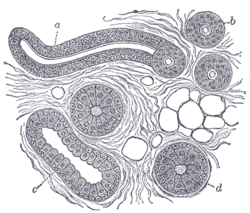
Key Facts
- Primary Functions: Temperature regulation and removal of nitrogenous waste (such as urea).
- Main Types: Eccrine, apocrine, and apoeccrine glands.
- Composition: Eccrine sweat is 98–99% water, while apocrine sweat is more viscous and contains lipids and proteins.
- Distribution: The highest density of sweat glands is found on the palms (approx. 370 per cm).
- Innervation: Eccrine glands are controlled by cholinergic sympathetic nerves, whereas apocrine glands are controlled by adrenergic nerves.
Types of Sweat Glands
Eccrine Glands
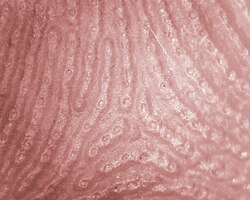
Eccrine glands are the most common type of sweat gland and open directly onto the skin surface. They consist of a secretory coil with a diameter of 500–700 μm and a duct lined by two or more layers of cuboidal cells. Their primary role is to produce a clear, odorless fluid composed mostly of water, sodium chloride (NaCl), and various acids (lactic, citric, and ascorbic), with a pH ranging from 4 to 6.8.
Apocrine Glands
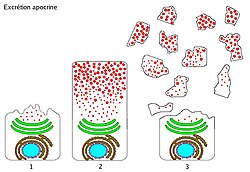
Apocrine glands are larger, with secretory coils measuring around 800 μm. Unlike eccrine glands, these typically open into hair follicles. They secrete a thicker, oily, and cloudy fluid containing proteins, lipids, and steroids, with a pH between 6 and 7.5. While originally odorless, this sweat develops a distinct smell when decomposed by bacteria on the skin. Because they share an opening with sebaceous glands, apocrine sweat often mixes with sebum (skin oil).
Apoeccrine Glands
Found primarily in the armpits (axillae) and perianal region, apoeccrine glands are believed to develop from eccrine glands during puberty. They open directly onto the skin surface and can make up 50% of the glands in the axillary region. These glands are highly productive, secreting a thin, watery sweat, and can be activated by both cholinergic and adrenergic stimulation.
Comparative Anatomy of Sweat Glands
| Feature | Eccrine Glands | Apocrine Glands | Apoeccrine Glands |
|---|---|---|---|
| Secretory Coil Diameter | 500–700 μm | 800 μm | Similar to Eccrine |
| Duct Opening | Skin surface | Hair follicle | Skin surface |
| Secretory Composition | Watery, clear | Viscous, cloudy | Thin, watery |
| Primary Control | Cholinergic | Adrenergic | Cholinergic/Adrenergic |
| pH Range | 4 – 6.8 | 6 – 7.5 | Watery/Acidic |
Distribution and Evolutionary Context
The density of sweat glands varies significantly across the human body. According to historical estimates by Henry Gray, the distribution is as follows:
- Palms: ~370 per cm
- Back of hand: ~200 per cm
- Forehead: ~175 per cm
- Breast, abdomen, forearm: ~155 per cm
- Back and legs: 60–80 per cm
In the animal kingdom, non-primate mammals typically only have eccrine glands on their palms and soles, relying on apocrine glands for the rest of the body. While horses have effective apocrine-based temperature regulation, most other mammals are less efficient than humans in this regard. Prosimians exhibit a different pattern, with eccrine glands located between hairs across most of their bodies.
Clinical Significance and Pathology
Dysfunction of the sweat glands can lead to various medical conditions. Hyperhidrosis involves excessive sweating, while Osmidrosis refers to abnormal odors. Other pathologies include Fox-Fordyce disease, Frey's Syndrome, and Hidradenitis suppurativa.
Certain systemic diseases also manifest through sweat gland dysfunction. For example, Ectodermal dysplasia may result in a total lack of sweat glands. Fabry disease causes a decrease in function due to the deposit of globotriaosylceramide (GL3) in the glands, and GM 1 gangliosidoses leads to vacuolization (the formation of small cavities) within the cells.
Additionally, various tumors can arise from these tissues, ranging from benign Syringomas to malignant Eccrine carcinomas or Apocrine gland carcinomas.
Frequently Asked Questions
Why does apocrine sweat smell while eccrine sweat does not?
Eccrine sweat is mostly water and salts. Apocrine sweat contains proteins and lipids; when bacteria on the skin surface break down these organic compounds, they produce the characteristic odor.
What is the difference between a sweat gland and a sebaceous gland?
Sweat glands produce watery or oily secretions for cooling and waste removal. Sebaceous glands produce sebum, a waxy oil that lubricates the skin and hair. While apocrine sweat glands often open into the same follicle as sebaceous glands, they are distinct structures.
How do apoeccrine glands differ from standard eccrine glands?
Apoeccrine glands are primarily found in the armpits and perianal areas, typically developing during puberty. They secrete a higher volume of sweat than standard eccrine glands and can be triggered by both adrenergic and cholinergic nerve activity.
Which part of the body has the most sweat glands?
The palms of the hands have the highest density of sweat glands, with approximately 370 glands per square centimeter.
Can certain diseases stop a person from sweating?
Yes. Conditions such as Ectodermal dysplasia can cause a person to be born without sweat glands, and Fabry disease can significantly impair their function due to lipid deposits.