Mammalian Fur: Biology, Function, and Evolution
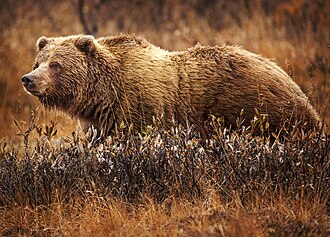
Fur is the soft, thick growth of hair that covers the skin of nearly all mammals. More than just a physical covering, fur is a complex biological tool essential for survival. It typically consists of a dual-layer system: oily guard hairs on the surface and a thick layer of underfur beneath. While the guard hairs prevent moisture from reaching the skin, the underfur serves as an insulating blanket to maintain body heat.
Beyond warmth, fur serves critical roles in protection, sensory perception, waterproofing, and camouflage. While these functions are diverse, the primary biological purpose of fur is thermoregulation—the process by which animals maintain their internal body temperature.
Key Facts
- Primary Purpose: Thermoregulation is the most critical function of mammalian fur.
- Structure: Most coats consist of guard hairs (outer layer) and underfur (inner layer).
- Insulation: Fur density, rather than length, is the primary driver of insulating value.
- Adaptation: Some mammals change coat color seasonally for camouflage, such as the arctic fox.
- Evolution: Hairlessness has evolved independently in various species to reduce water resistance or adapt to subterranean life.
Types of Mammalian Hair
The collective coat of a mammal is known as its pelage. Depending on the species and the specific need, mammals possess different types of hair:
- Definitive: Standard hair that may be shed after reaching a specific length.
- Vibrissae: Specialized sensory hairs, most commonly known as whiskers.
- Spines: Stiffened guard hairs used for defense, such as those found on porcupines.
- Bristles: Long hairs often used for visual signaling, such as a lion's mane.
- Velli: Also called "down fur," these insulate newborn mammals.
- Wool: Long, soft, and frequently curly hair.
The Mechanics of Thermoregulation
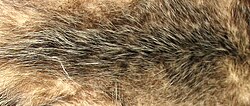
A common misconception is that hair length determines warmth. In reality, length is secondary to density. For example, sloths in the tropics may have fur as long as arctic mammals, but they possess far less insulation. Conversely, some short-haired tropical mammals have insulating values equal to those of arctic species.
Arctic mammals rely on extreme density to survive. The muskox, for instance, possesses guard hairs up to 30 cm (12 in) and a dense underfur that creates an airtight seal, allowing it to withstand temperatures as low as −40 °C (−40 °F). In contrast, desert mammals like camels use dense fur to block solar heat; while a camel's fur can reach 70 °C (158 °F) in summer, its skin remains at a cool 40 °C (104 °F). Aquatic mammals utilize their fur to trap air, which keeps the skin dry and conserves heat.
Coloration and Adaptation
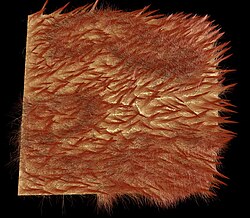
The color of a mammal's coat is driven by selective pressures including communication, sexual selection, and survival. Camouflage allows animals to hide from predators or sneak up on prey.
Some animals use aposematism—warning coloration—to signal danger to predators. This is seen in the black-and-white pelage of the honey badger and the skunk. Other species, such as the snowshoe hare and the arctic fox, undergo seasonal color changes, shifting from brown in summer to white in winter to match their surroundings.
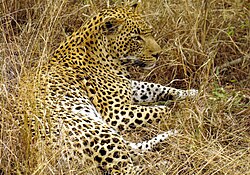
Color also plays a role in temperature control. Darker coats absorb more solar radiation, helping smaller mammals like voles stay warm in winter. Interestingly, the green color of sloths is not biological pigmentation but the result of a symbiotic relationship with algae.
The Three-Layer Composition of Fur
Many mammals possess a complex, layered coat structure to maximize efficiency.
Down Hair
Also known as underfur or ground hair, this is the innermost layer. These hairs are the shortest, most numerous, and typically wavy or curly. Their primary job is to insulate a layer of dry air against the skin.
Awn Hair
Awn hair acts as a hybrid. It begins as a straight shaft (like a guard hair) but becomes thin and wavy (like down hair) halfway through its length. This allows the base to provide insulation while the tip helps shed water.
Guard Hair
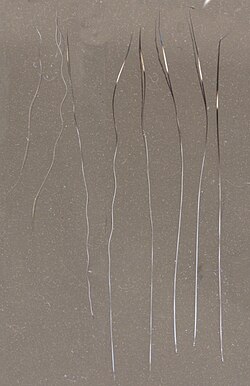
The outermost layer, or overhair, consists of long, coarse, straight shafts. Guard hairs are the most pigmented and glossy part of the coat. They protect the skin from UV radiation, repel water, and can reduce the impact of scratches. Some animals, such as cats and dogs, can raise these hairs via a pilomotor reflex as a threat display.
Evolution of Hairlessness
While hair is a defining mammalian trait, some species have evolved to be "naked" or hairless. This often occurs through natural selection to suit specific environments:
- Aquatic Adaptation: Cetaceans, pinnipeds, and hippopotamuses have reduced hair to decrease water resistance.
- Subterranean Life: The naked mole-rat has evolved hairlessness for its underground habitat.
- Size and Environment: Elephants and rhinoceroses are largely hairless.
In humans, significant hair loss is linked to the loss of functionality in the pseudogene KRTHAP1, which is involved in keratin production. Additionally, humans have created hairless breeds of domestic animals, such as the Sphynx cat, through artificial selection by breeding individuals with natural genetic mutations.
Fur in Human Use
Humans have used fur for clothing since the time of Neanderthals, primarily for insulation. In the modern era, fur is used for aesthetics, often dyed or shorn. While leather is made by removing the hair from a hide, fur garments retain the hair on the processed skin. Fur is also used to create felt, such as the beaver fur used in high-end hats.
| Hair Type | Position | Primary Characteristic | Main Function |
|---|---|---|---|
| Down Hair | Inner Layer | Short, wavy, numerous | Thermoregulation/Insulation |
| Awn Hair | Middle Layer | Hybrid (straight then wavy) | Insulation and water shedding |
| Guard Hair | Outer Layer | Long, coarse, straight | Protection and waterproofing |
Frequently Asked Questions
Does longer fur always mean better insulation?
No. Insulation is primarily determined by the density of the fur and the quality of the underfur, not the length of the hairs. Some tropical mammals have long fur but low insulation, while some arctic mammals have dense, short coats that provide superior warmth.
What is the difference between fur and leather?
Fur refers to animal pelts where the hair remains attached to the processed skin. Leather is produced by removing the hair from the hide entirely, using only the skin.
Why do some animals change their fur color in winter?
This is an evolutionary adaptation for camouflage. Animals like the arctic fox and snowshoe hare turn white in winter to blend in with the snow, protecting them from predators and helping them hunt more effectively.
What is a furbearer?
In the fur industry, a furbearer is any animal that possesses commercially valuable fur, such as mink, sable, fox, or beaver.
How do aquatic mammals stay warm if their fur gets wet?
Aquatic mammals have evolved fur that traps a layer of air against the skin. This air barrier prevents the skin from getting wet and acts as an insulator to conserve body heat in cold water.