Svealand and Sea Wind: A Maritime History of a Versatile Ferry
The maritime history of the vessel originally known as Svealand is a testament to the adaptability of modern shipping. From its origins as a regional ferry in the late 1960s to its various transformations into a train ferry and its eventual renaming as A Wind, the ship has served numerous operators across the Baltic and North Seas for over five decades.
Early Service and Initial Transformations
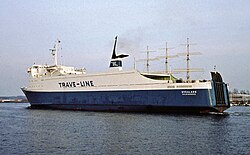
Ordered in 1969 by Linjebuss International (Svea, Stockholm), the ship was constructed as yard number 397 by Helsingør Skibsværft in Helsingør, Denmark. It began its operational life with Stockholms Rederi AB / Trave Line, serving the route between Helsingborg and Travemünde.
By October 1976, the vessel was transferred to Saga Line, maintaining its presence on the Helsingborg–Travemünde route. Following the transition of Saga Line to TT-Saga Line on January 1, 1981, the ship was redeployed to the Trelleborg–Travemünde route. After being sold to Johnson Line in November 1981, the vessel underwent a significant rebuild at Howaldtswerke-Deutsche Werft in Kiel, West Germany, during April and May 1982.
The Saga Wind Era and Technical Upgrades
The ship's ownership changed hands rapidly in early 1983, moving from Svenska Landfils to Scandinavian Ferry Line. To improve performance, the vessel was fitted with new Mak 8M453 AK diesel engines between July and September 1984 at Fosen Mekaniske Verksted in Trondheim, Norway. This upgrade increased the ship's power to 7,360 kilowatts (approximately 9,870 hp).
Renamed Saga Wind on September 22, 1984, the ship returned to the Trelleborg–Travemünde route. In December 1986, while under the newly renamed Swecarrier Rederi, the vessel was rebuilt by Seebeckwerft in Bremerhaven, West Germany, to increase its cabin capacity for passengers.
Transition to Sea Wind and Train Ferry Operations
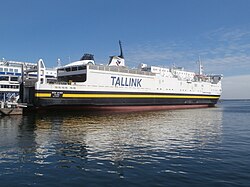
A major structural shift occurred in January 1989 when the ship arrived at Blohm & Voss in Hamburg, West Germany, to be converted into a train ferry (a vessel designed to carry railroad cars). In April 1989, the ship was chartered to Sea Wind Line and renamed Sea Wind, beginning service on the Stockholm–Turku route.
Ownership shifted to Silja OY in January 1992, with the vessel remaining under the management of Sweferry. Throughout the late 1990s and early 2000s, the ship faced several challenges and updates, including a bridge rebuild in 2001.
Incidents and Later Years
The vessel's history is marked by two notable incidents. In March 1997, the Sea Wind ran aground off Mjölkö; passengers were safely evacuated by the Waxholmsbolaget ferry Solöga before the ship was refloated and repaired. Later, on December 2, 2008, while operating for Tallink Swedish Line, a broken oil line caused a fire in the engine room 12 nautical miles off Mariehamn. Eleven passengers were evacuated via a Finnish helicopter.
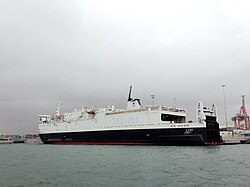
After returning to service in 2009, the ship was eventually withdrawn from the Stockholm–Turku route in December 2014 and laid up at Naantali. In January 2015, the vessel adopted the Estonian flag and began serving the Tallinn–Vuosaari route.
Key Facts
- Original Name: Svealand (built 1969).
- Builder: Helsingør Skibsværft, Denmark.
- Maximum Power: 7,360 kW (9,870 hp) following 1984 engine upgrades.
- Major Conversions: Rebuilt as a train ferry in 1989 at Blohm & Voss.
- Current Name: A Wind (renamed in 2022).
- Current Flag: Cameroon (changed from Estonian flag in 2022).
Vessel Summary
| Period | Name | Primary Route/Operator | Key Event |
|---|---|---|---|
| 1969–1981 | Svealand | Helsingborg–Travemünde | Initial service and transfer to Saga Line |
| 1984–1989 | Saga Wind | Trelleborg–Travemünde | Engine upgrade and cabin expansion |
| 1989–2014 | Sea Wind | Stockholm–Turku | Conversion to train ferry |
| 2015–2022 | Sea Wind | Tallinn–Vuosaari | Transfer to Estonian flag |
| 2022–Present | A Wind | Various | Transfer to Cameroon flag |
Frequently Asked Questions
Where was the Svealand originally built?
The vessel was built by Helsingør Skibsværft in Helsingør, Denmark, as yard number 397.
What was the purpose of the 1989 rebuilding at Blohm & Voss?
The ship was rebuilt at Blohm & Voss in Hamburg to be converted into a train ferry, allowing it to transport railroad cars.
What caused the engine room fire in 2008?
The fire, which occurred 12 nautical miles off Mariehamn, was caused by a broken oil line.
How did the ship's power change over time?
Between July and September 1984, the installation of new Mak 8M453 AK diesel engines increased the ship's power to 7,360 kilowatts (9,870 hp).
What is the ship called now?
As of 2022, the ship has been renamed A Wind and operates under the flag of Cameroon.