Supply Chain Management: Systems, Strategies, and Global Ethics
At its core, a supply chain is a complex logistics system comprising the facilities and processes required to convert raw materials into finished products and distribute them to end consumers. While the chain itself represents the physical and informational path of a product, supply chain management (SCM) is the strategic optimization of these distribution channels to ensure maximum efficiency.
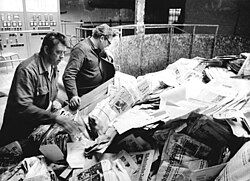
The concept is not new; the term "supply chain" appeared as early as 1905 in The Independent, referencing the challenges of maintaining a supply line to India during a British expedition to Tibet. Today, these systems have evolved into dynamic networks where used products can be reintroduced at any point where residual value allows for recycling.
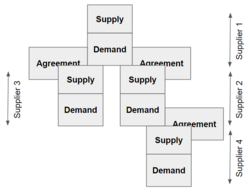
Key Facts
- SCM Definition: The integration of business processes from the original supplier to the end user.
- Supplier Hierarchy: Organized into tiers, where first-tier (direct) suppliers provide goods to the client, and second-tier suppliers provide to the first tier.
- Ethics Impact: A 2018 survey by Loyola University Chicago found that 53% of supply chain professionals view ethics as "extremely" important.
- Performance Metric: "Perfect order fulfillment" is defined as orders that are complete, accurate, on time, and in perfect condition.
- Strategic Types: Supply chains are generally categorized as either "functional and efficient" or "responsive and innovative."
![A chain is actually a complex and dynamic supply and demand network.[10]](/images/0b/d6/0bd671e54a2dac71568cdfee2f76da35f445f151da75c1ed821a155d501fc796.webp)
Supply Chain Structures and Typologies
Supply chains are closely linked to value chains and vary in scope depending on the organization's needs. Experts distinguish between different levels of connectivity and strategy:
Direct vs. Extended Chains
- Direct Supply Chain: A simple link involving a company, one supplier, and one customer.
- Extended Supply Chain: A broader network that includes the suppliers of the immediate supplier and the customers of the immediate customer.
Strategic Alignment
According to Marshall L. Fisher (1997), the right strategy depends on the product. Some chains are designed to be functional and efficient, while others are responsive and innovative to meet volatile market demands. Additionally, researchers Brown et al. categorize these networks as either "loosely coupled" or "tightly coupled."

Modeling, Mapping, and Management
To manage these complexities, organizations use standardized models. The American Productivity and Quality Center (APQC) Process Classification Framework (PCF) is a high-level, industry-neutral model. It organizes operating and management processes into 12 enterprise-level categories, encompassing over 1,000 processes to facilitate benchmarking across different industries and geographies.
The formalization of SCM as a discipline grew in the 1980s. While the term was used in academic papers as early as 1978, Keith Oliver of Booz Allen Hamilton is widely credited with popularizing the term in a 1982 Financial Times interview. The goal of SCM is to facilitate the exchange of information regarding production capabilities, distribution capacity, and market demand.
Resilience and Corporate Social Responsibility
Modern supply chains face significant scrutiny regarding corporate social responsibility (CSR). Tragedies such as the 2013 Savar building collapse, which claimed over 1,100 lives, highlighted the dangers of a lack of transparency. When companies lack visibility into their lower-tier suppliers, socially irresponsible practices can flourish.
To combat this, global brands are integrating codes of conduct and utilizing social audits to verify compliance. Experts suggest that auditing must extend beyond first-tier suppliers. The integration of electronic technologies and collaboration with universities and local partners are seen as essential for improving worker safety and occupational health management.
Industry-Specific Applications
Different sectors apply supply chain principles in unique ways. In the food industry, the European Commission has worked to improve the functioning of the chain across agriculture, food processing, and distribution. This included the creation of the "European Food Prices Monitoring Tool" by Eurostat to increase transparency and stabilize prices.
| Concept | Description | Key Goal |
|---|---|---|
| SCM | Integration of processes from supplier to end-user | Efficiency & Optimization |
| Tiered Suppliers | Hierarchical structure (1st tier, 2nd tier, etc.) | Organized Sourcing |
| APQC PCF | Industry-neutral process model | Benchmarking & Improvement |
| CSR | Ethical auditing and worker safety standards | Social Responsibility |
Frequently Asked Questions
What is the difference between a first-tier and second-tier supplier?
A first-tier supplier, or direct supplier, provides goods or services directly to the client. A second-tier supplier provides the necessary materials or services to the first-tier supplier.
What does "perfect order fulfillment" mean in SCM?
It refers to a performance metric where orders are delivered complete, accurate, on time, and in perfect condition.
Why is supply chain transparency important for ethics?
Transparency prevents consumers from being unaware of the origins of their purchases and helps companies identify and stop socially irresponsible practices, such as poor worker safety, in their deeper supplier networks.
What is the purpose of the APQC Process Classification Framework?
The PCF provides a standardized, cross-industry perspective on business processes, allowing organizations to manage and benchmark their operations regardless of their size or location.
How do "responsive" supply chains differ from "efficient" ones?
Efficient supply chains focus on minimizing cost and maximizing productivity for functional products, while responsive supply chains are designed to react quickly to changes in demand for innovative products.