Public Eye: Advocating for Global Justice and Corporate Responsibility
For over five decades, a dedicated voice has emerged from Switzerland to challenge the inequalities of the global economy. Originally known as Erklärung von Bern (Declaration from Bern), the organization has evolved into Public Eye, a prominent non-governmental organisation (NGO) focused on sustainability, international development, and social service. By bridging the gap between Swiss economic power and the needs of underprivileged populations worldwide, the organization works to ensure that prosperity does not come at the cost of human rights or environmental integrity.

The Origins of the Bern Declaration
The roots of the organization trace back to 1968, born from a manifesto titled “Switzerland and the Developing Countries.” This movement was initiated by a group of theologians who were concerned by the widening prosperity gap between the industrialized "first world" and the developing "third world." In this manifesto, one thousand signatories pledged to contribute 3% of their income toward development cooperation. This historic document was formally presented to the Swiss Federal Council on January 6, 1969.
In 1971, the movement transitioned into a formal association. Driven by donations, it saw significant growth, reaching 18,000 members by the late 1970s. Throughout its history, the organization has been a proponent of dependency theory—the idea that resources flow from a "periphery" of poor and underdeveloped states to a "core" of wealthy states, enriching the latter at the expense of the former. This perspective guided their involvement in drafting the Federal Law on Development Cooperation in the 1970s and their opposition to Switzerland's accession to the International Monetary Fund in 1992.
Transition to Public Eye
A significant turning point occurred on May 23, 2016, when members voted to change the organization's name to Public Eye. The new name was chosen to better reflect the organization's modern values and its focus on the intersection of business and human rights. The term "Public Eye" was already well-known due to the organization's long-standing tradition of hosting counter-summits to protest the Davos World Economic Forum (WEF). The rebranding was officially implemented in mid-September 2016.
Core Goals and Methods
Public Eye operates with the mission of improving living conditions for underprivileged populations. Their work is centered on several key pillars:
- Corporate Accountability: Demanding that Swiss-based enterprises assume their corporate social responsibility by respecting labor laws, human rights, and ecological norms throughout their entire value chain.
- Policy Advocacy: Urging the Swiss government to use its influence in international and multilateral organizations to promote fairer relations between industrialized and developing nations.
- Public Awareness: Using magazines and information campaigns to educate the Swiss population about the impact of their purchasing decisions and the conduct of global businesses.
- Research and Investigation: Gathering data on global justice, economic issues, and human rights to provide a factual basis for their campaigns.
Beyond economic policy, the organization also addresses critical issues such as nutrition awareness, health, the use of pesticides, biotechnology, genetic engineering, and drug policy.
The Public Eye Awards
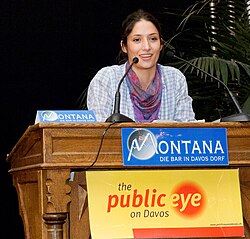
From 2000 to 2015, Public Eye, in collaboration with Greenpeace Switzerland, hosted the Public Eye Awards in Davos. These awards served as a counter-event to the World Economic Forum, designed to shine a light on irresponsible business practices and the "dark side" of globalization. Since 2005, NGOs from over 50 countries have nominated corporations for these prizes to highlight shameful conduct in the global market.
Key Facts
- Founded: 1968 (as Erklärung von Bern)
- Current Name: Public Eye (since September 2016)
- Headquarters: Lausanne and Zürich, Switzerland
- Membership: Over 25,000 members (as of 2016)
- Official Languages: German and French
- Primary Focus: Sustainability, human rights, and corporate responsibility
Organization Overview
| Category | Details |
|---|---|
| Focus Areas | Sustainability, International Development, Social Service |
| Key Locations | Lausanne, Zürich, and various regional groups (Basel, Bern, Geneva, etc.) |
| Leadership | Pierrette Rohrbach (Chairwoman), Andreas Cassee (Vice-chairman), Fabrizio Cioldi (Vice-chairman) |
| Volunteer Base | Approximately 200 volunteers |
Frequently Asked Questions
What was the original name of Public Eye?
The organization was originally founded in 1968 as Erklärung von Bern (Declaration from Bern).
What is the main objective of Public Eye?
The main objective is to ensure that Swiss businesses and policies respect human rights and the environment, promoting sustainable development and fair relations between industrialized and developing countries.
How does Public Eye influence consumer behavior?
Through information campaigns and magazines, Public Eye aims to increase awareness regarding sustainable consumption, helping the Swiss population make more responsible purchasing decisions.
What were the Public Eye Awards?
The Public Eye Awards were annual events held in Davos (from 2000 to 2015) to highlight irresponsible corporate practices and provide a critical perspective to the World Economic Forum.
Does Public Eye focus only on economic issues?
No. While economic justice is a core focus, the organization also addresses health issues, nutrition, biotechnology, genetic engineering, and drug policy.