Supersaturation: The Science of Unstable Solutions and Crystal Growth
In the world of physical chemistry, equilibrium is the standard. However, there exists a fascinating and unstable state known as supersaturation. This occurs when a solution contains a higher concentration of a solute than the maximum amount specified by its solubility at equilibrium. While most commonly observed when a solid is dissolved in a liquid, supersaturation can also involve gases or other liquids dissolved within a solvent.
Because a supersaturated solution is in a metastable state, it is inherently prone to change. It can return to a stable equilibrium through several methods: separating the excess solute from the liquid, diluting the solution with more solvent, or increasing the solubility of the solute.

Key Facts
- Metastability: Supersaturated solutions are unstable and will seek equilibrium via precipitation, dilution, or temperature changes.
- Nucleation: The process of forming new crystals often requires a "seed" or a nucleation site to overcome thermodynamic barriers.
- Temperature Sensitivity: Solubility changes with temperature; for example, sodium sulfate's solubility decreases above 33°C.
- Diverse Occurrences: Supersaturation is found in everything from fizzy drinks and honey to atmospheric clouds and deep-sea biology.
The History of Supersaturation Research
Early scientific investigations into this phenomenon focused heavily on sodium sulfate (also known as Glauber's Salt). Researchers noted its unusual property where solubility decreases as temperature increases past 33°C.
Historically, it was believed that simply agitating a solution would trigger crystallization. However, studies proved that crystallization actually requires solid matter to act as a "starting" site, now referred to as seeds. Scientists like Gay-Lussac expanded this understanding by noting how the kinematics of salt ions and the characteristics of the container influence the state. Later, Henri Löwel identified that both the solution's nuclei and the container walls can act as catalysts for crystallization, while Désiré Gernez discovered that nuclei must consist of the same salt being crystallized to effectively promote the process.
The LaMer Model of Nucleation
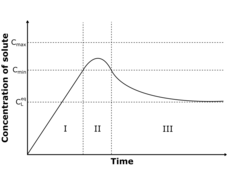
In 1950, Victor K. LaMer proposed a significant theory regarding the nucleation and growth of particles, such as sulfur nuclei. His model describes a three-stage process based on the constant inflow of a solute:
- Linear Growth: The solute concentration grows linearly as it is added to the solution.
- Nucleation Stage: Once the concentration reaches a critical level, solute crystals begin to nucleate. This appearance of nuclei consumes the solute, causing the concentration to peak and then decline.
- Growth Stage: Once supersaturation drops below the critical level for new nucleation, existing crystals continue to grow via solute diffusion until the concentration reaches the saturation value.
Real-World Occurrences and Examples
Solids in Liquids
A common way to create supersaturation is by changing the temperature of a saturated solution. In most cases, cooling a solution causes the excess solute to precipitate as crystals or powder. This principle is used in recrystallization, a vital laboratory process for purifying chemical compounds. By heating a mixture to dissolve an impure compound and then cooling it, the desired compound crystallizes out while impurities remain in the liquid.
To overcome the thermodynamic barriers that sometimes prevent crystals from forming, scientists use "seeding" (adding a tiny crystal) or by rubbing a glass vessel to release microscopic particles that act as nucleation centers. In industrial settings, centrifugation is often employed to separate these crystals from the remaining liquid.
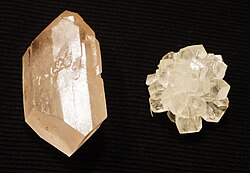
Some substances, like carbohydrates, form long-living supersaturated solutions. For instance, invert sugar (a mixture of glucose and fructose) exists as a viscous, supersaturated liquid, and honey contains carbohydrates that may crystallize over several weeks.
Gases in Liquids and Vapors in Air
The solubility of a gas increases with pressure. When pressure is reduced, the excess gas escapes the solution. This is the mechanism behind fizzy drinks, where carbon dioxide is held in solution under pressure. In humans, the sudden release of gas from supersaturated tissues during rapid ascent can lead to decompression sickness (the bends), which can be fatal if gas obstructs blood supply.
In the atmosphere, supersaturation of water vapor can lead to cloudbursts. In the upper troposphere, water can reach relative humidities above 100% before forming ice lattices, a phenomenon observed frequently via satellite data.
Summary of Supersaturation States
| State | Solute Concentration | |
|---|---|---|
| Undersaturated | Below equilibrium solubility | Stable |
| Saturated | At equilibrium solubility | Stable |
| Supersaturated | Above equilibrium solubility | Metastable (Unstable) |
Frequently Asked Questions
How is supersaturation used in medicine?
Pharmaceuticals use supersaturating drug delivery services (SDDS) to allow drugs with very low solubility to be ingested in liquid form. By adding precipitation inhibitors, the drug remains in a supersaturated state in the body, improving absorption.
Can supersaturation help in environmental studies?
Yes. Marine ecologists monitor oxygen supersaturation in the ocean to study photosynthetic activity. Since photosynthetic organisms release O2, areas with high oxygen levels often indicate high biological activity.
Why does steam in a turbine behave differently?
In steam turbines, the rapid expansion of superheated steam can lead to supersaturation. This causes the actual mass flow to be 1% to 3% greater than theoretical calculations, requiring engineers to adjust their design models.
What is the difference between nucleation and growth?
Nucleation is the initial formation of new, tiny crystal particles (nuclei) from the solution. Growth is the subsequent process where those existing crystals increase in size by absorbing more solute from the surrounding liquid.
What causes decompression sickness in divers?
When a diver returns to the surface too quickly, the reduction in external pressure causes dissolved gases in their tissues to become supersaturated and rapidly form bubbles, which can block blood flow.