Supercopa de España: History, Records, and Evolution of the Spanish Super Cup
The Supercopa de España is one of the most prestigious titles in Spanish football, organized by the Royal Spanish Football Federation. Since its official inception in 1982, the tournament has evolved from a simple clash between league and cup winners into a high-stakes international event. Today, it stands as a testament to the dominance of Spain's elite clubs, particularly the enduring rivalry between Barcelona and Real Madrid.
Key Facts
- Most Successful Club: Barcelona, with a record 16 titles.
- All-Time Top Scorer: Lionel Messi, with 14 goals.
- Current Format: A four-team tournament (since 2019).
- Most Individual Titles: Lionel Messi (8 titles).
- Total Participants: 13 different teams have competed since the tournament's start.
The Evolution of the Tournament
The path to the modern Supercopa was paved by several early competitions. Between 1940 and 1953, various tournaments were held between the Spanish league champions and the winners of the Copa del Generalísimo (the predecessor to the Copa del Rey). These included the unofficial Copa de los Campeones de España and the official Copa Presidente FEF.
A notable predecessor was the Copa Eva Duarte, contested between 1947 and 1953. During this era, Barcelona established early dominance, winning the trophy automatically in 1952 and 1953 after achieving the "Double" (winning both the league and the cup in the same season).
Tournament Formats Through the Years
The competition has undergone three distinct structural phases to determine its champion:
The Two-Team Format (1982–2018)
For over three decades, the tournament featured only two teams. Until 1995, if a single team won both the league and the cup, they were automatically awarded the trophy. From 1996 to 2019, the rules changed: a team winning the Double would instead face the cup runners-up.
The Four-Team Format (2019–Present)
Starting in 2019, the Royal Spanish Football Federation expanded the competition to four teams to increase competitiveness and commercial appeal. This format typically includes the league winner, the league runner-up, the cup winner, and the cup runner-up. In recent years, these finals have been hosted in Saudi Arabia, including venues in Jeddah and Riyadh.
Statistical Dominance and Records
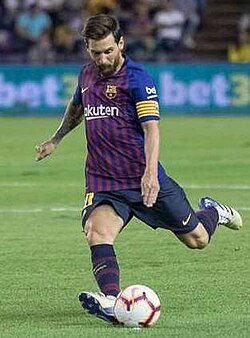
The history of the Supercopa is defined by the extraordinary achievements of a few individuals and clubs. Lionel Messi holds nearly every major individual record, including the most appearances (20), most goals (14), and most titles won (8).
In terms of club success, Barcelona leads the pack with 16 championships, followed closely by Real Madrid with 13. While other clubs like Athletic Bilbao and Deportivo La Coruña have secured multiple titles, the "Clásico" rivals continue to dominate the podium.
| Club | Titles | Runners-up | Semi-finalists |
|---|---|---|---|
| Barcelona | 16 | 12 | 2 |
| Real Madrid | 13 | 8 | 1 |
| Athletic Bilbao | 3 | 2 | 2 |
| Deportivo La Coruña | 3 | 0 | 0 |
| Atlético Madrid | 2 | 5 | 3 |
Frequently Asked Questions
Which team has won the most Supercopa de España titles?
Barcelona is the most successful club in the competition's history, having won a record 16 titles.
Who is the all-time leading goalscorer in the tournament?
Lionel Messi is the all-time top scorer with 14 goals scored across 20 appearances.
How has the tournament format changed since 2019?
The tournament transitioned from a two-team final to a four-team knockout format, involving the winners and runners-up of both La Liga and the Copa del Rey.
What happens if a team wins both the league and the cup?
Under the old rules (until 1995), they won the trophy automatically. From 1996 to 2018, they played the cup runners-up. In the current four-team format, they simply qualify as one of the four participants.
Where are the recent Supercopa finals played?
Since the introduction of the four-team format, the finals have been hosted in Saudi Arabia, specifically in cities such as Jeddah and Riyadh.