Superconductivity: The Science of Zero Resistance and Magnetic Levitation
Imagine a world where electricity flows forever without losing a single watt of energy to heat. This is the reality of superconductivity, a quantum mechanical phenomenon where certain materials exhibit exactly zero electrical resistance and expel magnetic fields from their interior. Unlike standard conductors, where resistance drops gradually as they cool, superconductors hit a specific critical temperature (Tc), at which point their resistance vanishes abruptly.
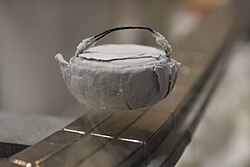
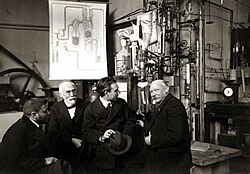
First discovered in 1911 by Dutch physicist Heike Kamerlingh Onnes, superconductivity defies classical physics. It is characterized by the Meissner effect—the complete cancellation of magnetic fields inside the material during its transition to a superconducting state. This effect proves that superconductivity is more than just "perfect conductivity"; it is a distinct phase of matter.
Key Facts
- Zero Resistance: Electric currents in a superconducting loop can persist indefinitely without a power source.
- Meissner Effect: The expulsion of magnetic fields, allowing for phenomena like magnetic levitation.
- Critical Temperature (Tc): The threshold temperature below which a material becomes superconducting.
- Coolants: Low-temperature superconductors typically require liquid helium (4.2 K), while high-temperature versions can use liquid nitrogen (77 K).
- Quantum Nature: The phenomenon can only be explained through quantum mechanics, specifically involving electron pairing.
The Evolution of Superconducting Materials
The history of superconductivity is a journey from extreme cold toward more practical, accessible temperatures. For decades, scientists worked with "conventional" superconductors, which typically operate at temperatures near absolute zero.
Conventional Superconductors
Conventional superconductors are those whose behavior is explained by the BCS theory (developed in 1957). These materials, such as solid mercury (Tc = 4.2 K), usually have very low critical temperatures. However, under extreme pressure (approximately 90 gigapascals), some conventional materials like H2S have reached critical temperatures as high as 203 K.
![Top: Periodic table of superconducting elemental solids and their experimental critical temperature (T)Bottom: Periodic table of superconducting binary hydrides (0–300 GPa). Theoretical predictions indicated in blue and experimental results in red[47]](/images/f9/09/f9098c1d00a4f6b98f7640d7a7ee7142cc4a6828aeac83d493ad44a81f9532d7.jpg)
High-Temperature Superconductors (HTS)
A major breakthrough occurred in 1986 when researchers Georg Bednorz and K. Alex Müller discovered cuprate-perovskite ceramics with a Tc above 35 K. Shortly after, Ching-Wu Chu developed YBCO (yttrium barium copper oxide), which raised the critical temperature to 92 K. This was a pivotal moment because it exceeded the boiling point of liquid nitrogen (77 K), a coolant that is significantly cheaper and easier to handle than liquid helium.
![Timeline of superconducting materials, note the cuts in both axis scales. Colors represent different classes of materials: BCS (dark green circle) Nickel-based (pink six-point star)*NdSrNiO should read Sr0.2Nd0.8NiO2[8]](/images/bc/f6/bcf6fa1d6d1c66fc91430c01030944f266539528b78a14672f2531a9c7b566ea.webp)
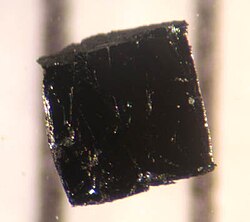
Other practical HTS materials include BSCCO (bismuth strontium calcium copper oxide), a cuprate that does not require rare earth elements, making it a strong competitor for niobium-based superconductors.
Theoretical Frameworks
Understanding how electrons move without friction required new physics. Two primary theories emerged in the 1950s:
- Ginzburg–Landau Theory (1950): A phenomenological approach that explains macroscopic properties. It predicted the existence of Type I and Type II superconductors.
- BCS Theory (1957): A microscopic theory explaining that superconductivity occurs when electrons form "Cooper pairs," allowing them to move through a lattice without scattering.
Further advancements include the Josephson effect (1962), where a supercurrent flows between two superconductors separated by a thin insulator. This discovery led to the creation of SQUIDs (Superconducting Quantum Interference Devices), which are used for ultra-precise measurements of magnetic flux.
Applications and Practical Use
Superconductivity is not just a laboratory curiosity; it is essential for high-energy physics and advanced technology. Because they can carry massive currents without overheating, superconducting cables are used in particle accelerators.
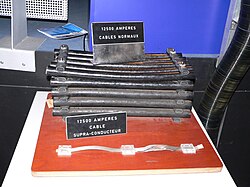
From the massive cables used in the Large Hadron Collider (LHC) to the preformed rods designed for the Superconducting Super Collider (SSC), these materials enable the creation of incredibly powerful electromagnets.

Summary of Superconductor Types
| Feature | Low-Temperature (LTS) | High-Temperature (HTS) |
|---|---|---|
| Critical Temp (Tc) | Typically < 30 K | Typically > 30 K (often > 77 K) |
| Primary Coolant | Liquid Helium | Liquid Nitrogen |
| Material Examples | Mercury, Niobium-Titanium | YBCO, BSCCO, Cuprates |
| Theoretical Basis | BCS Theory | Unconventional / Not fully clear |
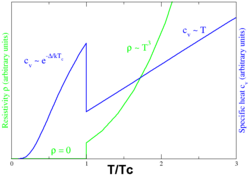
The transition into the superconducting state is also marked by a distinct change in physical properties, specifically in heat capacity and electrical resistivity.
Frequently Asked Questions
What is the difference between Type I and Type II superconductors?
Type I superconductors abruptly lose their superconductivity when exposed to a critical magnetic field. Type II superconductors are more robust; they allow some magnetic field penetration in the form of vortices, allowing them to remain superconducting in much higher magnetic fields.
Why is liquid nitrogen important for superconductivity?
Liquid nitrogen boils at 77 K. Materials that are superconducting above this temperature are much more practical to use because liquid nitrogen is significantly cheaper and easier to maintain than liquid helium, which is required for lower-temperature materials.
What is a SQUID?
A SQUID (Superconducting Quantum Interference Device) is an extremely sensitive magnetometer that uses the Josephson effect to measure tiny changes in magnetic flux, making it one of the most accurate measurement tools available.
Can superconductors work at room temperature?
While most superconductors require extreme cold, research continues into materials that can function at higher temperatures. Some conventional materials have shown superconductivity at 203 K, but only under immense pressures (90 GPa), which is not yet practical for everyday use.