Summer: The Science, Timing, and Cultural Traditions of the Warmest Season
Summer, or summertime, is the hottest and brightest of the four temperate seasons. Positioned between spring and autumn, it is characterized by the longest daylight hours and the shortest periods of darkness. This peak in solar radiation occurs around the summer solstice, the point at which the sun reaches its highest point in the sky. As the season progresses beyond the solstice, day length gradually decreases.
Because of the Earth's axial tilt, summer occurs at opposite times of the year depending on the hemisphere. When the Northern Hemisphere experiences summer, the Southern Hemisphere is in the midst of winter, and vice versa.
Key Facts
- Peak Daylight: The summer solstice marks the longest day of the year.
- Hemispheric Shift: Summer occurs from June to August in the North and December to February in the South.
- Meteorological Definition: Seasons are grouped by full calendar months for consistency in weather tracking.
- Seasonal Lag: The hottest temperatures often occur several weeks after the maximum solar radiation (insolation).
- Global Weather: Summer is associated with heat, but can also bring monsoons in Asia and tropical cyclones in the Atlantic and Pacific.
Defining the Start of Summer
The exact date summer begins varies based on whether one uses astronomical, meteorological, or cultural definitions.
Meteorological Reckoning
Meteorologists define summer by full calendar months to simplify climate data. In the Northern Hemisphere, this spans June, July, and August; in the Southern Hemisphere, it covers December, January, and February. This system is widely used in countries such as Japan, Russia, Denmark, Austria, Australia, and New Zealand, as well as by many in Canada and the UK.
Astronomical Reckoning
From an astronomical perspective, the solstice is often viewed as the midpoint of the season. However, many define astronomical summer as starting at the solstice (usually June 21 in the North and December 21 in the South) and ending at the autumn equinox.
Cultural and Traditional Reckoning
Cultural definitions vary wildly by region and history:
- Ancient Rome & Anglo-Saxon England: Summer traditionally began on May 9, with the solstice on June 24 serving as the midpoint.
- Celtic Traditions: In Gaelic Ireland, Scotland, and Wales, summer began with festivals like Bealtaine or Calan Haf on May 1.
- North America: In the US, summer is often culturally viewed as starting on Memorial Day weekend (late May) and ending on Labor Day (early September). Canada follows a similar pattern, often starting around Victoria Day.
- Asia: In Chinese astronomy, summer starts around May 5 (lìxià) and ends around August 7 (lìqiū). In Southern and Southeast Asia, summer is defined as the warmest period from March to June, ending with the onset of the monsoon.
Summer Weather and Natural Phenomena
While summer is synonymous with warmth, its weather patterns vary by climate zone. In Mediterranean regions, summer is typically dry. In contrast, Eastern Asia experiences heavy rains due to the monsoon—a seasonal shift in prevailing winds that brings significant precipitation.
Tropical Cyclones and Storms
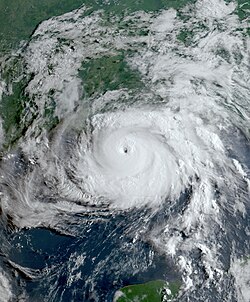
Summer is the primary period for tropical cyclone activity. In the North Atlantic, the season runs from June 1 to November 30, peaking around September 10. The Northwest Pacific sees activity year-round, peaking in early September. In the Southern Hemisphere, the season spans November through April, with peaks in February and March.
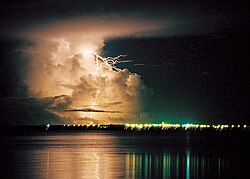
In North America, the summer months are also prime time for thunderstorms, which can produce hail, strong winds, and tornadoes, typically during the afternoon and evening.
Societal Impact: Holidays and Activities
The abundance of light and warmth significantly influences human behavior, economics, and education.
Education and Travel
Most global education systems implement a summer break. In the US, public schools typically end in late May and resume in mid-August. In the UK, schools end in mid-July and return in early September. In the Southern Hemisphere, summer breaks align with Christmas and New Year's Day.
Leisure and Economy
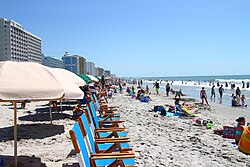
Summer is the peak season for the tourism, restaurant, and retail industries. Popular activities include beach trips, picnics, and a wide array of sports such as baseball, cricket, tennis, and volleyball. Water sports like surfing, swimming, and wakeboarding also peak. Notably, the Summer Olympics have been held every four years since 1896, though the "summer" timing depends on the host city's hemisphere.
| Definition | Northern Hemisphere | Southern Hemisphere |
|---|---|---|
| Meteorological | June 1 – August 31 | December 1 – February 28/29 |
| Astronomical | June 21 – September 22 | December 22 – March 21 |
| Solar (Celtic) | May 1 – July 31 | November 1 – January 31 |
Frequently Asked Questions
Why is the hottest part of summer not on the solstice?
This is due to a phenomenon called seasonal lag. Even though the solstice provides the maximum amount of solar radiation, it takes several weeks for the Earth's land and oceans to absorb and radiate that heat back into the atmosphere.
When does summer start in the Southern Hemisphere?
Meteorologically, summer in the Southern Hemisphere begins on December 1 and ends on the last day of February. Astronomically, it typically begins around December 21.
What is a monsoon?
A monsoon is a seasonal shift in prevailing winds that often brings a distinct wet season. In Southern and Southeast Asia, the onset of the monsoon rains typically marks the end of the summer season.
How do school summer breaks differ globally?
Breaks are timed to the local summer. In the Northern Hemisphere, they generally occur between June and September. In the Southern Hemisphere, they typically occur between December and February, coinciding with the Christmas and New Year holidays.