Seasons: The Science of Earth's Changing Cycles
A season is a division of the year defined by shifts in weather, ecology, and the duration of daylight in a specific region. On Earth, these cycles are not merely changes in temperature, but complex phenomena driven by our planet's relationship with the Sun. From the migration of animals to the dormancy of plants, seasons dictate the rhythm of life across the globe.
![The astronomical and meteorological periods of the four-seasons reckoning across the year at the Northern Hemisphere, displayed as segments of Earth's orbit. Astronomically a season encompasses the time between an equinox and solstice. Meteorologically seasons are quarters of the annual temperature cycle,[1] centered on the season characteristic temperatures, which trail equinox and solstice.](/images/ea/9f/ea9f934915460fb267d20691ca313839071c58b7c2903ced15efd660efaba41e.png)
Key Facts
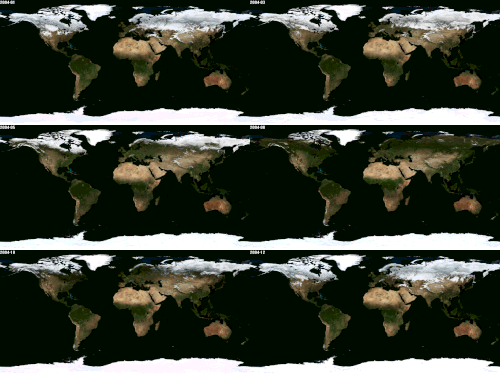
- Seasons are primarily caused by Earth's axial tilt and its orbit around the Sun.
- Axial parallelism ensures the direction of Earth's axis remains constant throughout its orbit.
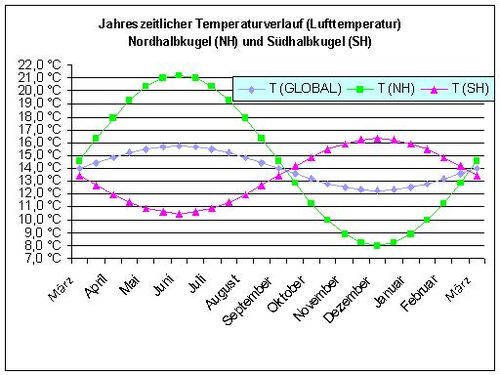
- The Northern and Southern Hemispheres experience opposite seasons.
- Seasonal lag causes the warmest months to occur after the solstices.
- Astronomical seasons are defined by equinoxes and solstices, while meteorological seasons are based on temperature and calendar months.
The Mechanics of Seasonal Change
Axial Parallelism and Tilt
The fundamental cause of our seasons is Earth's axial tilt. As Earth orbits the Sun, it maintains axial parallelism, meaning the axis remains pointed in the same direction in space. Because the axis is tilted approximately 23.5 degrees from the perpendicular to the ecliptic (the plane of the solar system), different parts of the planet receive varying amounts of sunlight at different times of the year.
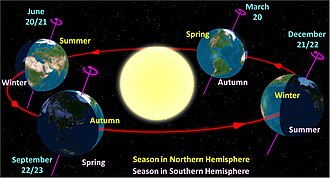
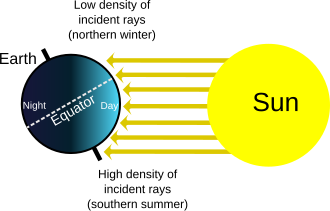
When a hemisphere is tilted toward the Sun, it experiences summer. During this time, the Sun appears higher in the sky, increasing the solar flux—the amount of solar energy reaching a given area. Conversely, when a hemisphere is tilted away, it experiences winter. This tilt also affects the angle of sunlight; when light falls at a shallow angle, it dissipates more in the atmosphere, leading to cooler temperatures.
The Elliptical Orbit and Solar Intensity
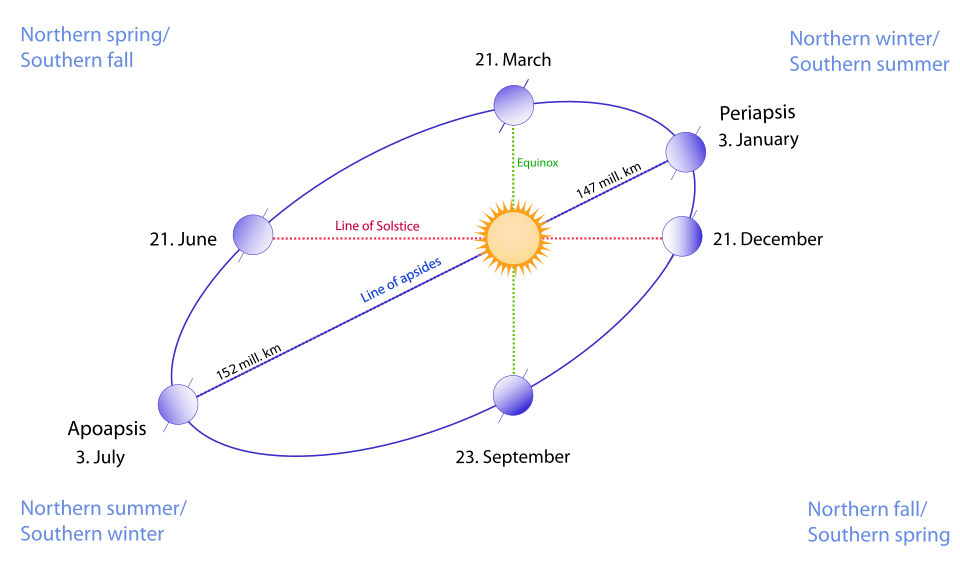
Earth's orbit around the Sun is not a perfect circle but an ellipse. This means the distance between the Earth and the Sun varies throughout the year. The point where Earth is closest to the Sun is called perihelion (occurring between January 2 and January 5), and the farthest point is aphelion (occurring between July 3 and July 6).
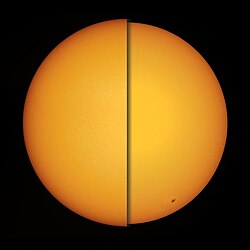
While there is a 7% difference in solar intensity between these two points, this distance does not dictate the seasons. Geographic factors and axial tilt are much more influential. In fact, the elliptical nature of the orbit means that astronomical seasons are not of equal length. For example, the time from the March equinox to the September equinox is about 7.56 days longer than the period from the September equinox to the March equinox.
Different Ways to Measure Seasons
Depending on whether you are a scientist, a meteorologist, or an ecologist, the definition of a "season" can change significantly.
Astronomical vs. Meteorological Reckoning
Astronomical seasons are defined by specific celestial events: the equinoxes (when day and night are roughly equal) and the solstices (the points of maximum or minimum sunlight). These dates shift slightly over long periods due to calendar adjustments.
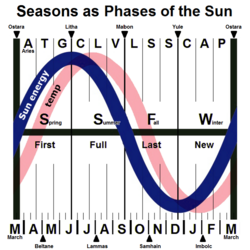
Meteorological seasons, however, are based on the temperature cycle and the Gregorian calendar. This system groups months into three-month blocks to simplify weather tracking. For the Northern Hemisphere, meteorological spring begins on March 1, summer on June 1, autumn on September 1, and winter on December 1.
Ecological and Regional Variations
In many parts of the world, seasons are defined by biological or environmental triggers rather than a calendar. Ecologists in temperate regions often use a six-season model: prevernal, vernal, estival, serotinal, autumnal, and hibernal.
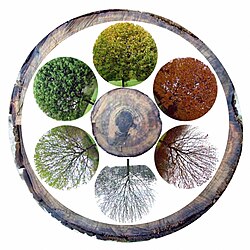
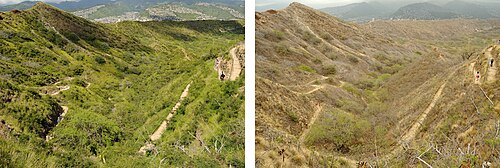
In tropical regions, the distinction is often between wet (monsoon) and dry seasons. Some cultures, such as those in ancient Egypt, historically defined seasons by environmental events, such as the annual flooding of the Nile.
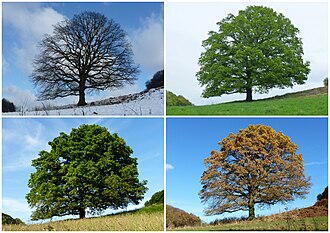
Cultural perspectives vary widely. The Hindu calendar utilizes a six-season system (such as Vasanta for spring and Grishma for summer), while the Noongar seasons of Australia are tied to life stages, such as the "season of the young" or the "fertility season.'

Summary of Seasonal Definitions
| System Type | Basis of Definition | Common Examples |
|---|---|---|
| Astronomical | Equinoxes and Solstices | Spring, Summer, Autumn, Winter |
| Meteorological | Temperature and Calendar Months | Three-month groupings (e.g., June-Aug) |
| Ecological | Biological/Environmental Events | Prevernal, Vernal, Estival, etc. |
| Tropical | Precipitation Patterns | Wet/Monsoon and Dry seasons |
Frequently Asked Questions
Why is summer not the hottest month if the solstice is the peak of sunlight?
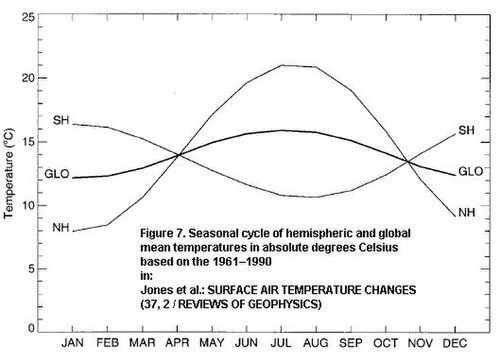
This is due to seasonal lag. The Earth's surface and oceans take time to absorb heat. Consequently, the warmest months (such as July and August in the Northern Hemisphere) occur after the summer solstice.
Do all places on Earth have four seasons?
No. While temperate and polar regions typically experience four seasons, tropical regions often only have wet and dry seasons, and polar regions experience extreme variations in daylight hours.
How does the Earth's orbit affect the seasons?
The elliptical orbit causes a slight variation in solar intensity, but the primary driver of seasons is the axial tilt. The orbit's eccentricity means astronomical seasons vary slightly in length.
What is the difference between an equinox and a solstice?
An equinox occurs when the Sun is directly above the equator, resulting in nearly equal day and night. A solstice occurs when the Sun reaches its highest or lowest point in the sky at noon, marking the longest or shortest day of the year.
Why do the seasons in the Southern Hemisphere start at different times?
Because the Earth is tilted, when the Northern Hemisphere is tilted toward the Sun (summer), the Southern Hemisphere is tilted away (winter). This creates a seasonal reversal between the two hemispheres.