Sumatran Orangutan
The Sumatran orangutan (Pongo abelii) is a highly intelligent great ape endemic to the northern reaches of Sumatra, Indonesia. Distinguished by their striking red hair and deep social bonds between mothers and offspring, these primates play a vital role in their rainforest ecosystem. However, they currently face a precarious future, classified as Critically Endangered on the IUCN Red List.
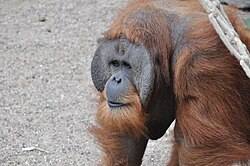
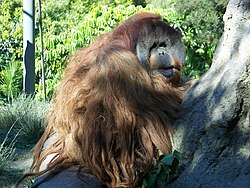
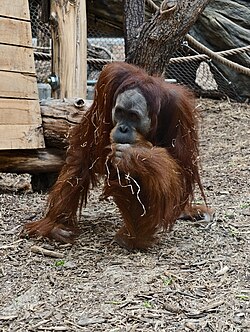
Compared to their Bornean cousins, Sumatran orangutans are generally thinner, possess longer faces, and have paler, longer red hair. Adult males are significantly larger than females, reaching heights of approximately 1.7 meters (5.6 ft) and weighing up to 90 kg (200 lb), while females average 90 cm (3.0 ft) and 45 kg (99 lb).
Key Facts
- Scientific Name: Pongo abelii
- Conservation Status: Critically Endangered (IUCN 3.1)
- Primary Habitat: Northern Sumatra, Indonesia
- Diet: Primarily frugivorous (fruit-eating)
- Lifespan: 44–53 years for females; 47–58 years for males
- Population: Estimated at approximately 13,846 to 14,613 individuals in the wild
Life Cycle and Development
The Sumatran orangutan progresses through five distinct life stages, each marked by specific physical and behavioral changes.
Infancy (Birth to 2.5 Years)
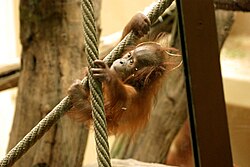
Infants weigh between 2 and 6 kg and are characterized by light-pigmented zones around the muzzle and eyes. They are entirely dependent on their mothers for food, travel, and sleep.
Juvenilehood (2.5 to 5 Years)
Weighing 6 to 15 kg, juveniles begin to explore their environment and play with peers, though they remain under the close supervision of their mothers. Toward the end of this stage, they start building their own nests.
Adolescence (5 to 8 Years)
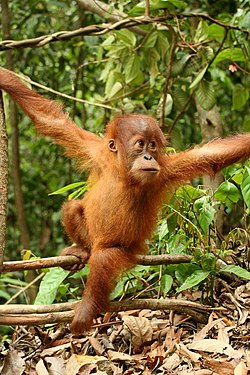
During this stage, orangutans weigh between 15 and 30 kg. The light facial patches disappear, leaving the face dark. While they maintain contact with their mothers, they form stronger social bonds with other young orangutans.
Sub-adulthood (8 to 15 Years)
Females are fully developed by age 8 and can begin having offspring. Males, however, enter sub-adulthood, weighing 30 to 50 kg. They begin developing cheek flanges (fleshy pads on the sides of the face) and beards, though they remain socially cautious around adult males.
Adulthood (15+ Years)
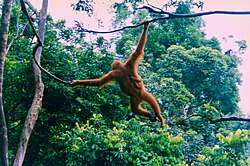
Adult males reach full sexual and social maturity between 13 and 15 years, weighing 50 to 90 kg. They possess fully developed cheek callosities and beards, and typically travel alone.
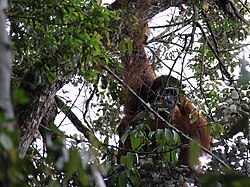
Diet and Foraging Behavior
Sumatran orangutans are primarily frugivores, meaning their diet consists mostly of fruit. They favor fleshy fruits with large seeds, such as durians, jackfruit, lychees, breadfruit, and figs. In the Ketambe area of Indonesia, studies have recorded them eating over 92 different types of fruit.
Beyond fruit, their diet includes:
- Insects: Particularly ants of the genus Camponotus.
- Vegetation: Various leaves, bark, top-sprouts, and orchid pseudo-bulbs.
- Miscellaneous: Small quantities of soil from termite mounds.
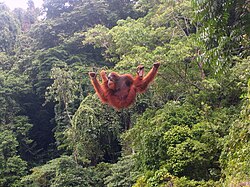
Occasional Meat Consumption
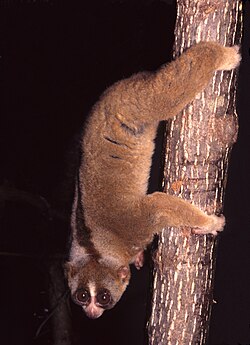
Meat-eating is rare and typically serves as a fallback strategy during seasonal fruit shortages (non-mast years). The most common prey is the slow loris, a nocturnal primate. This meat is generally only shared between mothers and their infants.
Conservation and Threats
The Sumatran orangutan is endemic to the north of Sumatra, with permanent populations primarily found in the Nanggroe Aceh Darussalam province and the Lake Toba forests, including Gunung Leuser National Park and the Bukit Lawang sanctuary.
The species faces severe threats from human activity, including:
- Deforestation: Legal and illegal logging.
- Agricultural Conversion: The wholesale conversion of forests into oil palm plantations.
- Habitat Fragmentation: The construction of roads that split populations.
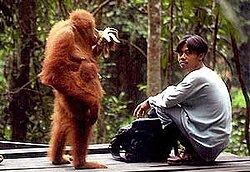
The Captivity Effect
To prevent extinction, organizations like the World Wide Fund for Nature (WWF) support captive breeding. However, this introduces the Captivity Effect, where animals provided with constant food and shelter may lose the natural behaviors and survival skills necessary to survive in the wild.
Summary Table: Sumatran Orangutan Profile
| Feature | Details |
|---|---|
| Scientific Classification | Genus: Pongo, Species: P. abelii |
| Average Male Weight | 50–90 kg |
| Average Female Weight | 45 kg |
| Genome Size | 3,441.24 Mb (24 pairs of chromosomes) |
| Primary Threats | Logging, Palm Oil Plantations, Road Fragmentation |
| Key Habitats | Gunung Leuser National Park, Bukit Lawang |
Frequently Asked Questions
What is the difference between Sumatran and Bornean orangutans?
Sumatran orangutans are generally thinner, have longer faces, and possess longer, paler red hair compared to the Bornean species.
Do Sumatran orangutans eat meat?
Yes, but rarely. They primarily eat fruit and insects, but will prey on slow lorises during periods of low fruit availability.
How long do Sumatran orangutans live in the wild?
Females typically live between 44 and 53 years, while males have a slightly longer lifespan of 47 to 58 years.
What is the "Captivity Effect"?
The Captivity Effect occurs when animals held in captivity for long periods lose their natural wild behaviors because their basic needs (food, water, shelter) are met without the challenges of the wild.
Where can Sumatran orangutans be found in the wild?
They are endemic to northern Sumatra, Indonesia, specifically in areas like the Nanggroe Aceh Darussalam province and Gunung Leuser National Park.