Stigma: The Essential Gateway for Plant Pollination
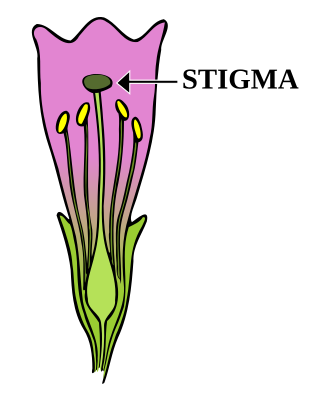
In the complex world of plant reproduction, the stigma serves as the critical entry point for fertilization. As the receptive tip of a carpel (the female reproductive unit of a flower), the stigma is designed to capture pollen and initiate the journey toward the ovary. Together with the style and the ovary, it forms the pistil, the central component of the gynoecium, which is the collective female reproductive organ of a plant.
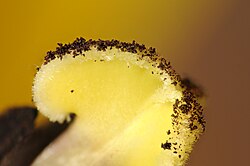
The stigma is composed of specialized cells called stigmatic papillae. These cells are specifically adapted to receive pollen grains, ensuring that the plant can successfully reproduce. Depending on the species and its method of pollination, the stigma may be limited to the very tip of the style or spread across a wider surface area to maximize the chances of capturing pollen.
Key Facts
- Function: Acts as the landing platform for pollen and facilitates its germination.
- Composition: Made of stigmatic papillae that are receptive to pollen grains.
- Pollination Methods: Captures pollen via wind (anemophily), animals/insects (biotic pollination), or water (hydrophily).
- Biological Role: Assists in pollen rehydration and discriminates against incorrect species or self-incompatible pollen.
- Structure: Forms the distal (top) portion of the style within the pistil system.
The Mechanics of Pollen Capture and Germination
Because pollen is typically highly desiccated (dried out) when it leaves the anther, the stigma plays a vital role in rehydration. Once a pollen grain adheres to the stigma, the organ promotes the germination of the pollen tube, which will eventually grow down toward the ovary.
To ensure efficiency, stigmas have evolved various physical adaptations to trap pollen, including sticky surfaces, hairs, flaps, or intricate sculpturings. Beyond physical capture, the stigma acts as a biological gatekeeper. It ensures the adhesion of the correct species and can trigger self-incompatibility reactions, which reject pollen from the same plant or genetically similar individuals to maintain genetic diversity.
Variations in Stigma Shape
The morphology of the stigma varies significantly across different plant species to suit their specific environmental needs:
- Capitate: Simple and shaped like the head of a pin.
- Trifid: Split into three distinct lobes.
- Punctiform: Coming to a sharp point.
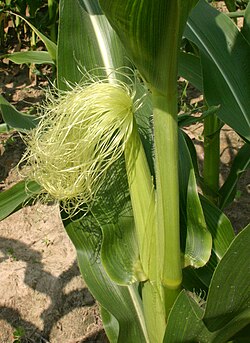
- Feathery: Often found in wind-pollinated species to increase surface area.

The Role of the Style
The style is the narrow extension that connects the stigma to the ovary. In some plants, the style is absent, leaving the stigma sessile (attached directly to the ovary). Styles are generally tube-like and can be categorized into two main types:
- Open Styles: These contain a central canal, often filled with mucilage, and have few or no cells in the center. These are common in most syncarpous monocots.
- Closed Styles: These are densely packed with cells and contain specialized secretory transmitting tissue that provides a nutrient-rich path for the growing pollen tube. These are common in grasses and many syncarpous eudicots.
In certain families, such as Iridaceae (irises), the style is highly specialized. It may divide into three petal-like branches known as tribrachiate structures. In these cases, the stigma is located as a rim or edge on the underside of the branch.
Summary of the Stigma-Style-Ovary System
| Component | Primary Function | Key Characteristics |
|---|---|---|
| Stigma | Pollen reception and germination | Sticky, feathery, or lobed; contains papillae. |
| Style | Support and pollen tube pathway | Can be open (mucilage-filled) or closed (solid tissue). |
| Ovary | Ovule protection and seed development | The base of the pistil where fertilization occurs. |
Frequently Asked Questions
What is the main purpose of the stigma?
The primary purpose of the stigma is to act as the receptive surface for pollen grains, facilitating their adhesion, rehydration, and subsequent germination to allow fertilization of the ovules in the ovary.
How does the stigma prevent self-pollination?
The stigma can engage in self-incompatibility reactions, where it recognizes and rejects pollen from the same plant or genetically similar plants, ensuring greater genetic variation in offspring.
What is the difference between an open and a closed style?
An open style has a central canal often filled with mucilage, whereas a closed style is solid and contains specialized secretory transmitting tissue that nourishes the growing pollen tube.
What are stigmatic papillae?
Stigmatic papillae are the specialized cells that make up the surface of the stigma, providing the necessary receptivity to capture and hold pollen grains.
What does it mean when a stigma is described as sessile?
A sessile stigma is one that lacks a style, meaning the receptive tip is attached directly to the ovary.