Statehood and Governance: The Evolution of Political Entities
A state is a political entity that regulates a population within a defined territory. In common parlance, the state is often referred to as the country itself, encompassing various administrative divisions. While the terms are frequently used interchangeably, a distinction exists between the state and the government: the government acts as the apparatus, representative, or instrument through which the state operates.
Historically, the structure of states has varied. Some operate as unitary states, where central authority is supreme. Others exist as federal unions, where the term "state" may refer to the federated polities (such as provinces or regions) that compose the union. These sub-entities may possess some attributes of sovereignty but remain subordinate to the federal government and typically lack the capacity to act independently on the international stage.

Key Facts
- Origin: The earliest states emerged approximately 5,500 years ago.
- Evolution: Societies transitioned from prehistoric statelessness to centralized governments due to urban growth, climate factors, and territorial competition.
- Core Functions: States primarily handle internal order, military defense, infrastructure, and economic redistribution.
- Modernity: The modern state is characterized by fixed boundaries, a monopoly on violence, and institutions separate from other social structures.
The Mechanics of State Function
To understand how a state operates, political scientists often break down its activities into specific functional categories. These processes allow a state to maintain control and provide services to its population.
Core Operational Activities
- War making: The process of neutralizing or eliminating external rivals.
- State making: The elimination or neutralization of rivals within the state's own territory.
- Protection: Neutralizing enemies of the state's clients.
- Extraction: Acquiring the resources necessary to fund war making, state making, and protection.
- Adjudication: The authoritative settlement of disputes among the population.
- Distribution: Intervening in how goods are allocated among members of society.
- Production: Controlling the creation and transformation of goods and services.
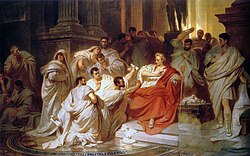
Comparing Empires and Modern States
Scholar Josep Colomer identified several critical distinctions between the historical empire and the modern state. While both exercise power, their methods and structures differ significantly.
| Feature | Empires | Modern States |
|---|---|---|
| Size | Vast, often spanning continents | Generally smaller and more consolidated |
| Boundaries | Fluid or non-permanent | Fixed and permanent |
| Jurisdiction | Multi-level and overlapping | Monopolistic and homogenized |
| Control | Variable across territories | Unprecedented social and economic control |
| Violence | Distributed power | Monopolized means of violence |
The Evolution of Statehood
For the vast majority of human prehistory, people lived in stateless societies. The shift toward statehood was not immediate but evolved through several stages of social stratification and institutional development.
From Prehistory to the Modern Era
The growth of cities, often driven by economic development and climate, necessitated more complex organization. Insecurity and territorial competition further spurred the centralization of power. This progression moved from the Neolithic period through Ancient Eurasia and Classical antiquity, eventually leading to the feudal state and finally the modern state.
The modern state is distinguished by its ability to establish ruling institutions that are separate from other social or religious institutions, allowing for more efficient administration and a stronger grip on the means of coercion.
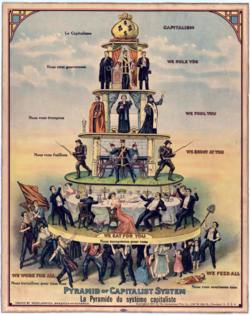
Theoretical Perspectives on the State
Different political philosophies interpret the purpose and legitimacy of the state in contrasting ways:
- Anarchist and Anarcho-capitalist: These perspectives generally view the state as unnecessary or harmful, advocating for the removal of centralized coercive power.
- Marxist: This view often sees the state as an instrument of class struggle and a tool for the ruling class to maintain economic dominance.
- Pluralism: This theory suggests that the state is a neutral arena where various interest groups compete and negotiate for influence.
- Legitimacy Theories: Historically, some states relied on the divine right of kings to justify their authority, while modern states typically rely on legal-rational frameworks.
Frequently Asked Questions
What is the difference between a state and a government?
The state is the permanent political entity and territory, while the government is the temporary apparatus or set of people who exercise the state's authority at a given time.
What are the primary symbols of a state?
Common state symbols include the national flag, coat of arms or national emblem, official seals or stamps, a national motto, national colors, and a national anthem.
How did the first states form?
The earliest states appeared about 5,500 years ago, emerging as societies became more stratified and developed centralized institutions to manage urban growth and territorial competition.
What defines a "modern state" compared to an empire?
A modern state is characterized by fixed boundaries, a monopoly on the legitimate use of violence, and specialized ruling institutions that are separate from other social structures.
What is state failure?
State failure occurs when a political entity can no longer perform its basic functions, such as maintaining internal order, providing security, or managing basic infrastructure.