Nationalism: Ideology, History, and Global Impact
Nationalism is a powerful political ideology and movement centered on the belief that a nation—a group of people sharing common characteristics—should be congruent with the state, the political entity that governs them. At its core, nationalism seeks to ensure that a nation possesses sovereignty, or the power to govern itself, over its perceived homeland. This pursuit of self-determination aims to create a nation-state where the nation is the sole rightful source of political power.
To foster this sense of unity, nationalism works to build and maintain a single national identity. This identity is often constructed through a combination of shared social characteristics, including culture, ethnicity, language, religion, traditions, and a belief in a shared history. By promoting national solidarity, these movements aim to protect the interests of their people from outside interference.
Key Facts
![Senator Johan Vilhelm Snellman (1806–1881) was one of the most influential Fennomans and Finnish nationalists in the 19th century.[64][65][66][67][68]](/images/a6/3c/a63c9d77ddd7129b543fad8316f53df1c37144b35e781c8843213279f4d9233a.jpg)
- Core Objective: To achieve sovereignty and self-governance for a specific nation.
- Primary Goal: The creation and maintenance of a nation-state.
- Foundational Elements: Shared culture, language, ethnicity, religion, and history.
- Main Divergent Forms: Ethnic nationalism and civic nationalism.
- Dual Nature: Can serve as a tool for freedom and justice or as a cause for conflict and division.
The Diverse Forms of Nationalism

Because the definition of a "nation" varies, nationalism manifests in many different ways. While scholars often debate the distinction, two primary forms are frequently discussed:
Civic and Ethnic Nationalism
Civic nationalism is generally based on shared political principles and citizenship within a state, whereas ethnic nationalism defines the nation through shared heritage, such as common ancestry or language. While this dichotomy is widely used, many historians argue it can oversimplify the complex realities of different historical contexts.

Specialized Ideologies
Nationalism is not a monolith; it can be combined with various political goals. It may align with conservatism (seen in national conservatism and right-wing populism) or socialism (known as left-wing nationalism). Other specialized forms include:
- Anti-colonial nationalism: Movements seeking independence from colonial rule.
- Economic nationalism: Prioritizing domestic industries and economic self-sufficiency.
- Irredentism: The desire to annex territory perceived as belonging to the nation.
- Nativism: Prioritizing the interests of established inhabitants over immigrants.
Historical Evolution and Global Context

The history of nationalism is deeply intertwined with the modern era, seeing significant surges during the 19th and 20th centuries. It has been a driving force behind various independence movements and revolutions across the globe.
The 19th Century: Revolutions and Identity
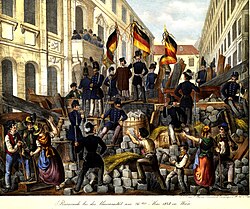
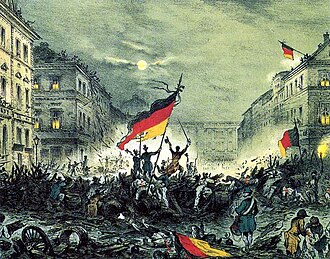
The 1800s saw a rise in nationalist fervor across Europe and Latin America. In Europe, the 1848 revolutions were fueled by both nationalist and liberal pressures. In Greece, the War of Independence began in 1821 as a rebellion against the Ottoman Empire. Meanwhile, in Latin America, leaders sought to establish new sovereign states following colonial rule.



The 20th Century: Conflict and Decolonization
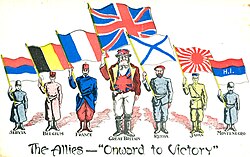
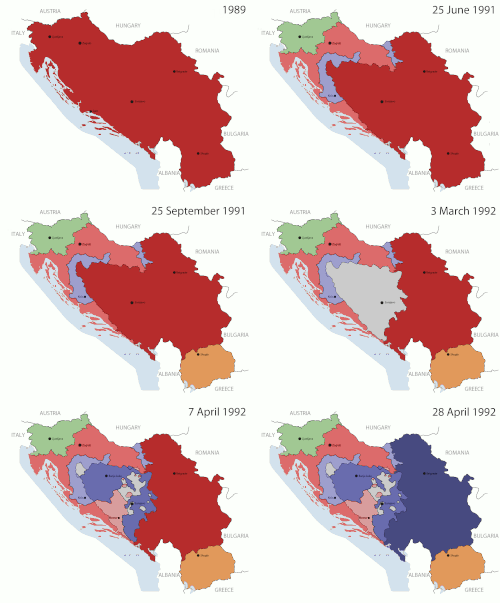
In the 20th century, nationalism played a complex role. It was a central factor in both World Wars and was used by various regimes to justify territorial expansion or the suppression of minorities. Conversely, it was also the engine of anti-colonialism, as nations in Africa and Asia fought for liberation from European powers.

![Adolf Hitler being welcomed by a crowd in Sudetenland, where the pro-Nazi Sudeten German Party gained 88% of ethnic-German votes in May 1938[91]](/images/53/02/53022098ef90ebf1400d4ddf6efe15e9b26162a9704ce75ae27627fdfb11f764.jpg)


Modern Manifestations
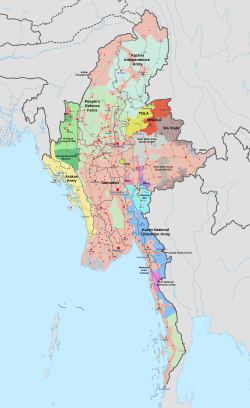
In the 21st century, nationalism continues to shape global politics, appearing in debates over sovereignty, migration, and international cooperation. It remains a subject of intense study in political science and sociology.





Summary of Nationalism Characteristics
| Concept | Description |
|---|---|
| Sovereignty | The right of a nation to govern itself without outside interference. |
| Nation-State | A political unit where the state boundaries coincide with the nation. |
| Civic Nationalism | Identity based on shared political values and citizenship. |
| Ethnic Nationalism | Identity based on shared heritage, such as language or ancestry. |
| Self-Determination | The process by which a group of people forms their own state. |
Frequently Asked Questions

What is the difference between nationalism and patriotism?
While often used interchangeably, they are distinct. Nationalism is an ideology focused on the interests of the nation and its sovereignty, whereas patriotism is generally defined as a sense of pride or devotion to one's country.
Can nationalism be a positive force?
Yes. Nationalism has historically been a driver for freedom, justice, and cultural revival, encouraging pride in national achievements and helping oppressed groups seek independence.
How can nationalism be negative?
Nationalism can be used to justify the suppression of minorities, undermine human rights, and fuel ethnic or religious divisions. It has also been a cited cause of major global conflicts, including the World Wars.
What is the difference between civic and ethnic nationalism?
Civic nationalism is inclusive of anyone who adheres to the state's political principles and laws. Ethnic nationalism is more exclusive, defining membership through shared heritage, such as ethnicity, language, or religion.
What is a nation-state?
A nation-state is a sovereign state whose citizens or subjects are relatively homogeneous in terms of ethnicity or culture, meaning the political boundaries of the state match the cultural boundaries of the nation.