State Schools: Global Systems of Public Education
A state school, also known as a public or government school, is an educational institution funded in whole or in part by taxation and operated by the government. These institutions are designed to provide universal public education, typically covering kindergarten, primary, and secondary levels for children aged 4 to 18. While the core goal of providing accessible education is global, the structures, curricula, and funding models vary significantly across different countries.
While state schools are the primary vehicle for public education, alternatives such as homeschooling, private schools, and charter schools provide different educational pathways depending on the region.
Key Facts
- Funding: State schools are primarily funded through government taxation.
- Scope: They generally cover primary and secondary education for students aged 4 to 18.
- Global Variation: Systems range from highly centralized (France) to more decentralized or privatized models (Australia).
- Compulsory Nature: Most state systems mandate attendance for a specific range of years to ensure basic literacy and numeracy.
Educational Structures in the Americas
United States
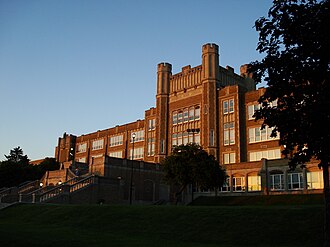
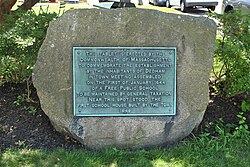
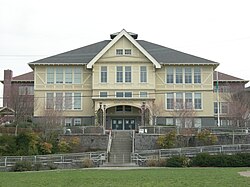
In the United States, public education is typically divided into three stages: elementary school (kindergarten to 5th or 6th grade), middle school (5th, 6th, or 7th grade to 8th or 9th grade), and high school (9th or 10th to 12th grade). Some districts utilize a K-8 format, allowing students to attend only two schools throughout their K-12 journey, while rural areas may still maintain a single K-12 building.
Canada and Latin America
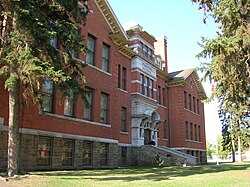
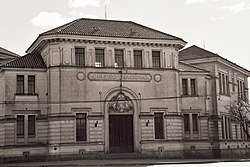
Public education is widely available across Canada and Latin America, providing the foundational framework for youth development in these regions.
Public Education Across Asia
South Korea
Education in South Korean public schools (grades 1-12) is compulsory, excluding kindergarten. The Ministry of Education centrally manages administration, funding, teacher certification, and the development of standardized textbooks. South Korea's commitment to education is reflected in its spending, which was 4.2% of its GDP in 2000, ranking it eighth in the world according to the 2007 United Nations Education Index.
Other Asian Systems
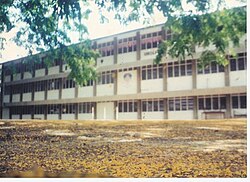
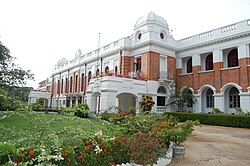
Countries such as Indonesia divide education into pendidikan dasar (primary), pendidikan menengah (secondary), and perguruan tinggi (tertiary). Other nations with established state systems include Bangladesh, China, Hong Kong, India, Japan, Malaysia, the Philippines, and Sri Lanka.
European State School Models
England and Scotland
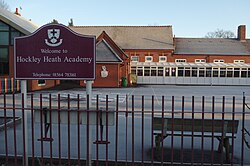
In England, approximately one-third of state-funded schools are faith schools, primarily affiliated with the Church of England or the Roman Catholic Church. Most secondary students (about 90%) attend comprehensive schools—institutions that do not select students based on academic achievement, offering a broad curriculum including vocational and practical subjects.
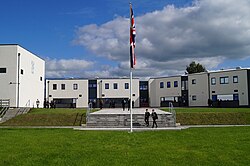
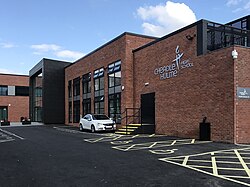
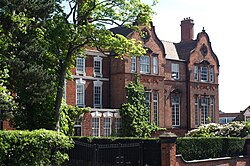
Scotland has a long history of state-administered education, with compulsory schooling for ages 5 to 13 established in 1872. Today, pupils typically start secondary school at age 11 or 12, with a compulsory four-year period followed by two optional years. The "Curriculum for Excellence," introduced in 2012/2013, has modernized assessment and qualifications.
![Pediment above entrance showing name of Mearns Street Public School in Greenock, Scotland, listed in 1881 for science instruction[26]](/images/ea/9e/ea9e22126d2357ebbfd3f9d9384a539395ad12f25142d9ef3512e54ab628719b.jpg)
France, Germany, and Italy
France employs a highly centralized system divided into primary, secondary, and tertiary education. Secondary education is further split between the collège (first four years) and the lycée (final three years).
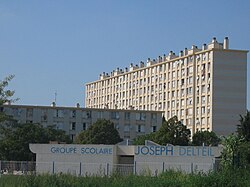
Germany's system includes the Realschule, which typically leads to the Mittlere Reife qualification by the 10th grade.
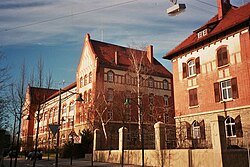
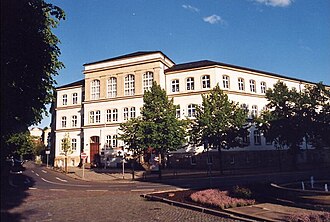
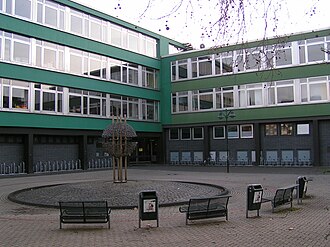
Italy's state system dates back to 1859. It is divided into primary (including non-compulsory nursery), secondary (first grade 11-14; second grade 14-19), and higher education.
Northern Europe
Denmark's folkeskoler (people's schools) provide tax-funded education from pre-school through a 9-year obligatory course and a voluntary 11th year for pupils aged 6 to 17.
Sweden utilizes a letter-based grading system (A-F) with national exams in grades 3, 6, and 9. Students who do not pass core subjects like Swedish, English, or mathematics must attend an introductory program before entering a standard three-year high school (gymnasium) program.
Oceania: Australia and New Zealand
Australia
Australian government schools are free for citizens and permanent residents. They are categorized as either open schools (based on catchment areas) or selective schools (based on academic merit). Australia has one of the world's most privatized systems, with over 40% of secondary students attending private schools, well above the OECD average of 18%.
New Zealand
Education is a right in New Zealand, free until the end of the year following a student's 19th birthday. While compulsory between ages 6 and 16, most children start at age 5. The system often includes an intermediate school (Years 7 and 8) to bridge the gap between primary and secondary education.
Summary of Global State School Characteristics
| Region/Country | Key Feature | Compulsory Age/Stage | Funding Model |
|---|---|---|---|
| United States | K-8 and K-12 variations | Kindergarten to Grade 12 | Tax-funded |
| South Korea | Highly centralized Ministry control | Grades 1-12 | Government funded |
| England | High prevalence of Comprehensive schools | Primary and Secondary | State-funded |
| Denmark | Folkeskoler system | Ages 6 to 17 | Tax-based/Municipal |
| Australia | Open vs. Selective schools | Primary and Secondary | Free for citizens |
| New Zealand | Intermediate school bridge | Ages 6 to 16 | Government provided |
Frequently Asked Questions
What is the difference between a comprehensive school and a selective school?
Comprehensive schools admit students regardless of academic achievement or aptitude, providing a broad curriculum to all. Selective schools restrict admission based on specific criteria, such as academic performance or merit.
How does the French secondary school system work?
French secondary education is divided into two distinct stages: the collège, which covers the first four years after primary school, and the lycée, which covers the subsequent three years.
What are faith schools in the English state system?
Faith schools are state-funded institutions affiliated with religious groups. The majority are linked to the Church of England or the Roman Catholic Church, though there are also Jewish, Muslim, Sikh, and Hindu faith schools.
Is public education free in Australia and New Zealand?
Yes, government schools in Australia are free for citizens and permanent residents. In New Zealand, education is provided as a right and is freely available up to the end of the calendar year following a student's 19th birthday.
What is the "folkeskole" in Denmark?
The folkeskole, meaning "people's school," is the Danish public primary school system. It covers the entire period of compulsory education, including a pre-school class and a 9-year obligatory course.