Articles/State of Aleppo: The French Mandate and the Division of Syria
State of AleppoFrench Mandate of SyriaGeneral Henri GouraudSyrian FederationInterwar period
State of Aleppo: The French Mandate and the Division of Syria
State of Aleppo The State of Aleppo (French: État d'Alep; Arabic: Dawlat Ḥalab) was a short-lived political entity established during the interwar period. Existing from 1920 to 1925, it w...
State of Aleppo
The State of Aleppo (French: État d'Alep; Arabic: Dawlat Ḥalab) was a short-lived political entity established during the interwar period. Existing from 1920 to 1925, it was one of six states created by General Henri Gouraud, the French High Commissioner of the Levant, following the San Remo conference and the collapse of King Faisal I's Arab monarchy in Syria.
This division was part of the broader French Mandate of Syria, a system designed to manage the region after the fall of the Ottoman Empire. Alongside Aleppo, the French established the State of Damascus, the Alawite State, the State of Jabal Druze, the Sanjak of Alexandretta, and the State of Greater Lebanon.
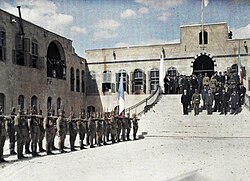
Government seat, 1921: Government seat, 1921
Key Facts
Duration: 1920–1925.
Capital: Aleppo.
Languages: Arabic, French, Kurdish, and Turkish.
Establishment: Declared on September 1, 1920, by General Henri Gouraud.
Demographics: A Sunni Muslim majority with significant Christian, Alawite, and Jewish minorities.
End of State: Incorporated into the State of Syria on January 1, 1925.
The Strategy of Division
The creation of the State of Aleppo was a calculated political move by General Gouraud to make Syria easier to control. By dividing the territory into smaller states, France aimed to prevent the emergence of a unified Syrian nationalist movement. This strategy became more pronounced after the Battle of Maysaloun, which increased French hostility toward a united Syria.
Gouraud sought to exploit the traditional rivalry between Aleppo and Damascus. Because residents of Aleppo were dissatisfied that Damascus had been chosen as the capital of the new Syrian nation, the French made Aleppo the capital of its own wealthy state. To ensure this state remained attractive and resistant to reunification with Damascus, France granted it control over the most fertile agricultural lands, including the Euphrates basin, and provided sea access via the autonomous Sanjak of Alexandretta.
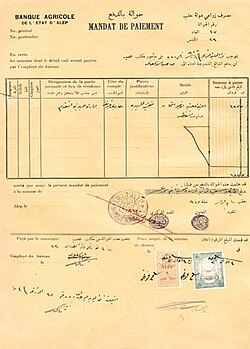
Official document carrying the name and the stamps of the State of Aleppo: Official document carrying the name and the stamps of the State of Aleppo
Population and Diversity
The State of Aleppo was characterized by its immense ethnic and religious diversity. While Sunni Muslims formed the majority, the eastern regions were home to significant Kurdish populations. The state also hosted various ethnicities that had relocated during the Ottoman era, including Circassians, Albanians, Bosnians, Bulgars, Turks, Kabardins, and Chechens.
The region was also a center for religious pluralism. Significant Shia Muslim communities resided in towns such as Nebbol, Fu'a, Az Zahra', Kefrayya, and Maarrat Misrin. Furthermore, Aleppo city boasted one of the most diverse Christian communities in the Orient, including Armenian Apostolic, Greek Catholic, and Syriac Orthodox congregations. In fact, Aleppo had the largest Christian community in the Middle East outside of Lebanon.
General Distribution of Population (1921-22 French Census)
Religion
Inhabitants
Percentage
Sunni
502,000
83.1%
Christians
52,000
8.6%
Alawis
30,000
5%
Jews
7,000
1.2%
Foreigners
3,000
0.5%
Total
604,000
100%
Governance and Administration
The state was led by a Governor General, supported by French delegates. Despite French intentions, local resistance forced the administration to include a Council of Directors to assist in governance. This council managed key portfolios such as Interior, Justice, Commerce, Agriculture, and Finance.
Governor Generals
Kamil Pasha al-Qudsi (1920–1922)
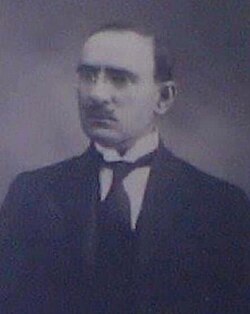
Mustafa Bey Barmada (1923–1924) Mustafa Bey Barmada, Governor General of the State of Aleppo, 1923: Mustafa Bey Barmada, Governor General of the State of Aleppo, 1923
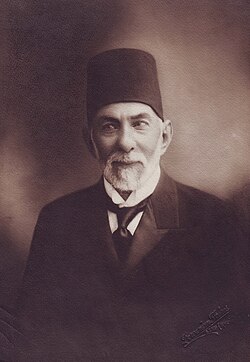
Mar'i Pasha Al Mallah (1924–1925) Mar'i Pasha Al Mallah, Governor General of the State of Aleppo, 1924: Mar'i Pasha Al Mallah, Governor General of the State of Aleppo, 1924
The legislative branch was the Representative Council, which was largely composed of pro-French members, including figures such as Subhi Barakat and the mayor of Aleppo, Ghaleb Bey Ibrahim Pasha.
Resistance and the Hananu Revolt
Not all residents accepted the French Mandate. Ibrahim Hananu, a native of Aleppo and member of the Syrian National Congress, led an armed insurgency against French rule. Supported by Mustafa Kemal Atatürk, the Turkish nationalist leader, Hananu's revolt continued until his arrest in 1921. In a notable legal turn, an Aleppo court found him not guilty, a verdict likely influenced by the large crowds of supporters outside the courthouse.
Hananu later transitioned to political opposition and played a critical role in 1926 in ensuring Aleppo did not secede from the newly established State of Syria.
The Path to Unification
The political landscape shifted on June 28, 1922, when General Gouraud created the Syrian Federation, which merged the states of Damascus, Aleppo, and the Alawite State. Although the Alawite State later separated again in 1924, the movement toward centralization continued.
On January 1, 1925, the Syrian Federation was incorporated into the State of Syria. With this unification, the State of Aleppo lost its autonomy and became a provincial dependency of Damascus. Mar'i Pasha Al Mallah, the final Governor General, was transitioned to the role of provincial governor (vali). The colonial flag of the State of Aleppo remained in use for a few more weeks, finally being abolished on January 25, 1925.
Frequently Asked Questions
Why did France create the State of Aleppo?
France created the state to make Syria easier to control by dividing it into smaller, competing entities. By granting Aleppo wealth and autonomy, they hoped to discourage it from reuniting with Damascus.
Who was Ibrahim Hananu?
Ibrahim Hananu was a nationalist leader from Aleppo who led an armed insurgency against the French Mandate from 1919 until 1921, later becoming a key political figure in Syrian unification.
What was the demographic makeup of the state?
The population was predominantly Sunni Muslim (83.1%), but it was highly diverse, including significant Christian (8.6%), Alawite (5%), and Jewish (1.2%) communities, as well as various ethnic minorities like Kurds and Circassians.
How did the State of Aleppo end?
The state ended on January 1, 1925, when it was incorporated into the centralized State of Syria, transforming from an autonomous state into a province governed from Damascus.
What was the role of the Sanjak of Alexandretta?
The Sanjak of Alexandretta was an autonomous region included within the State of Aleppo, providing the state with essential access to the sea.