Stars and Stripes: The History of the US Military Newspaper
For over a century and a half, Stars and Stripes has served as a vital link between the United States military and the soldiers serving in the field. From its humble beginnings during the American Civil War to its role as a global news source during the World Wars, the publication has documented the lived experience of service members while launching the careers of some of America's most influential journalists.
The Origins of a Military Tradition
The roots of the publication date back to November 9, 1861, during the American Civil War. While stationed in Bloomfield, Missouri, soldiers from the 11th, 18th, and 29th Illinois Regiments discovered an empty local newspaper office. Seizing the opportunity, they began printing their own news to document their activities, naming the venture the Stars and Stripes. This tradition is still honored today by the Stars and Stripes Museum/Library Association located in Bloomfield.
World War I: A Breeding Ground for Journalism
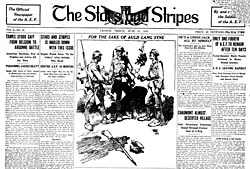
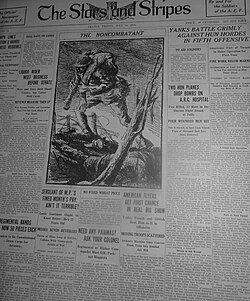
During the First World War, the publication was officially produced by the American Expeditionary Forces (AEF) from February 8, 1918, to June 13, 1919. At the time, it was an eight-page weekly that reached a peak circulation of 526,000 readers. The staff consisted of a mix of veteran reporters and young soldiers who operated under improvisational conditions in France to ensure news reached the troops.
The paper became a launchpad for legendary media figures. Editor Harold Ross went on to found The New Yorker magazine, while art director Cyrus Baldridge became a renowned illustrator and stage designer. Other notable contributors included sports editor Grantland Rice and drama critic Alexander Woollcott, whose essays were later compiled in the 1919 book The Command Is Forward.
World War II: Global Reach and Iconic Voices
As the United States entered World War II, Stars and Stripes expanded into dozens of editions across multiple operating theaters. To ensure the most current information reached the front lines, some editions were printed in close proximity to active combat zones. During this era, the paper also published the G.I. Stories, a comprehensive 53-book series.
The publication featured some of the most respected names in journalism. Ernie Pyle, the Pulitzer Prize-winning war correspondent, was a regular contributor until his death during the Battle of Okinawa on Iejima. Editorial cartoonist Bill Mauldin gained fame through his "Up Front" cartoons, later winning two Pulitzer Prizes. Interestingly, the paper also featured early photographs of Norma Jeane Dougherty, who would later become Marilyn Monroe and was named "Miss Cheesecake 1952" by the publication.
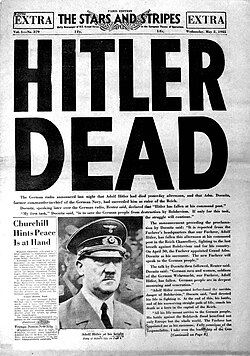
In a notable post-war transition, the Rome edition of the paper closed in 1945, with its printing press transferred to the Rome Daily American via an arrangement facilitated by the CIA.
The Modern Era and Digital Challenges
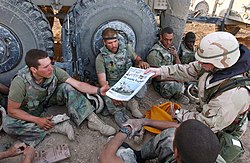
In the 21st century, the rise of digital media and federal budget constraints have challenged the publication's sustainability. Despite the prevalence of the internet, print editions remain critical for service members forward-deployed in areas without reliable connectivity. The paper focuses on geopolitics, base life, and essential information regarding pay and benefits.
The publication has faced significant financial instability due to federal budget sequestration (automatic spending cuts to keep government spending within statutory limits). In 2020, the Department of Defense proposed a budget shift that would have eliminated the paper's $15 million annual subsidy—roughly 0.002 percent of the $721.5 billion defense budget. While an order to shutter the paper by September 30, 2020, was issued, it was ultimately rescinded following a tweet from President Donald Trump and pressure from a bipartisan group of senators.
Recent Editorial Shifts
Recent years have seen increased tension regarding editorial independence. In early 2026, reports emerged that job applicants were being asked partisan questions. Subsequently, the Pentagon announced an overhaul of editorial policies to remove "woke distractions" and ordered the paper to stop publishing most content from wire services like Reuters and the Associated Press to ensure content remained "consistent with good order and discipline," a term derived from the Uniform Code of Military Justice.
Key Facts
- Founded: November 9, 1861, by Illinois Regiments in Bloomfield, Missouri.
- WWI Peak: Reached 526,000 readers as an eight-page weekly.
- Notable Alumni: Harold Ross (The New Yorker) and Bill Mauldin (Pulitzer Prize winner).
- WWII Contribution: Published the 53-book G.I. Stories series.
- Funding: Receives a federal subsidy of over $15 million annually.
- Modern Role: Provides critical news to troops in areas without internet access.
| Era | Key Focus/Event | Notable Figure/Outcome |
|---|---|---|
| Civil War | Origin in Bloomfield, MO | 11th, 18th, and 29th Illinois Regiments |
| World War I | AEF Publication (1918-1919) | Harold Ross & Cyrus Baldridge |
| World War II | Global theater editions | Ernie Pyle & Bill Mauldin |
| Modern Era | Digital transition & budget cuts | Department of Defense funding |
Frequently Asked Questions
How did Stars and Stripes begin?
It began during the Civil War in 1861 when soldiers from the 11th, 18th, and 29th Illinois Regiments used an empty newspaper office in Bloomfield, Missouri, to print news about their activities.
Who are some of the famous journalists associated with the paper?
Notable figures include Harold Ross, who founded The New Yorker; Pulitzer Prize winner Ernie Pyle; and editorial cartoonist Bill Mauldin.
Why is the print version still necessary in the digital age?
Print newspapers are essential for service members deployed in remote areas where reliable internet access is unavailable.
What is the current funding status of the publication?
The paper receives a federal subsidy of more than $15 million per year, which covers approximately half of its operating budget.
What recent changes have been made to its editorial policy?
The Pentagon has recently moved to refocus content away from certain social topics and restricted the use of external wire services like the Associated Press and Reuters to maintain military discipline.