Major Non-NATO Allies: US Strategic Defense Partnerships
The United States maintains a complex network of global security relationships that extend beyond its formal membership in the North Atlantic Treaty Organization (NATO). To facilitate deep military and strategic cooperation with key partners worldwide, the U.S. utilizes a specific legal designation known as Major Non-NATO Ally (MNNA). This status allows the U.S. to provide significant defense benefits and technology sharing to nations that are critical to its security interests but are not members of the NATO alliance.
Established to bridge the gap between formal treaty allies and general partners, the MNNA designation streamlines the acquisition of defense equipment and fosters joint research and development. While it provides substantial military and economic privileges, it is important to note that MNNA status does not entail a mutual security commitment or a guarantee of military defense by the United States.
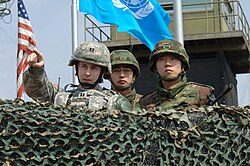
Key Facts
- Founded: 1987 via the Sam Nunn Amendment to Title 10 of the U.S. Code.
- Current Scope: 22 states hold the designation, including de facto status for Taiwan.
- Primary Purpose: To enable cooperative research, development, and priority access to military equipment.
- Legal Basis: Governed by Title 10 and Title 22 of the U.S. Code.
- Distinction: Unlike NATO membership, MNNA status does not include a formal security guarantee.
The Evolution of MNNA Status
The framework for MNNAs began in 1987 when Congress passed the Sam Nunn Amendment. This legislation allowed the Secretary of Defense, with the concurrence of the Secretary of State, to enter into cooperative research and development agreements with non-NATO allies. The first five nations to receive this status were Australia, Egypt, Israel, Japan, and South Korea.
In 1996, the benefits were expanded through the addition of section 2321k to Title 22 of the U.S. Code. This amendment granted MNNAs many of the same exemptions from the Arms Export Control Act that NATO members enjoy. It also streamlined the process, authorizing the President to designate a country as an MNNA after notifying Congress thirty days in advance. New Zealand was added to the list during this period, marking a recovery in bilateral relations following the 1984 breakdown of the ANZUS Treaty over nuclear ship entry.

Strategic Designations and Regional Impact
The U.S. has used the MNNA designation to respond to shifting geopolitical landscapes and reward strategic cooperation.
Asia-Pacific and the Americas
In the Asia-Pacific, the U.S. has strengthened ties with the Philippines and Thailand. Taiwan was granted de facto MNNA status in 2003 following the Foreign Relations Authorization Act for FY 2003. In the Americas, Brazil (2019), Colombia (2022), and Peru (2026) have been designated to bolster regional security cooperation.
The Middle East and Africa
The Gulf region is heavily represented, with Bahrain, Kuwait, and Qatar holding the status. Qatar's designation in 2022 was specifically cited by President Joe Biden as recognition for its assistance during the 2021 U.S. withdrawal from Afghanistan. Saudi Arabia's 2026 designation was accompanied by a pledge to increase U.S. investments to $1 trillion and the confirmed sale of F-35 fighter jets. In Africa, Tunisia (2015) and Kenya (2024) have been designated, with Kenya's status recognizing its leadership in the intervention in Haiti.
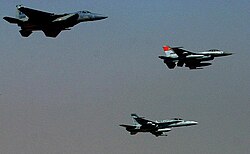
Benefits of MNNA Designation
Countries designated as MNNAs gain access to a suite of military and financial advantages designed to increase interoperability with U.S. forces.
- Research and Development: Eligibility for shared-cost cooperative R&D projects with the Department of Defense (DoD).
- Equipment Access: Priority delivery of military surplus and the ability to possess DoD-owned War Reserve Stocks outside U.S. bases.
- Advanced Weaponry: Permission to purchase depleted uranium anti-tank rounds.
- Financial and Logistics: Access to American financing for leasing or purchasing defense equipment and reciprocal training opportunities.
- Technology: Expedited export processing for space technology and participation in specific counterterrorism initiatives.
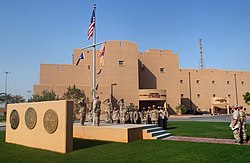
Special Designations: India as a Major Defense Partner
While many nations are MNNAs, India holds a unique status as a Major Defense Partner. Established in 2016 and later codified by the John S. McCain National Defense Authorization Act for FY 2019, this status is intended to facilitate defense trade and technology sharing on par with the U.S.'s closest allies.
This partnership is supported by several foundational agreements, including the Logistics Exchange Memorandum of Agreement (2016), the Communications Compatibility and Security Agreement (2018), and the Basic Exchange and Cooperation Agreement (2020), which focuses on intelligence sharing and interoperability.
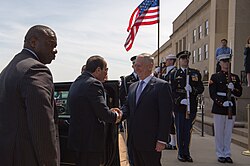
Summary of MNNA Designations
| President | Countries Designated | Year(s) |
|---|---|---|
| Ronald Reagan | Australia, Egypt, Israel, Japan, South Korea | 1987 |
| Bill Clinton | New Zealand, Jordan, Argentina | 1996–1998 |
| George W. Bush | Bahrain, Philippines, Taiwan (de facto), Thailand, Kuwait, Morocco, Pakistan | 2002–2004 |
| Barack Obama | Tunisia | 2015 |
| Donald Trump (1st Term) | Brazil | 2019 |
| Joe Biden | Colombia, Qatar, Kenya | 2022–2024 |
| Donald Trump (2nd Term) | Saudi Arabia, Peru | 2026 |

Frequently Asked Questions
Does MNNA status mean the U.S. will defend that country in a war?
No. Unlike NATO membership, the MNNA designation provides military and economic privileges but does not include a formal security commitment or mutual defense guarantee.
What is the difference between an MNNA and a Major Defense Partner?
MNNA is a broad legal status providing specific benefits under U.S. law. The Major Defense Partner status is a unique designation created specifically for India to allow for advanced technology sharing and defense trade tailored to that specific strategic relationship.
Can a country lose its MNNA status?
Yes. The U.S. government can rescind the designation. For example, Afghanistan's status as a major non-NATO ally was rescinded in 2022.
Why was Taiwan designated as a "de facto" MNNA?
Taiwan was required to be treated as an MNNA by the Foreign Relations Authorization Act for FY 2003. The "de facto" label reflects the complex diplomatic nature of the U.S.-Taiwan relationship while still granting the practical benefits of the status.
What are the primary benefits for a country becoming an MNNA?
The primary benefits include priority delivery of military surplus, access to U.S. Department of Defense cooperative research projects, and exemptions from certain restrictions in the Arms Export Control Act.