Department of Defense: History, Structure, and Organizational Overview
The Department of Defense (DoD) serves as the executive department responsible for coordinating and supervising all agencies and functions of the government relating directly to national security and the United States military. Headquartered at the iconic Pentagon in Arlington County, Virginia, the department manages one of the largest workforces and budgets in the world.

Key Facts
- Established: September 18, 1947 (originally as the National Military Establishment).
- Headquarters: The Pentagon, Arlington County, Virginia.
- Total Personnel: Approximately 2,845,386 (as of June 30, 2024).
- FY2024 Budget: $842 billion.
- Primary Mission: Managing U.S. federal military operations and national security.
Historical Evolution
The modern structure of the American military was fundamentally reshaped by the National Security Act of 1947. Signed by President Harry S. Truman, this legislation unified the Army and Navy into a single organization known as the National Military Establishment (NME). This act also established the National Security Council, the National Security Resources Board, the United States Air Force, and the Joint Chiefs of Staff.
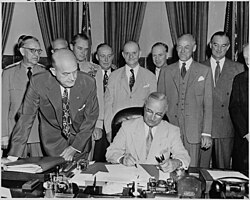
On August 10, 1949, an amendment to the original law renamed the NME to the Department of Defense. This change occurred as the department absorbed three cabinet-level military departments. Historically, the transition from the NME was influenced by the phonetic similarity between the acronym "NME" and the word "enemy." While "Department of Defense" remains the statutory name, recent executive orders have authorized the use of "Department of War" as a secondary name.
Organizational Structure and Leadership
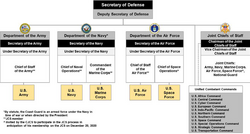
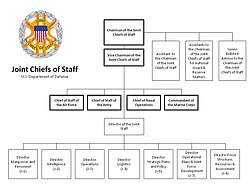
The Department of Defense is a massive hierarchy designed to manage diverse military and intelligence functions. At the top of the civilian leadership is the Secretary of Defense, supported by the Deputy Secretary of Defense. The military leadership is represented by the Joint Chiefs of Staff, which includes a Chairman and a Vice Chairman.
Military Departments and Services
The DoD oversees three primary military departments, which are responsible for organizing, training, and equipping forces:
- Department of the Army
- Department of the Navy
- Department of the Air Force
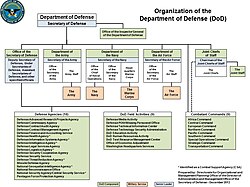
Unified Combatant Commands
To manage global operations, the DoD utilizes Unified Combatant Commands. These are geographically or functionally oriented commands that allow for coordinated military action. Examples include:
- USNORTHCOM: U.S. Northern Command
- USCENTCOM: U.S. Central Command
- USEUCOM: U.S. European Command
- USINDOPACCOM: U.S. Pacific Command
- USCYBERCOM: U.S. Cyber Command
- USSPACECOM: U.S. Space Command
Defense Agencies and Intelligence
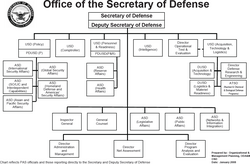
Beyond the main military branches, the DoD manages numerous specialized agencies. These include the Office of the Secretary of Defense (OSD) parent agencies, such as the Defense Advanced Research Projects Agency (DARPA) and the Defense Logistics Agency (DLA). Additionally, the department oversees critical national intelligence agencies like the National Security Agency (NSA) and the Defense Intelligence Agency (DIA).
Financial Overview
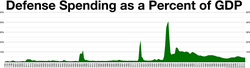
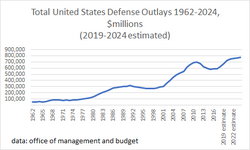
The DoD budget is a significant component of the United States federal budget. For Fiscal Year 2024, the budget was set at $842 billion. Understanding the scale of these expenditures requires looking at both discretionary spending (authorized by the annual National Defense Authorization Act) and mandatory spending.
| Category | Details / Figures |
|---|---|
| Active Duty Military | 1,294,191 |
| Civilian Employees | 789,594 |
| National Guard and Reserve | 761,601 |
| Total Personnel (June 2024) | 2,845,386 |
| FY2024 Annual Budget | $842 Billion |
Frequently Asked Questions
What was the predecessor to the Department of Defense?
The Department of Defense evolved from the National Military Establishment (NME), which was created in 1947 to unify the previously independent Department of War and Department of the Navy.
Where is the Department of Defense located?
The headquarters of the Department of Defense is located at the Pentagon in Arlington County, Virginia.
What is the role of the Joint Chiefs of Staff?
The Joint Chiefs of Staff serve as the highest-ranking military officers in the United States, providing professional military advice to the President, the Secretary of Defense, and the National Security Council.
How many people work for the DoD?
As of June 30, 2024, the total workforce includes approximately 2,845,386 individuals, comprising active duty military, civilians, and National Guard/reserve members.
What is the difference between military departments and military services?
Military departments are administrative entities (like the Department of the Army) that oversee the organization and equipping of the military services (the actual branches of service used in operations).