Ministry of Defence: Structure, Evolution, and Governance
A Ministry of Defence (or Department of Defense) serves as the primary government entity responsible for managing a nation's military forces and overall security strategy. In states where the government is organized into specialized ministries or departments, this body acts as the central authority for national defense matters.
Typically, a Ministry of Defence oversees all branches of the military. Depending on the nation's political structure, the organization is led by a defence minister or a secretary of defense. These roles vary significantly across different countries; some ministers focus primarily on administrative duties such as budget management and the procurement of equipment, while others are deeply integrated into the operational military chain of command.
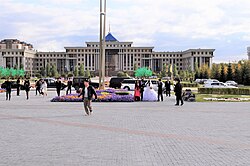
Key Facts
- Responsible for the administration of a state's military forces and defense matters.
- Usually encompasses all military branches under one governmental umbrella.
- Led by a defence minister or secretary of defense.
- Responsibilities range from financial procurement to operational command.
- Modern structures evolved from separate "ministries of war" following World War II.
The Historical Evolution of Defense Departments
The way governments organize their military oversight has shifted dramatically over time. Historically, these entities were known as a Ministry of War or Department of War. However, these early departments generally lacked comprehensive authority, often governing only the land army.
Before World War II, it was common for different military branches to operate under separate administrative bodies. For instance, the navy and air force—if they existed as distinct branches—usually had their own independent departments. This fragmented system persisted well into the mid-20th century; the Soviet Union, for example, maintained a separate "ministry of war" and "ministry of the navy" as late as 1953.
Post-War Consolidation
The aftermath of World War II triggered a global trend toward consolidation. Governments began renaming and merging their separate military departments to better coordinate land, air, and sea operations. This shift led to the creation of the unified Ministries of Defence seen in most modern states today, ensuring a more synchronized approach to national security.
Comparison of Defense Governance
| Feature | Historical Model (Pre-WWII) | Modern Model (Post-WWII) |
|---|---|---|
| Common Name | Ministry of War / Department of War | Ministry of Defence / Department of Defense |
| Scope of Authority | Often limited to the Army | Consolidated (Army, Navy, Air Force) |
| Organizational Structure | Separate departments per branch | Unified governmental department |
| Primary Focus | Branch-specific management | Coordinated national defense strategy |
Frequently Asked Questions
What is the primary role of a Ministry of Defence?
The primary role is to manage a government's military forces and handle all matters related to national defence.
Who typically leads a Department of Defense?
These departments are usually controlled by a defence minister or a secretary of defense.
How does the role of a defence minister differ between countries?
In some countries, the minister is limited to managing the budget and equipment procurement, while in others, they are an active part of the operational military chain of command.
Why were these departments previously called "Ministries of War"?
Historically, these departments were called Ministries of War because they generally only had authority over the army, rather than all military branches.
When did the trend toward unified defense ministries begin?
The tendency to consolidate separate land, air, and navy departments into a single Ministry of Defence arose after World War II.