Squid: Biology, Evolution, and the Giants of the Deep
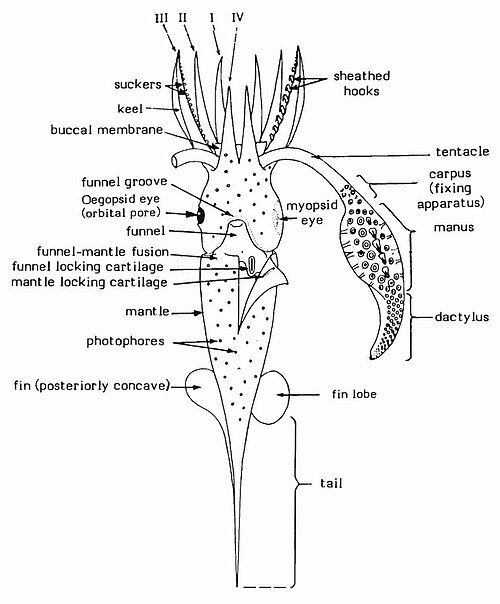
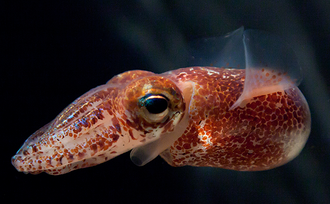
Squid are highly intelligent marine mollusks belonging to the class Cephalopoda. Known for their agility, complex nervous systems, and remarkable ability to blend into their surroundings, these creatures occupy a vital role in the ocean's food web. From the tiny pygmy squid to the legendary colossal squid, these invertebrates exhibit a diverse range of adaptations that allow them to thrive from shallow reefs to the crushing depths of the Southern Ocean.
Taxonomically, squid are classified under the superorder Decapodiformes, characterized by having ten limbs. Their evolutionary history is marked by a transition from ancestral forms to the modern species we see today, with fossil records such as Loligosepia aalensis from the Lower Jurassic providing a glimpse into their ancient past.
Key Facts
- Size Range: Varies from the pygmy squid (10–18 mm mantle length) to the giant squid (up to 13 m).
- Largest Invertebrate: The colossal squid (Mesonychoteuthis hamiltoni) can reach 10 m in length.
- Camouflage: Use specialized skin cells called chromatophores to change color.
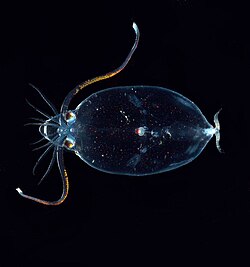
- Buoyancy: Some species, like glass squids, use ammonium ions in their coelom (body cavity) to float.
- Dietary Role: A primary food source for sperm whales and elephant seals.
Anatomy and Specialized Adaptations
Camouflage and Defense
One of the most striking features of the squid is its ability to change color and pattern almost instantaneously. This is achieved through chromatophores, controllable pigment-containing cells in the skin. This capability is used for social interaction, courtship, and hiding from predators.
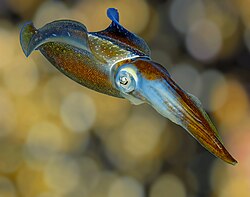
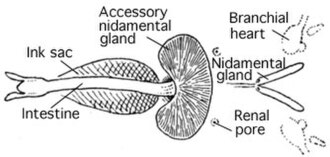
When threatened, many squid release a cloud of ink to distract predators, providing a window for escape. This ink is produced in a specialized ink sac, a feature preserved even in some Jurassic fossils.

Sensory Systems and Intelligence
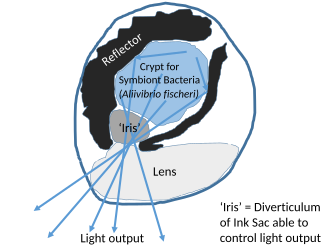
Squid possess advanced nervous systems and highly developed eyes. In deep-sea species, eyes can grow to the size of footballs to detect the faintest light in the midnight zone. Some species, like the Hawaiian bobtail squid, maintain a symbiotic relationship with Aliivibrio fischeri bacteria to produce light, helping them blend in with moonlight from above.
Locomotion and Buoyancy
Squid move primarily through jet propulsion, expelling water through a siphon. For stability and slow movement, they undulate their fins. To maintain position in the water column without wasting energy, different species have evolved various buoyancy mechanisms, including the use of ammonium ions.
Reproduction and Development
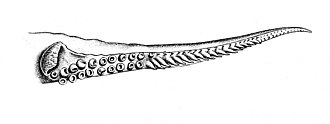
Squid reproduction involves complex behaviors and specialized anatomy. Males often possess a hectocotylus, a modified arm used to transfer spermatophores (packets of sperm) to the female.
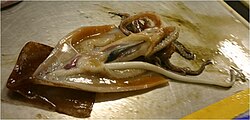
After fertilization, females lay eggs, which are then guarded or left to develop until the larvae hatch as paralarvae.
The Giants of the Ocean
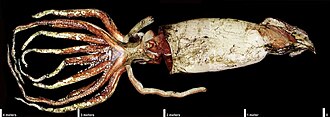
While most squid are under 60 cm, the deep ocean hosts true behemoths. The giant squid is famous for its massive size, but the colossal squid is considered the largest invertebrate by mass. A documented specimen from New Zealand weighed 495 kg and measured approximately 10 m.
Ecology and Human Interaction
Diet and Predators
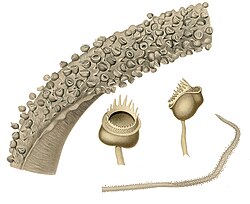
Squid are opportunistic predators, using their tentacles and sharp beaks to capture prey. Some deep-sea species, like Mastigoteuthis, have whip-like tentacles that act like flypaper to catch small organisms.
Conversely, they are a staple for large marine mammals. Research on elephant seals in South Georgia revealed that 96% of their stomach contents by weight were squid. Sperm whales are known to consume 700 to 800 squid in a single day.
Commercial Importance and Food Safety
Squid are a major global fishery resource. In 2002, squid accounted for over 75% of the total cephalopod catch, totaling more than 2.1 million tonnes.
| Common Name | Species | Catch (Tonnes) | Percentage |
|---|---|---|---|
| Argentine shortfin squid | Illex argentinus | 511,087 | 23.3% |
| Japanese flying squid | Todarodes pacificus | 504,438 | 23.0% |
| Humboldt squid | Dosidicus gigas | 406,356 | 18.6% |
| Common squid nei | Loliginidae | 225,958 | 10.3% |
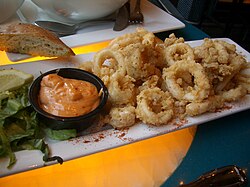
When consumed as food, such as in fried calamari, it is essential to ensure the meat is cooked to at least 60°C (140°F) or frozen at -20°C (-4°F) for 24 hours to eliminate parasites that can cause nausea, fever, and abdominal pain.
Biomimicry and Culture
The unique biology of the squid has inspired human technology. The Schmitt trigger, an electronic circuit used to remove noise from analog inputs, mimics the firing mechanism of the squid's giant axon.

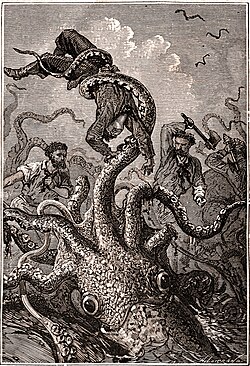
Squid have also captured the human imagination in literature, most notably as the sea monsters in Jules Verne's Twenty Thousand Leagues Under the Seas.
Frequently Asked Questions
What is the difference between a giant squid and a colossal squid?
While both are massive, the colossal squid (Mesonychoteuthis hamiltoni) is generally considered the largest invertebrate by mass, with documented weights reaching 495 kg, whereas the giant squid is known for its extreme length, potentially reaching 13 m.
How do squid change their color?
Squid use specialized cells called chromatophores. These are pigment-filled sacs that can be expanded or contracted via muscular control, allowing the squid to change its skin pattern and color almost instantly.
Are squid dangerous to eat?
Squid are safe to eat if prepared correctly. However, raw or undercooked squid can carry parasites. To prevent infection, squid should be cooked to at least 60°C (140°F) or frozen at -20°C (-4°F) for at least 24 hours.
How do glass squids stay buoyant?
Glass squids (family Cranchiidae) possess a large, transparent body cavity called a coelom. This cavity is filled with ammonium ions, which are lighter than seawater, providing the squid with neutral buoyancy.
What is a hectocotylus?
A hectocotylus is a specialized arm found in male squids that has been adapted for the purpose of transferring spermatophores to the female during mating.