Spongivores: The Specialized Predators of Sea Sponges
In the diverse ecosystems of our oceans and freshwater rivers, a unique group of animals known as spongivores has evolved. A spongivore is any animal anatomically and physiologically adapted to consume animals of the phylum Porifera—commonly known as sea sponges—as the primary component of its diet. Because sponges are often tough, chemically defended, or hidden in tight spaces, these predators have developed remarkable specializations to survive and thrive.
Key Facts
- Specialized Diet: Spongivores rely on sponges as their main food source, with some species deriving up to 96% of their diet from them.
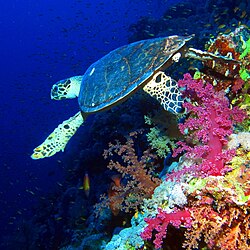
- Physical Adaptations: Predators like the hawksbill turtle possess narrow, bird-like beaks to extract sponges from reef crevices.
- Chemical Warfare: Spongivores have evolved the ability to process secondary metabolites (toxic compounds) produced by sponges.
- Ecological Role: Spongivory influences bioerosion, reef stability, and the critical nitrogen cycle in marine environments.
Diverse Examples of Spongivores
Marine Vertebrates and Invertebrates
The hawksbill turtle is the only known spongivorous reptile and one of the few vertebrates that primarily eat sponges. In Caribbean populations, sponges can make up 95% of their diet. Their sharp beaks are essential for reaching sponges tucked away in coral reefs.
Several species of coral reef fish also specialize in this diet, including the emperor angelfish (Pomacanthus imperator), the spotted trunkfish (Lactophrys bicaudalis), and the planehead filefish (Stephanolepis hispidus). The rock beauty (Holocanthus tricolor) is particularly specialized, with sponges constituting 96% of its food intake. Additionally, certain species of nudibranchs (soft-bodied marine gastropod mollusks) feed selectively on specific sponge species.
Freshwater Specialists: Spongillaflies
Spongivory is not limited to the ocean. Spongillaflies (Neuroptera, Sisyridae) consist of about 60 species that feed on freshwater sponges, typically of the genus Spongilla, as well as freshwater bryozoans. The larvae use elongated mouthparts to pierce the host's body and suck out the cell contents. Depending on the species, larvae may cling to the sponge's surface or hide within its internal cavities before leaving the water to pupate in cocoons under rocks or tree bark.
The Evolutionary Arms Race: Offense and Defense
Spongivore Offense Strategies
To overcome the formidable defenses of sponges, spongivores employ three primary strategies:
- Color-Based Selection: Some predators use a trial-and-error method, biting a small sample of a sponge. If it is harmless, they continue eating that sponge and seek out others of the same color.
- Chemical Tolerance: Spongivores have adapted physiologically to handle secondary metabolites—organic compounds produced by sponges to deter predators—allowing them to eat various species without being poisoned.
- Cognitive Memory: Advanced brain development allows these animals to remember which sponge species are safe to eat, ensuring efficient foraging in the future.
Sponge Defense Mechanisms
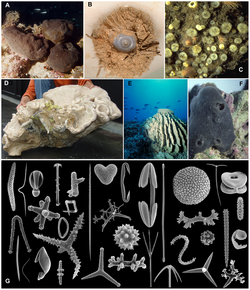
Sponges utilize structural and chemical traits to increase their fitness and survival against predation. One of the most effective structural defenses is the production of spicules, which are small, needle-like skeletal elements. When combined with organic chemical compounds, spicules significantly reduce the likelihood of a sponge being eaten.
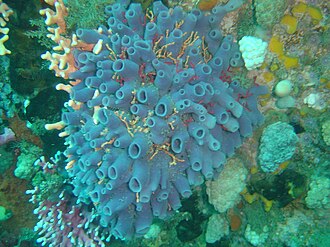
Many sponges also employ aposematism, which is the use of conspicuous signals (such as bright colors) to warn predators that they are toxic. Predators learn that bright colors often correlate with poison, leading them to avoid attacking these signaled individuals. However, this advantage is lost in the deep sea, where most colors are not visible.
Ecological Impact of Spongivory
Sponges are vital to benthic fauna (organisms living on the ocean floor) across polar, tropical, and temperate habitats. The balance of predation by spongivores affects several environmental processes:
- Bioerosion and Reef Creation: Sponges process solid carbonate into fine sediments, contributing to reef sediments. In the Caribbean, they help increase the survival of live coral by binding fragments together, which aids in carbonate accretion.
- Structural Stability: Reefs with higher sponge populations often have better survival rates. Sponges act as stabilizers during storms, keeping reefs intact against strong currents and providing protected habitats for other organisms.
- The Nitrogen Cycle: Sponges play a crucial role in recycling nitrogen. They transform dissolved organic matter into forms that can be used by other organisms, such as cyanobacteria. These bacteria then fix atmospheric nitrogen, which the sponges can use in return.
| Category | Key Examples/Mechanisms | Primary Function/Impact |
|---|---|---|
| Predators | Hawksbill turtle, Spongillaflies, Angelfish | Control sponge populations; nutrient cycling |
| Sponge Defenses | Spicules, Secondary Metabolites, Aposematism | Deter predation; increase survival fitness |
| Environmental Role | Bioerosion, Nitrogen Cycling | Reef stability and nutrient availability |
Frequently Asked Questions
What is a spongivore?
A spongivore is an animal that has evolved specific anatomical and physiological adaptations to eat sponges (phylum Porifera) as the main part of its diet.
How do sponges protect themselves from being eaten?
Sponges use a combination of structural defenses, such as needle-like spicules, and chemical defenses, such as toxic secondary metabolites and warning colors (aposematism).
Why are sponges important for coral reefs?
Sponges stabilize reefs during storms, provide habitats for other species, contribute to the production of reef sediments through bioerosion, and help cycle nitrogen for other reef organisms.
Which reptile is known to be a spongivore?
The hawksbill turtle is the only known spongivorous reptile, using its narrow, bird-like beak to feed on sponges in reef crevices.
Do spongivores exist in freshwater?
Yes, spongillaflies are a lineage of about 60 species that specialize in feeding on freshwater sponges and bryozoans.