Trace Fossils: Reading the Biological Activity of Ancient Life
While traditional fossils preserve the physical remains of a creature, trace fossils—also known as ichnofossils—capture the moments of their lives. Derived from the Ancient Greek word íkhnos (meaning trace or track), these fossils are records of biological activity rather than the preserved bodies of the organisms themselves. By studying these marks, scientists in the field of ichnology can reconstruct the behavior, movement, and environments of prehistoric life.
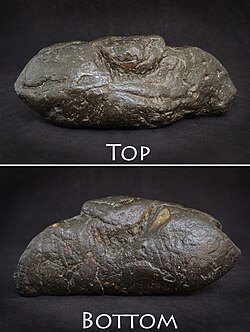
Unlike body fossils, which consist of mineralized bones, shells, or tissues, trace fossils include footprints, burrows, feeding marks, and coprolites (fossilized feces). They provide a unique window into paleobiology, allowing researchers to see how an animal interacted with its world in real-time.
Key Facts
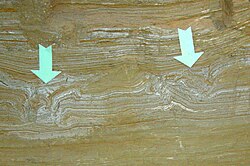
- Definition: Geological records of biological activity (tracks, burrows, borings) rather than body parts.
- Earliest Evidence: Complex traces dating back 2,000 to 1,800 million years are attributed to amoebae.
- Ediacaran Transition: Widely accepted animal burrowing began around 567.3 million years ago.
- Diversity: Ranges from microscopic borings to termite mounds spanning several square kilometers.
- Scientific Value: Used for stratigraphic correlation and determining paleoenvironments.
Classification of Trace Fossils
Ichnologists categorize trace fossils based on the type of behavior they represent. This classification helps in understanding the ecological role of the organism.
Feeding and Resting Traces
- Pascichnia: Feeding traces left by grazers on a mineral substrate or soft sediment surface.
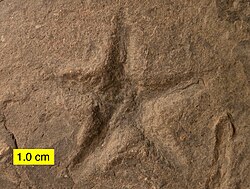
- Cubichnia: Resting traces, which are impressions left by an organism resting on soft sediment.
Notable Examples Across Eras
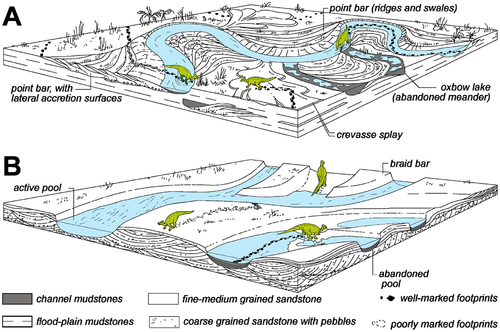
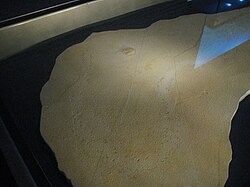
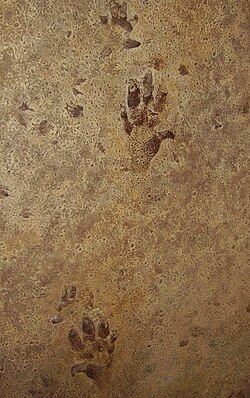
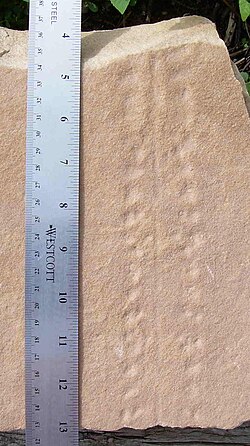
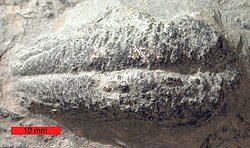
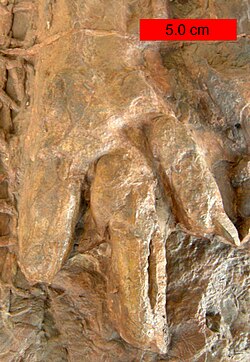
From the early Cambrian period, intertidal settings have yielded traces such as Protichnites and Climactichnites. In the Mesozoic era, dinosaur footprints are common, featuring ichnogenera like Grallator, Atreipus, and Anomoepus.
The Evolution of Biological Traces
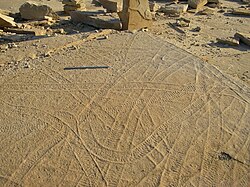
The history of trace fossils reveals the gradual evolution of animal complexity. The earliest complex traces (1,800–2,000 million years ago) were likely created by amoebae. While some claim burrows exist from 1,100 million years ago, these are often disputed due to irregular widths and tapering ends.
The Ediacaran period (approximately 567.3 million years ago) marks a turning point. Early traces were primarily horizontal, suggesting simple behaviors like random walks by bilateran animals seeking protection or food. However, vertical burrows known as Skolithos also appear from this era, possibly created by filter feeders.
Some Ediacaran fossils are found directly associated with body fossils. For example, Yorgia and Dickinsonia are often found at the end of pathways that match their body shape, suggesting they fed using cilia on their ventral side. Similarly, Kimberella is associated with scratch marks likely made by a radula (a scraping organ).
Common Ichnogenera and Notable Finds
Certain types of trace fossils are so widespread that they serve as important markers for geologists.
Planolites and Skolithos
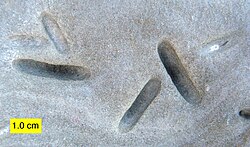
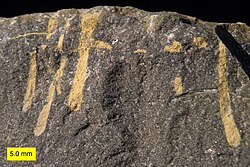
Planolites are small (1–5mm), unlined, elongate burrows found throughout the Ediacaran and Phanerozoic eons. Skolithos are straight, vertical tubes that can reach 30 cm in length and 2–4 cm in diameter. A famous example is the "Pipe Rock" of northwest Scotland, where these tubes are densely packed.
Diverse Biological Records
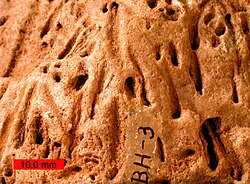
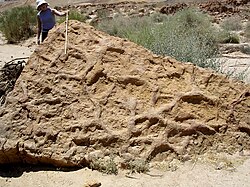
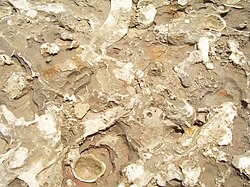
Trace fossils are not limited to footprints and burrows. They include bioerosion (the erosion of hard substrates by living organisms), such as Petroxestes and Trypanites borings in hardgrounds. Other examples include Thalassinoides and Ophiomorpha, which are complex burrow systems produced by crustaceans.
Summary of Trace Fossil Types
| Category | Description | Example Ichnogenera |
|---|---|---|
| Footprints/Tracks | Surface impressions of locomotion | Eubrontes, Grallator |
| Burrows | Tunnels created within sediment | Skolithos, Planolites |
| Borings | Holes drilled into hard substrates | Trypanites, Petroxestes |
| Feeding Traces | Patterns left while grazing | Pascichnia |
| Resting Traces | Impressions from stationary organisms | Cubichnia, Rusophycus |
Frequently Asked Questions
What is the difference between a body fossil and a trace fossil?
A body fossil is the preserved remains of the organism's actual physical structure, such as a bone or shell. A trace fossil is a record of the organism's activity, such as a footprint, a burrow, or fossilized waste.
Can we always tell which animal made a trace fossil?
Not always. While some traces are clearly linked to specific animals (like dinosaur footprints), many burrows or trails are assigned to an "ichnogenus" because the exact species that created them cannot be identified.
What can trace fossils tell us about the environment?
They provide clues about the paleoenvironment, such as whether an area was a shallow marine setting, an intertidal zone, or dry land, based on the type of sediment and the nature of the traces (e.g., vertical burrows often indicate high-energy sandy environments).
How old are the oldest known trace fossils?
The earliest complex trace fossils date back to 2,000 to 1,800 million years ago, though these are believed to have been created by single-celled amoebae rather than complex animals.
What is a coprolite?
A coprolite is a type of trace fossil consisting of fossilized feces. These are valuable because they provide direct evidence of an ancient organism's diet and digestive system.