Sperm Competition: Evolutionary Adaptations and Mating Strategies in Humans
In the biological world, the race to fertilize an egg is not always a solo sprint. Sperm competition is a form of post-copulatory sexual selection where sperm from two or more rival males compete simultaneously to fertilize a single ovum. This phenomenon typically occurs in polyandrous mating systems—where females mate with multiple males—or due to extra-pair copulations. Such instances increase the risk of cuckoldry, a situation where a male raises offspring that are not genetically his own.
To navigate these competitive pressures, various species have developed specific physiological and psychological adaptations. While the production of large quantities of sperm is biologically costly, researchers suggest that males may increase semen production when the risk of competition is perceived to be high.
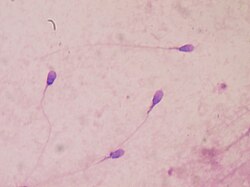
Key Facts
- Sperm competition occurs when multiple males attempt to fertilize a female within a short timeframe.
- Humans exhibit low-to-intermediate levels of sperm competition compared to other primates.
- Physiological indicators include relative testis size, ejaculate volume, and sperm midpiece size.
- Evolutionary evidence, such as the lack of a baculum (penis bone), suggests a history of monogamous mating in humans.
- Actual rates of cuckoldry in human populations are estimated to be quite low, around 1% to 2%.
Evolutionary Context in Primates
Sperm competition is a widespread phenomenon across the animal kingdom. In primates, the intensity of this competition is closely tied to their breeding systems. Species with multi-male breeding systems experience the highest levels of competition, whereas those with single-male breeding systems experience the lowest. Humans fall into an intermediate category, suggesting our evolutionary history has involved moderate selection pressures rather than the extreme competition seen in chimpanzees or the low competition seen in gorillas.
| Primate Group | Mating System Type | Relative Sperm Competition Level |
|---|---|---|
| Chimpanzees | Promiscuous / Multi-male | High |
| Humans | Intermediate | Low-to-Intermediate |
| Gorillas | Monogamous / Single-male | Low |
Physiological Adaptations
Biological evidence points to several physical traits that have been shaped by evolutionary pressures related to reproduction.
Testis Size and Ejaculate Volume
Among great apes, the size of the testes relative to total body weight is a key indicator of a species' breeding system. In humans, this size is intermediate, supporting the theory of moderate selection pressure. Similarly, the volume of semen produced during ejaculation reflects these evolutionary middle grounds.
Sperm Midpiece and Motility
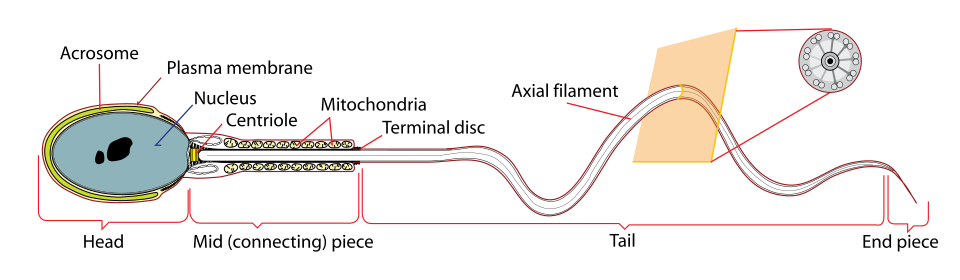
The sperm midpiece is a critical component of the sperm cell, as it contains the mitochondria required for energy. A larger midpiece typically indicates a higher volume of mitochondria, which results in more highly motile (active) sperm. In humans, the size of the sperm midpiece is relatively small compared to more promiscuous primates, aligning with our intermediate evolutionary status.
Anatomy and Semen Displacement
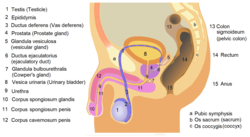
The physical structure of the penis, specifically the shape of the glans and the coronal ridge, may play a role in semen displacement. This theory suggests that certain anatomical features may help displace the semen of rival males. Research indicates that this displacement is most effective when the penis is inserted at least 75% of its length into the vagina. Interestingly, reports suggest that in instances of perceived infidelity, men may engage in deeper and faster thrusting during subsequent copulations.
Psychological and Behavioral Adaptations
Beyond physical anatomy, sperm competition influences psychological traits and copulatory behaviors.
Copulatory Behaviors and Mate Choice
Men facing a higher risk of sperm competition—often defined by partners with high reproductive value, such as being younger or physically attractive—may engage in more frequent semen-displacing behaviors. These include increased thrusting frequency, greater duration of intercourse, and deeper thrusts. Furthermore, male mate choice is influenced by this risk; men often prefer short-term partners who are not currently in sexual relationships with other men to minimize competition.
The Role of Oral Sex
While the exact evolutionary purpose of oral sex remains a subject of study, several hypotheses link it to sperm competition. It is proposed that oral sex may allow a male to assess a partner's fertility, increase female arousal (thereby reducing the likelihood of extra-pair copulations), increase male arousal to improve semen quality, or even serve as a method to detect the presence of another male's semen.
The Reality of Cuckoldry in Humans
While popular media often suggests that cuckoldry is a widespread issue, scientific data tells a different story. A survey of 67 studies indicates that for men with high paternity confidence, the rate of nonpaternity is typically only about 1.9%. This is significantly lower than the 10% or higher often cited in popular literature. Researchers suggest that the potential benefits for women to engage in extra-pair copulations are often offset by the high costs, such as divorce or reduced paternal investment from the social partner.
Frequently Asked Questions
What is the difference between sperm competition and sexual selection?
Sexual selection is the broader process where certain traits become more common because they increase mating success. Sperm competition is a specific type of post-copulatory sexual selection that occurs after mating has taken place, specifically between the sperm of different males.
Do human sperm cells fight each other?
No. Research conducted by biologists at the University of Sheffield, including H.D.M. Moore and Tim Birkhead, found no evidence of "warring sperm" or a "kamikaze sperm hypothesis" in human samples. The sperm do not actively attack one another.
Why do humans have intermediate testis size?
The intermediate size of human testes relative to body weight suggests that humans have experienced moderate selection pressure for sperm competition, likely due to an evolutionary history that includes significant periods of monogamous behavior.
How does the sperm midpiece affect fertility?
The midpiece contains mitochondria, which provide the energy necessary for sperm to swim. A larger midpiece generally allows for higher motility, which is essential for the sperm to reach and fertilize the ovum.
Is cuckoldry common in human populations?
Contrary to popular belief, contemporary data suggests that cuckoldry rates are quite low, estimated at approximately 1% to 2% in populations where paternity confidence is high.