Spanish Transition to Democracy (1975–1982)
The period between 1975 and 1982 marks one of the most pivotal eras in modern European history: the Spanish Transition. This was the process by which Spain moved from the authoritarian dictatorship of Francisco Franco to a stable, pluralistic constitutional monarchy. The journey was not a simple switch but a complex negotiation between the remnants of the old regime and a growing demand for democratic liberties.
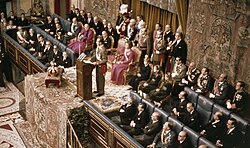
The transition began immediately following the death of Francisco Franco on November 20, 1975. While initial efforts by Francoist elites sought only minor reforms, intense social and political pressure eventually led to the first free elections since 1936 and the ratification of a new constitution in 1978.
Key Facts
- Timeline: 1975 (Death of Franco) to 1982 (First peaceful transfer of power to the PSOE).
- Key Figure: King Juan Carlos I, who facilitated the shift toward a constitutional monarchy.
- Legal Milestone: The Political Reform Act of 1976, which used the existing Francoist system to dismantle itself.
- Constitutional Shift: The 1978 Constitution established Spain as a constitutional monarchy and recognized regional languages.
- Political Turning Point: The 1982 general election, resulting in a landslide victory for the Spanish Socialist Workers' Party (PSOE).
The Role of King Juan Carlos I
General Francisco Franco had ruled Spain as a dictator since 1939. In 1969, he designated Prince Juan Carlos as his successor. For years, the Prince remained in the background, appearing to align with Franco's ideology. However, upon ascending the throne on November 22, 1975, Juan Carlos I pivoted toward the vision of his father, Don Juan de Borbón, advocating for a constitutional monarchy—a system where the monarch acts as a non-partisan head of state within the boundaries of a constitution.
The Government of Adolfo Suárez and Political Reform
After a brief period under Carlos Arias Navarro, Adolfo Suárez was appointed Prime Minister in July 1976. Suárez implemented a strategic program to transition the country toward democracy without triggering a collapse or a military backlash.
The Political Reform Act
To avoid a legal vacuum, the government introduced the Political Reform Act (Ley para la Reforma Política). Drafted by Torcuato Fernández-Miranda, this law was designed to liquidate the Francoist system using its own legal mechanisms. The Francoist Cortes approved the bill in November 1976, and a subsequent referendum on December 15, 1976, saw 94% of voters support the changes.

Expanding Civil Liberties
Suárez worked to build credibility with the opposition through several measured steps:
- Amnesty: A series of amnesties were granted between July 1976 and October 1977, freeing political prisoners.
- Legalization: The right to strike was legalized in March 1977, followed by the right to organize unions in April.
- Dissolution of the TOP: The Tribunal de Orden Público (TOP), the Francoist secret police tribunal, was dissolved in December 1976.
One of the most controversial moves was the legalization of the Communist Party of Spain (PCE) in April 1977. Following the Massacre of Atocha—where far-right terrorists murdered PCE-aligned labor leaders—Suárez negotiated with PCE leader Santiago Carrillo to ensure the party's participation in the democratic process.
Challenges: Terrorism and Economic Instability
The transition was not without violence. The Basque separatist group ETA resumed armed confrontation in October 1976, leading to a period of extreme tension. The years between 1978 and 1980 became the deadliest in ETA's history.
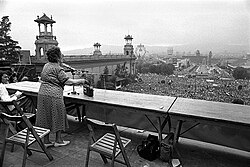
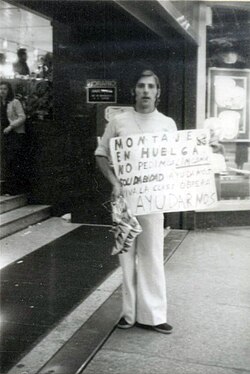
Simultaneously, Spain struggled with a recession from 1973 to 1975, leading to widespread strikes and economic unrest across the country.
The 1977 Elections and the 1978 Constitution
The first free elections since 1936 were held on June 15, 1977. The results established a fragmented but democratic landscape:
| Political Party | Vote Percentage | Seats Won |
|---|---|---|
| Union of the Democratic Centre (UCD) | 34.61% | 165 |
| Spanish Socialist Workers' Party (PSOE) | 29.27% | 119 |
| Communist Party of Spain (PCE) | 9.38% | 19 |
| People's Alliance (AP) | 8.33% | 16 |
The elected parliament, known as the Constituent Cortes, drafted a new constitution. To stabilize the economy, politicians and unions signed the Moncloa Pacts in 1977. The final Spanish Constitution was ratified by referendum on December 6, 1978, officially establishing the rule of law and regional governments.
The Path to Stability: 1979–1982
The UCD continued to lead through coalitions, but internal divisions over conservative and liberal values—such as the legalization of divorce—eventually tore the party apart. This instability culminated in the attempted coup d'état on February 23, 1981 (known as 23-F), which failed to overthrow the democratic order.
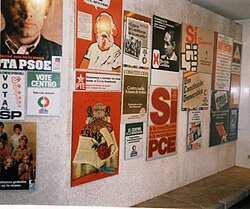
The transition is widely considered to have concluded with the general election of October 28, 1982. The PSOE, led by Felipe González, won an absolute majority after moderating its platform and renouncing Marxism. This marked the first peaceful transfer of executive power in modern Spanish history.
Frequently Asked Questions
When did the Spanish Transition officially begin and end?
The transition began with the death of Francisco Franco on November 20, 1975, and is generally considered to have concluded with the landslide victory of the PSOE in the October 1982 general election.
What was the Political Reform Act?
The Political Reform Act of 1976 was a legal mechanism that allowed the Francoist parliament to vote itself out of existence and pave the way for democratic elections and a new constitution.
Who was Adolfo Suárez?
Adolfo Suárez was the Prime Minister from 1976 to 1981 who managed the delicate process of legalizing political parties, including the Communist Party, and overseeing the first free elections.
What was the significance of the 1978 Constitution?
The 1978 Constitution formally established Spain as a constitutional monarchy, guaranteed fundamental civil liberties, and recognized the co-official status of Catalan, Basque, and Galician languages.
What was the 23-F event?
23-F refers to the attempted coup d'état on February 23, 1981, where elements of the military tried to seize power and halt the democratic process, though the attempt ultimately failed.