Cortes Generales: The History and Structure of the Spanish Parliament
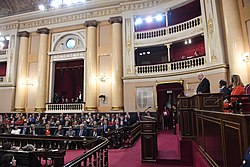
The Cortes Generales, known in English as the Spanish Parliament, serves as the bicameral legislature of Spain. This essential democratic institution is composed of two distinct houses: the Congress of Deputies (the lower house) and the Senate (the upper house). Together, they represent the will of the Spanish people through a system of universal, free, equal, direct, and secret suffrage.
Operating from the heart of Madrid, the Congress of Deputies meets in the Palacio de las Cortes, while the Senate convenes in the Palacio del Senado. While the modern framework of the Cortes was established by the 1978 Constitution, the institution's roots stretch back centuries, evolving from tribal councils to a sophisticated modern parliament.
Key Facts
- Structure: Bicameral legislature consisting of the Congress of Deputies and the Senate.
- Total Membership: 616 members (350 deputies and 266 senators).
- Legal Basis: The current system is governed by the 1978 Constitution of Spain.
- Election Method: Primarily direct universal suffrage, with some senators appointed by autonomous community legislatures.
- Locations: Both houses are based in Madrid.
The Evolution of Spanish Parliamentarism
Early Foundations and the Middle Ages
The origins of the Cortes can be traced back to the Visigothic Kingdom, where tribal councils organized under Germanic law held the power to appoint kings and pass laws. By the mid-7th century, the Visigothic Code unified laws for Visigoths and native Spaniards, though these councils eventually fell under the heavy influence of the clergy in Toledo.
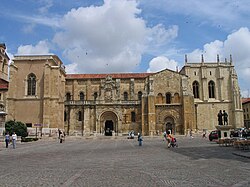
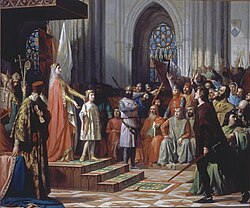
During the High Middle Ages, royal advisory councils known as curia regis evolved into the cortes. A pivotal moment occurred in 1188 with the Cortes of León, convened by Alfonso IX. This event is often cited as a landmark in Western European parliamentarism because it was the first to include formal representation for free urban citizens alongside the nobility and clergy.
From the Habsburgs to the Bourbons
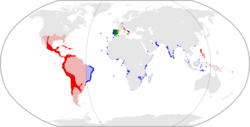
Under the Habsburg dynasty, particularly during the reign of Charles V, royal power expanded, often curtailing the influence of the corteses. The 1520 Revolt of the Comuneros attempted to restore parliamentary power but was suppressed by 1521. However, by the 17th century, financial crises forced the monarchy to rely more heavily on the Cortes for funding.
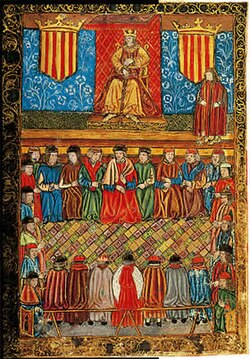
The transition to Bourbon rule brought significant centralization. King Philip V suppressed the corteses of Aragon, Valencia, Catalonia, and the Balearic Islands between 1707 and 1714, effectively abolishing the autonomy of the Crown of Aragon through the Nueva Planta Decrees.
The Struggle for Liberalism and the Republics
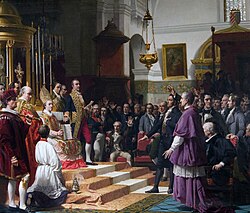
The Napoleonic era saw the creation of the Cortes of Cádiz, a government-in-exile that produced the liberal Constitution of 1812. This period marked the first time a single representative body claimed sovereignty over the entire Spanish empire.
Spain's journey toward a stable republic was tumultuous. The First Spanish Republic (1873–1874) briefly abolished the Senate, while the Second Spanish Republic (1931–1939) introduced universal suffrage, including the right for women to vote. This era was characterized by extreme political polarization, eventually culminating in the Spanish Civil War.
The Franco Era and the Return to Democracy
Under Francisco Franco, the Cortes Españolas (established in 1942) was a non-democratic chamber. Its members, known as procuradores, were not elected and held only symbolic power, as real legislative authority remained with Franco.
The restoration of democracy culminated in the 1978 Constitution, which established the current bicameral system, ensuring that legislative power is derived from the people through regular, competitive elections.
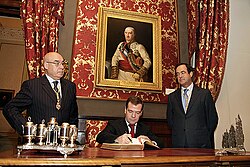
Current Structure and Composition
The Congress of Deputies
The lower house consists of 350 deputies, though the Constitution allows for a range between 300 and 400. Members are directly elected every four years. The Congress is currently led by President Francesca Lluc Armengol Socias (PSOE).
The Senate
The Senate serves as the upper house with 266 members. Its composition is a hybrid: most are directly elected (four per province), while others are appointed by the legislatures of the autonomous communities. The Senate is currently led by President Pedro Manuel Rollán Ojeda (PP).
Summary of the 15th Cortes Generales
| Feature | Congress of Deputies | Senate |
|---|---|---|
| Total Seats | 350 | 266 |
| President | Francesca Lluc Armengol Socias | Pedro Manuel Rollán Ojeda |
| Meeting Place | Palacio de las Cortes | Palacio del Senado |
| Election Date | 23 July 2023 | 23 July 2023 |
Frequently Asked Questions
What is the difference between the Congress of Deputies and the Senate?
The Congress of Deputies is the lower house, consisting of 350 directly elected members. The Senate is the upper house, consisting of 266 members, some of whom are directly elected and some of whom are appointed by regional legislatures to provide territorial representation.
How are the members of the Cortes Generales elected?
Most members are elected through universal, free, equal, direct, and secret suffrage. However, a portion of the Senate is elected indirectly by the legislatures of Spain's autonomous communities.
What is the historical significance of the 1188 Cortes of León?
The 1188 Cortes of León is considered a milestone in Western European history because it was the first parliamentary body to grant formal national representation to free urban citizens, alongside the clergy and nobility.
What happened to the Cortes during the Franco regime?
During Franco's rule, the Cortes Españolas was a non-democratic body. Its members (procuradores) were not elected by the public and possessed only symbolic power, with all real legislative authority held by the dictator.
Where are the two houses of the Spanish Parliament located?
Both houses are located in Madrid. The Congress of Deputies meets in the Palacio de las Cortes on Carrera de San Jerónimo, and the Senate meets in the Palacio del Senado on Plaza de la Marina Española.