Spanish Conquest of Peru: The Expeditions of Francisco Pizarro
The Spanish conquest of Peru was not a single event, but a grueling series of expeditions driven by rumors of immense wealth. In 1522, Pascual de Andagoya first explored western South America, returning with reports of a gold-rich territory called Virú, located on a river known as Pirú. These accounts, combined with the success of Hernán Cortés in Mexico, ignited the ambition of Francisco Pizarro to seek out the legendary El Dorado.
To achieve this, Pizarro formed the Empresa del Levante, a partnership with the priest Hernando de Luque and the soldier Diego de Almagro. Their oral agreement was simple: they would conquer the southern empire and divide the spoils equally. Pizarro took command of the expeditions, Almagro managed military and food supplies, and Luque oversaw finances.
Key Facts
- Primary Leader: Francisco Pizarro, supported by Diego de Almagro and Hernando de Luque.
- Key Conflict: The Battle of Cajamarca (1532) led to the capture of the Inca Emperor Atahualpa.
- Legal Basis: The Capitulación de Toledo (1529) granted Pizarro the right to conquer Peru.
- Major Cities: Pizarro founded Lima in 1535 as the central coastal capital.
- Outcome: The fall of the Inca Empire and the establishment of the Governorate of New Castile.
The Early Expeditions (1524–1528)
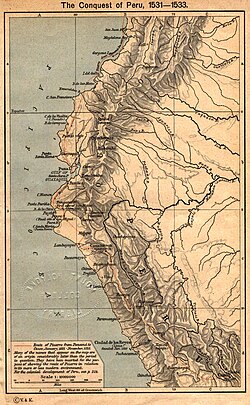
The first attempt in 1524 was modest, consisting of 80 men and four horses. However, it was the second expedition in 1526 that provided the first tangible proof of wealth. While exploring the Colombian coast, Pizarro's main pilot, Bartolomé Ruiz, captured a balsa (a traditional sailing raft) carrying textiles made of cotton, ceramics, and precious metals including gold, silver, and emeralds.
Despite these findings, the expedition faced immense hardship. After a failed attempt to enter the defiant territories of Atacames, the group split. Most men returned to Panama under orders from Governor Pedro de los Ríos, leaving only 13 men with Pizarro. This small, determined group became known as The Famous Thirteen (Los trece de la fama).
In April 1528, the group finally reached the Tumbes Region of northwestern Peru. There, they were welcomed by the Tumpis and witnessed the riches of the land for the first time, including the llama (which Pizarro described as "little camels"). This success confirmed the existence of a powerful, wealthy monarch ruling the interior.
The Capitulation of Toledo and the Final Push
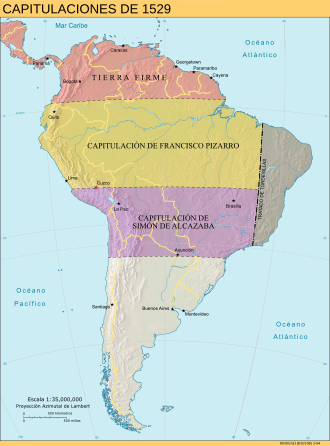
Facing resistance from the governor in Panama, Pizarro traveled to Spain in 1528 to seek royal approval. He presented King Charles I with samples of gold, silver, and fabric. On July 6, 1529, Queen Isabel signed the Capitulación de Toledo, a license authorizing Pizarro to conquer Peru. He was named Governor, Captain General, Adelantado, and Alguacil Mayor of New Castile.
Pizarro returned to Spain to recruit his brothers—Hernando, Juan, and Gonzalo—and other allies, including Francisco de Orellana. By December 1530, the final expedition departed Panama with three ships, 180 men, and 27 horses.
The Fall of the Inca Empire
Upon landing in 1531, Pizarro faced early resistance in the Battle of Puná. He eventually established San Miguel de Piura, the first Spanish settlement in Peru, in May 1532. In September, Pizarro marched inland with 200 men, eventually reaching Cajamarca.
At the time, the Inca Empire was fractured following a civil war between brothers Huáscar and Atahualpa. Atahualpa, the victor, agreed to meet Pizarro in the Cajamarca plaza on November 16, 1532. Despite having an army of 50,000 men (with 6,000 present), Atahualpa's complacency proved fatal. The Spanish launched a surprise attack, capturing the Emperor and executing his honor guard.
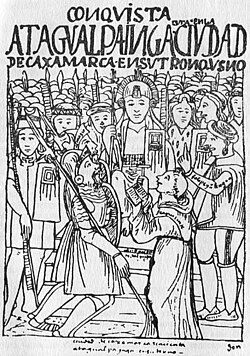
Atahualpa attempted to buy his freedom by filling one room with gold and two with silver. Despite this massive ransom, he was executed by garrote on August 29, 1533, following a trial on charges of fratricide and plotting against the Spanish.
The Capture of Cuzco and the Founding of Lima
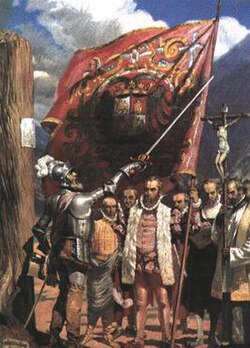
Pizarro advanced to Cuzco, the heart of the empire, entering the city on November 15, 1533. He was struck by the city's beauty and architecture. While Jauja was briefly the provisional capital, Pizarro founded Lima on January 6, 1535, to provide a strategic coastal hub.
Inca Resistance and Spanish Infighting
The conquest was not without challenge. In 1536, Manco Inca Yupanqui led a massive siege of Cuzco with approximately 100,000 soldiers. The Inca adapted to Spanish tactics, using the terrain to lure cavalry into canyons where they could be crushed by rockslides. However, the Spanish fortifications and gunpowder weapons ultimately secured victory.
Following the external war, internal conflict erupted between Pizarro and Almagro over the jurisdiction of Cuzco. This rivalry culminated in the Battle of Las Salinas in 1538, where Almagro was defeated and subsequently executed.
Summary of Pizarro's Expeditions
| Year | Event/Expedition | Key Outcome |
|---|---|---|
| 1524 | First Expedition | Initial exploration; limited success. |
| 1526 | Second Expedition | Discovery of gold and textiles via Bartolomé Ruiz. |
| 1528 | Tumbes Arrival | First contact with the Peruvian coast and llamas. |
| 1529 | Capitulación de Toledo | Official royal license to conquer New Castile. |
| 1532 | Battle of Cajamarca | Capture and eventual execution of Emperor Atahualpa. |
| 1533 | Entry into Cuzco | Consolidation of Spanish control over the Inca capital. |
| 1535 | Founding of Lima | Establishment of a permanent coastal capital. |
Frequently Asked Questions
Who were "The Famous Thirteen"?
The Famous Thirteen were the small group of men who remained loyal to Francisco Pizarro on Isla de Gallo after the majority of the second expedition's force returned to Panama under orders from Governor Pedro de los Ríos.
What was the Capitulación de Toledo?
It was a legal document signed by Queen Isabel on July 6, 1529, which granted Pizarro the official authority to conquer Peru and appointed him Governor and Captain General of New Castile.
How did the Spanish defeat the larger Inca army at Cajamarca?
The Spanish utilized a surprise attack and superior weaponry (including cavalry and gunpowder) against a complacent Atahualpa, who underestimated the small Spanish force despite his own numerical advantage.
Why did Pizarro and Almagro turn against each other?
The conflict arose from a dispute over the boundaries of their respective governorates, specifically regarding which of them had jurisdiction over the city of Cuzco.
How did the Inca military adapt to Spanish cavalry?
Inca forces learned to avoid open-field charges, instead drawing the Spanish cavalry into narrow canyons where they could be ambushed with rock avalanches and missile weapons.