Sapa Inca: The Divine Monarchs of the Inca Empire
The Sapa Inca (from the Quechua sapa inka, meaning "the only emperor") served as the absolute monarch of the Inca Empire, known as Tawantinsuyu ("the region of the four provinces"). Beyond the empire, this title was held by the rulers of the earlier Kingdom of Cusco and the subsequent Neo-Inca State at Vilcabamba. While the position's origins are steeped in myth and the legendary founding of Cusco, historical evidence suggests the role emerged around AD 1100.
The Sapa Inca was viewed as the Inti churi or Intip churin ("son of the sun"), believed to be the direct offspring of the sun god, Inti. This divine status placed the emperor at the absolute peak of the social hierarchy, granting him dominant authority over both the political and spiritual realms of Andean life.
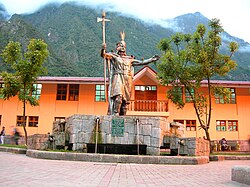
Key Facts
- Divine Status: Believed to be the son of the sun god, Inti.
- Absolute Power: Held total control over political, military, economic, and religious affairs.
- Succession: Originally based on divine selection and merit, it later became hereditary.
- Primary Consort: The Sapa Inca's principal wife was known as the Coya.
- Dynasties: The empire was led by two main moieties: the Hurin and the Hanan.
- Last Emperor: Atahualpa was the last effective Sapa Inca of the empire, executed in 1533.
The Path to Power: Selection and Succession
Unlike European monarchies of the Middle Ages, the position of Sapa Inca was not automatically inherited by the eldest son. Instead, candidates underwent rigorous challenges to test their physical and moral aptitudes. This process was accompanied by complex spiritual rituals through which Inti was believed to nominate the successor.
Over time, the system evolved. Emperors began naming a favorite son as a co-governor to secure the succession. The Coya played a significant role in this process, influencing the decision on which son was most apt to lead. Eventually, the position became more strictly hereditary, passing from father to son.
Imperial Functions and Governance
As the absolute ruler, the Sapa Inca managed every facet of the state. His influence was felt across several key domains:
Infrastructure and Engineering
The Sapa Inca directed massive engineering projects, including the fortress of Sacsayhuamán, which took 50 years to complete. Most notably, he oversaw the creation of a vast road network featuring hanging bridges and tambos (waystations), ensuring rapid movement for armies, messengers, and administrators.
Economic and Social Welfare
The emperor managed a sophisticated redistribution system, utilizing storehouses to provide resources during environmental disasters. He was also known as the huacchacoya ("benefactor of the poor"), organizing state-sponsored religious feasts and providing work through public projects.
Political and Military Control
To maintain order, the Sapa Inca appointed trusted governors and sent inspectors to ensure the loyalty of civil servants. He utilized kurakas (local intermediaries) to collect taxes and labor tribute, known as mit'a. Militarily, he founded colonies to expand Inca culture and maintain control over conquered territories.
Symbols of Divine Authority
The Sapa Inca's divinity was reflected in his attire and regalia. In public, he carried the topayauri (scepter), sat upon the ushno (golden throne), and carried the suntur páucar (feathered pike). His most distinct insignia was the mascapaicha (royal crown), worn on a llauto (headband) or an amachana chuku (military helmet).
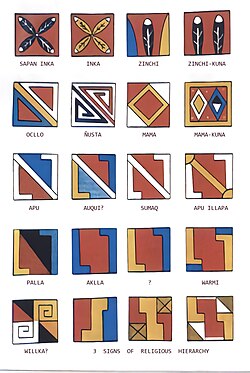
Textiles were a primary marker of wealth and status; it is speculated that the Sapa Inca never wore the same garment twice. Even in death, the emperor remained influential; he was mummified, and his tomb was frequently visited by the living to consult him on state affairs.
The Lineage of the Sapa Incas
The history of the Sapa Incas is divided into two primary dynasties and a post-conquest period.
The First and Second Dynasties
The First Dynasty was affiliated with the Hurin moiety and focused primarily on the Kingdom of Cusco. It was founded by Manco Cápac. The Second Dynasty, affiliated with the Hanan moiety, began with Inca Roca. This dynasty expanded the kingdom into a vast empire, reaching its peak under rulers like Pachacuti and Huayna Capac.
Post-Conquest and the Neo-Inca State
Following the execution of Atahualpa by Francisco Pizarro in 1533, the Spanish installed puppet rulers such as Túpac Huallpa and Manco Inca Yupanqui. However, Manco Inca eventually rebelled and established the Neo-Inca State in Vilcabamba. The lineage finally ended with the execution of Túpac Amaru in 1572.
| Era | Primary Moiety/State | Key Figures | Focus |
|---|---|---|---|
| First Dynasty | Hurin | Manco Cápac | Foundation of Cusco |
| Second Dynasty | Hanan | Pachacuti, Atahualpa | Imperial Expansion |
| Neo-Inca State | Vilcabamba | Túpac Amaru | Resistance to Spanish |
Frequently Asked Questions
Who was the first Sapa Inca?
Manco Cápac is considered the first monarch, though he used the title capac (king). Inca Roca, the sixth monarch, was the first to officially bear the title Sapa Inca (emperor).
How was a new Sapa Inca chosen?
Initially, the successor was chosen based on physical and moral aptitude through rigorous trials and divine nomination by the sun god, Inti. Later, the system shifted toward hereditary succession, often involving a co-governor.
What was the role of the Coya?
The Coya was the principal wife of the Sapa Inca and held significant influence, particularly in determining which son was most fit to succeed the emperor.
What happened to the Sapa Incas after the Spanish conquest?
Some were installed as puppets by the Spanish, while others, like Manco Inca Yupanqui, led revolts and established a remnant state in Vilcabamba until the final Sapa Inca, Túpac Amaru, was executed in 1572.
What was the 'mit'a' system?
The mit'a was a form of mandatory public service or labor tax paid by subjugated peoples to the Sapa Inca, used for building roads, fortresses, and other state projects.