Spanish Conquest of the Inca Empire
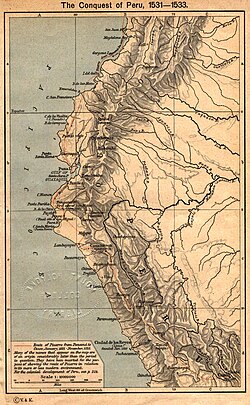
The Spanish conquest of the Inca Empire, also known as the Conquest of Peru, stands as one of the most pivotal campaigns in the European colonization of the Americas. Spanning from 1532 to 1572, this conflict saw a relatively small force of Spanish soldiers dismantle the largest pre-Columbian civilization in the Americas, eventually incorporating its vast territories into the Spanish Empire.
At its peak in 1528, the Inca Empire—known as Tawantinsuyu (the empire of the four parts)—was a marvel of administration and geography. It stretched from the Patía River in present-day Colombia to the Maule River in Chile, covering approximately 1,800,000 square kilometers. With an estimated population of 12 to 16 million people, the empire managed diverse cultures and rugged Andean terrains through a centralized authority led by the Sapa Inca (the Emperor).
Key Facts
- Timeline: 1532–1572.
- Primary Leaders: Francisco Pizarro (Spain) and Atahualpa (Inca).
- Turning Point: The capture of Atahualpa at the Battle of Cajamarca in 1532.
- Demographic Impact: An estimated 93% population decline in the Andes due to disease and conflict.
- Economic Result: Establishment of the Viceroyalty of Peru and the massive silver mines of Potosí.
The Arrival of Francisco Pizarro
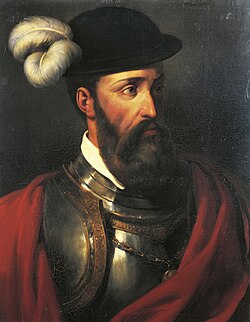
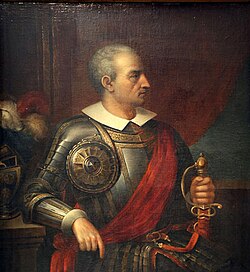
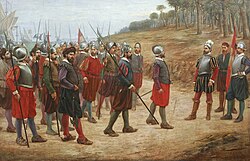
The conquest was spearheaded by Francisco Pizarro, a conquistador from Trujillo. After receiving a license from the Queen of Spain to conquer the region, Pizarro launched his third voyage to Peru between 1531 and 1532. Pizarro did not act alone; he was supported by partners like Diego de Almagro and his brothers, as well as a critical network of Indian auxiliaries.
These auxiliaries included groups such as the Cañari, Chankas, Huancas, and Chachapoyas. These indigenous peoples, who had suffered under Inca oppression, viewed the Spaniards as allies and provided essential military support and local intelligence.
The Capture of Atahualpa and the Fall of Cajamarca
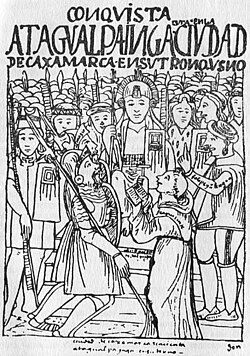
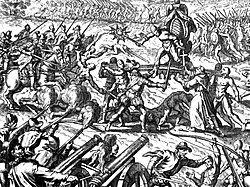
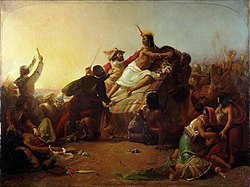
On November 16, 1532, Pizarro orchestrated an ambush in the plaza of Cajamarca. Despite having only 168 men—106 on foot and 62 on horseback—the Spanish faced Atahualpa and his 6,000 unarmed followers. The encounter turned violent after a failed attempt by Friar Vincente de Valverde to deliver the requerimiento (a document demanding submission to the Spanish Crown and the Christian faith).
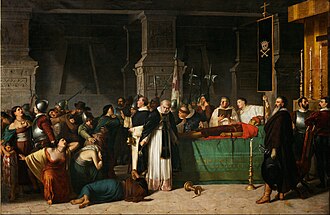
The resulting massacre left thousands of natives dead and Atahualpa in Spanish captivity. To secure his release, Atahualpa offered a legendary ransom: a room filled once with gold and twice with silver. Although Pizarro accepted the treasure, which was melted into bars by May 1533, he had no intention of freeing the Sapa Inca. Atahualpa was executed on August 29, 1533.
Resistance and the Neo-Inca State
The fall of Atahualpa did not immediately end Inca resistance. Manco Inca Yupanqui initially joined Pizarro but later led a major rebellion in 1536. While the Spanish were aided by native allies, the conflict was brutal. Archaeological evidence from 2007 near Lima reveals mass graves where both European and indigenous weapons were used.
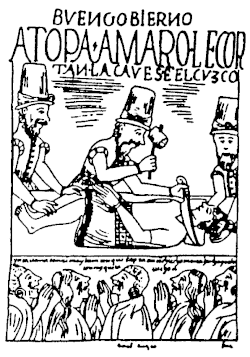
Following the failed rebellion, a remnant of the empire established the Neo-Inca State in Vilcabamba. This state persisted until 1572, when Viceroy Francisco de Toledo captured and executed the last Inca leader, Túpac Amaru I.
Colonization and the Viceroyalty of Peru
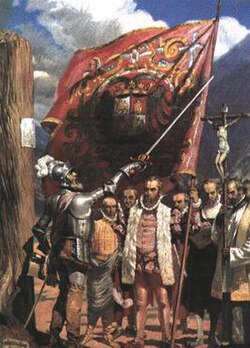
To consolidate power, the Spanish founded Lima in 1535 as the administrative center. In 1542, the Viceroyalty of Peru was created. Under Viceroy Francisco de Toledo, the Spanish implemented reductions—the forced resettlement of indigenous people into Spanish-style towns—and the mita, a system of forced labor adapted from an Inca institution.
Environmental and Economic Impact
The discovery of silver at Cerro Rico (Rich Hill) in Potosí in 1545 transformed the region into the world's primary silver source. However, the refining process used mercury amalgamation, which released massive amounts of mercury into the atmosphere and watersheds, causing long-term environmental damage across the Andes and as far as New Spain.
The Demographic Catastrophe
The most devastating impact of the conquest was the collapse of the indigenous population. Between 1520 and 1570, the population plummeted from roughly 10–15 million to fewer than 3 million. This decline was driven primarily by European diseases to which the natives had no immunity.
| Epidemic Wave | Estimated Population Decline | Primary Cause |
|---|---|---|
| First Outbreak | 30–50% | Smallpox |
| Second Outbreak | 25–30% | Measles |
| Combined Outbreak (1585–1591) | 30–60% | Smallpox and Measles |
| Total Cumulative Loss | ~93% | Combined Epidemics |
Frequently Asked Questions
How did a small Spanish force defeat the massive Inca army?
The Spanish victory was made possible by a combination of superior weaponry (steel and horses), the capture of the central leader Atahualpa, and critical alliances with indigenous groups like the Cañari and Huancas who wanted to overthrow Inca rule.
What was the role of disease in the conquest?
Disease was the single most destructive factor. Smallpox and measles caused a catastrophic population decline of approximately 93% in the Andes, weakening the empire's social structure and military capacity before and during the conquest.
What was the 'mita' system?
The mita was an original Inca system of mandatory public service. The Spanish adapted it into a system of forced labor to provide a steady stream of workers for the silver mines, most notably at Potosí.
Who was the last Sapa Inca?
While Atahualpa was the last emperor of the unified empire, Túpac Amaru I was the final leader of the Neo-Inca State in Vilcabamba, whose execution in 1572 marked the definitive end of Inca political sovereignty.
What was the environmental cost of silver mining?
The use of mercury amalgamation to refine silver led to significant pollution. Large quantities of mercury were released into the air and water, contaminating the local ecosystem and affecting plants and animals throughout the region.