Southern Hemisphere
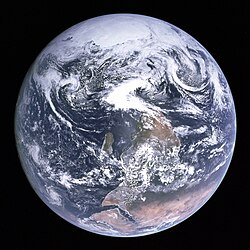
The Southern Hemisphere is the half of planet Earth located south of the equator. Characterized by a vast expanse of water and a diverse array of landmasses, it encompasses the entirety of Antarctica and Oceania, approximately 90% of South America, one-third of Africa, and various islands off the Asian mainland. This region is predominantly aquatic, with water covering 80.9% of its surface, compared to 60.7% in the Northern Hemisphere.
While it contains 32.7% of Earth's total land, the Southern Hemisphere is home to a smaller portion of the human population—roughly 850 million people, representing about 10–12% of the global total.
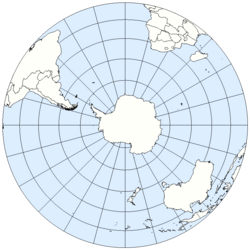
Key Facts
- Water Dominance: 80.9% of the surface is water, significantly higher than the Northern Hemisphere.
- Seasonal Inversion: Summer occurs from December to February; winter occurs from June to August.
- Population: Home to approximately 10–12% of the global population (over 850 million people).
- Climate: Generally milder than similar northern latitudes due to the higher ratio of ocean to land.
- Rotation: Cyclones and tropical storms spin clockwise due to the Coriolis effect.
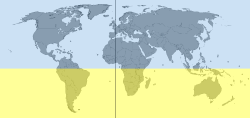
Climate and Astronomical Characteristics
The climate of the Southern Hemisphere is influenced heavily by its geography. Because water heats and cools more slowly than land, temperatures at similar latitudes tend to be milder than those in the North. The exception is Antarctica, which remains significantly colder than the Arctic. These differences are further driven by oceanic heat transfer and variations in greenhouse trapping.
Solar Patterns and Navigation
For observers south of the Tropic of Capricorn, the Sun passes from east to west through the northern sky. This creates a right-to-left trajectory, the opposite of the motion seen in the Northern Hemisphere. Consequently, sun-cast shadows move anticlockwise throughout the day, and sundials are designed with hours increasing in an anticlockwise direction.
During solar eclipses, the Moon appears to move from left to right across the Sun's disc when viewed from south of the Tropic of Capricorn.
Atmospheric and Celestial Phenomena
The Coriolis effect—the deflection of moving objects caused by Earth's rotation—causes tropical storms and cyclones to spin clockwise in this hemisphere. Additionally, the night sky offers unique views; the Sagittarius constellation (containing the galactic center) and the Magellanic Clouds are southern features. Combined with often clearer skies, this makes the region ideal for astronomical observation.
Biodiversity and Natural Features
The Southern Hemisphere hosts distinct flora and fauna. Forests in Chile and Australia share unique beech species known as Nothofagus, while New Zealand features the related genera Lophozonia and Fuscospora. The eucalyptus, native to Australia, has been introduced to Latin America and Southern Africa for biofuel and pulp production.
Among the most iconic animals of the region is the penguin. While one species is found on Isabela Island in the Galápagos—an archipelago that straddles the equator—the vast majority of penguin populations are located deep within the Southern Hemisphere.
Human Geography and Demographics
The human landscape of the Southern Hemisphere is marked by extreme diversity in development and population density. Indonesia is the most populous country in the region with 275 million people, though a small portion of its population lives north of the equator. Tanzania is the most populous country located entirely within the Southern Hemisphere, with roughly 67 million people as of 2024.
Urban Centers and Economy
Major metropolitan hubs include Jakarta (33 million), São Paulo (22 million), and Kinshasa-Brazzaville (19 million). The region also hosts critical financial centers, such as the B3 in São Paulo and the Australian Securities Exchange in Sydney. The Buenos Aires Stock Exchange holds the distinction of being the oldest stock market in the Southern Hemisphere.
Economic development varies widely. Australia and New Zealand are among the most developed nations globally, boasting high Human Development Index (HDI) scores. Conversely, nations like Burundi and Mozambique are among the least developed, with significantly lower GDP per capita.
History and Culture
The region has a rich ancient history. The Norte Chico civilization and Casma–Sechin culture in northern Peru built pyramids and plazas as far back as 3600 BCE. Bogor, in western Java, is recorded as the oldest continuously inhabited city, founded in 669 CE, though some evidence suggests Zanzibar may be older.
Easter Island, settled by the Rapa Nui, is noted as the most remote permanently inhabited place on Earth prior to the Age of Discovery. Other areas, such as Antarctica and the Galápagos Islands, had no human contact until that era.

Regional Geography Summary
The Southern Hemisphere is composed of several major landmasses and a submerged continent.
| Continent/Region | Extent in Southern Hemisphere | Key Geographic Note |
|---|---|---|
| Antarctica | 100% | Centered around the South Pole. |
| Oceania/Australia | ~100% | Includes the continent of Australia and New Zealand. |
| South America | ~90% | Extends from the equator to the Diego Ramírez Islands. |
| Africa | ~33% | Extends from the equator to Cape Agulhas. |
| Asia | Partial | Includes Maritime Southeast Asia (e.g., most of Indonesia). |
| Zealandia | 100% | A submerged continent including New Zealand. |
Frequently Asked Questions
When are the seasons in the Southern Hemisphere?
The seasons are opposite to those in the Northern Hemisphere. Summer lasts from December to February, and winter lasts from June to August.
Why is the climate generally milder in the Southern Hemisphere?
The region has significantly more ocean and less land than the Northern Hemisphere. Because water retains and releases heat more slowly than land, it moderates the overall temperature.
How does the rotation of storms differ in the Southern Hemisphere?
Due to the Coriolis effect, cyclones and tropical storms spin in a clockwise direction, whereas they spin anticlockwise in the Northern Hemisphere.
Which is the most populous country entirely in the Southern Hemisphere?
Tanzania is the most populous country located entirely within the Southern Hemisphere, with an estimated population of roughly 67 million as of 2024.
What is Zealandia?
Zealandia is a submerged continent located entirely within the Southern Hemisphere, of which New Zealand and New Caledonia are the most prominent visible parts.