British Antarctic Survey: Leading Polar Research for Global Science
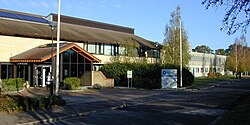
The British Antarctic Survey (BAS) serves as the United Kingdom's national polar research institute. Operating under the Natural Environment Research Council (NERC), which has been part of UK Research and Innovation since 2018, BAS fulfills a dual mission: conducting critical polar science to better understand global environmental issues and maintaining an active British presence in the Antarctic.
With a dedicated team of over 400 staff, the organization manages a complex network of research stations, ships, and aircraft. Its work is highly collaborative, involving joint projects with more than 40 UK universities and over 120 international partnerships.

Key Facts
- Founded: 1962 (evolving from the Falkland Islands Dependencies Survey).
- Headquarters: Cambridge, Cambridgeshire, England.
- Current Director: Professor Dame Jane Francis.
- Primary Assets: One research ship, five aircraft, and multiple polar stations.
- Major Achievement: Discovery of the Antarctic ozone hole in 1985.
History and Evolution
The origins of BAS date back to 1943 with Operation Tabarin, a joint venture between the Admiralty and the Colonial Office to establish permanently occupied bases in the Antarctic. Following World War II, this initiative became the Falkland Islands Dependencies Survey (FIDS). Between its inception and 1962, the organization expanded significantly, growing from four stations to 19 stations and three refuges.
In 1962, the organization was officially renamed the British Antarctic Survey. While there was a proposal in 2012 to merge BAS with the National Oceanography Centre in Southampton, the plan was abandoned following opposition from the House of Commons Science and Technology Committee.
Research Stations and Global Presence
BAS maintains a strategic footprint across the polar regions to facilitate year-round and seasonal data collection.
Antarctic Territory
The survey operates five permanent stations in the British Antarctic Territory. Rothera Research Station on Adelaide Island is the only one staffed throughout the entire year. Other key sites include:
- Halley Research Station: Located on the Brunt Ice Shelf (previously year-round until 2017).
- Signy Research Station: Located on Signy Island.
- Fossil Bluff: A logistics facility on Alexander Island.
- Sky Blu: A logistics facility in Ellsworth Land.
South Georgia and the Arctic
In South Georgia, BAS operates two permanently staffed bases: King Edward Point and Bird Island. Additionally, BAS manages the Ny-Ålesund Research Station on the Norwegian island of Spitsbergen in the Arctic on behalf of NERC.
Logistics and Equipment
Operating in the world's harshest environments requires specialized transport and infrastructure.
Maritime Operations
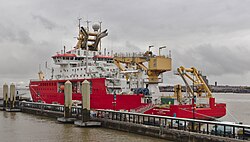
As of 2021, the primary vessel is the RRS Sir David Attenborough, which supports Arctic and Antarctic research. This ship replaced the RRS James Clark Ross and RRS Ernest Shackleton. These vessels typically depart the UK in September or October and return the following May or June.
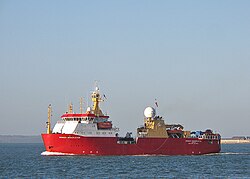
BAS maritime efforts are complemented by the Royal Navy's ice patrol vessels. Following the loss of HMS Endurance, HMS Protector was deployed in November 2011 to provide essential ice-breaking and helicopter support.
Aviation Support
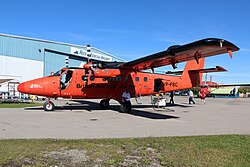
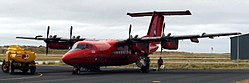
BAS utilizes five de Havilland Canada aircraft: four Twin Otters and one Dash 7. The Dash 7 handles shuttle flights between Rothera and hubs like Port Stanley Airport in the Falkland Islands or Punta Arenas in Chile. The Twin Otters, equipped with skis, allow scientists to access remote ice fields.
Major Scientific Findings
The research conducted by BAS has led to several discoveries with global implications:
- The Ozone Hole: In 1985, scientists Joe Farman, Brian Gardiner, and Jonathan Shanklin discovered the hole in the ozone layer over Antarctica, a finding later confirmed by satellite data.
- Subglacial Volcanism: In 2008, a team led by Hugh Corr and David Vaughan used radar imagery to identify a massive volcanic eruption that occurred under the ice sheet approximately 2,200 years ago.
- Wildlife Census: In 2020, satellite mapping revealed that emperor penguin colonies were nearly 20% more numerous than previous estimates.
Summary of BAS Operations
| Category | Details | Key Examples/Locations |
|---|---|---|
| Headquarters | Administrative & Lab Hub | Cambridge, England |
| Antarctic Stations | 5 Permanent Sites | Rothera, Halley, Signy, Fossil Bluff, Sky Blu |
| South Georgia Bases | 2 Year-round Sites | King Edward Point, Bird Island |
| Arctic Presence | 1 Research Station | Ny-Ålesund, Spitsbergen |
| Primary Vessel | Research & Logistics Ship | RRS Sir David Attenborough |
| Aircraft Fleet | 5 Specialized Planes | Dash 7 and Twin Otters |
Frequently Asked Questions
What is the primary purpose of the British Antarctic Survey?
The BAS conducts polar science to help the world understand global environmental issues and maintains a continuous British presence in the Antarctic region.
Which BAS station is staffed year-round in the Antarctic?
Rothera Research Station is the only permanent station in the British Antarctic Territory that is staffed throughout the entire year.
What was the most significant discovery made by BAS?
One of the most globally impactful discoveries was the identification of the hole in the ozone layer over Antarctica in 1985.
How does BAS transport personnel and equipment to remote ice sites?
BAS uses a combination of the RRS Sir David Attenborough for sea transport and a fleet of de Havilland Canada aircraft, including ski-equipped Twin Otters for landing on snow and ice.
Who manages the British Antarctic Survey?
BAS is a government organization and part of the Natural Environment Research Council (NERC), which falls under the umbrella of UK Research and Innovation.