South Tyrol and Trentino: A Complex History of Culture and Conflict
The region encompassing today's South Tyrol and Trentino is a land of breathtaking alpine vistas and deep historical complexity. Situated at the crossroads of Germanic and Romance cultures, this territory has been a strategic prize for empires and nations for millennia, evolving from a Roman conquest into a modern model of regional autonomy.
The region's journey began in 15 BC with the Roman conquest. Following the collapse of the Western Roman Empire, the land was partitioned among invading Germanic tribes, including the Lombards in the Duchy of Tridentum (modern Trentino), the Alamannic Vinschgau, and the Bavarians. Later, under Charlemagne's Kingdom of Italy, the area was split between the Marquisate of Verona to the south of Bolzano and the Duchy of Bavaria to the north.
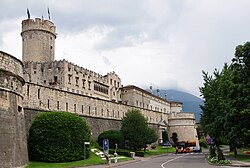
The Era of Prince-Bishops and the Habsburgs
From the 11th century, the Holy Roman Emperors granted extensive temporal powers to the prince-bishops of Trent and Brixen. However, these figures were eventually overshadowed by the Counts of Tyrol and the Counts of Görz. A pivotal shift occurred in 1363 when Margarete of Tyrol, the last titular countess, ceded the region to the House of Habsburg.
During the early Middle Ages, the areas north of Salorno underwent a process of Germanization. This cultural shift made the region a cradle for significant German literary figures, such as Oswald von Wolkenstein and Arbeo of Freising.
Napoleonic Upheaval and the 19th Century
The early 1800s brought rapid political change. In 1803, the Reichsdeputationshauptschluss (a major restructuring of the Holy Roman Empire) secularized the bishoprics, incorporating them into Tyrol under the Habsburgs. This was short-lived; following the Austrian defeat at the Battle of Austerlitz, the Treaty of Pressburg (1805) handed the region to Napoleon's ally, Bavaria.
Bavarian rule sparked fierce resistance, culminating in an 1809 rebellion led by Andreas Hofer, a landlord from St. Leonhard in Passeier. Though the rebellion was crushed, the subsequent Treaty of Paris (1810) saw Bavaria cede Bolzano and Trentino to the Napoleonic Kingdom of Italy. To erase references to the County of Tyrol, the French established the Haut Adige (High Adige) department. By 1815, after Napoleon's fall, the region returned to Austrian control.
World Wars and the Struggle for Identity
Under Austria, the region's nomenclature was fluid. The area now known as South Tyrol was often called südliches Tirol or Deutschsüdtirol, while Trentino was referred to as Südtirol or Welschtirol (Romance Tyrol).
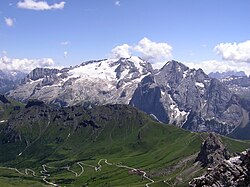
The First World War transformed the Alps and Dolomites into a violent front, where Austro-Hungarian Kaiserjäger fought Italian Alpini. With the collapse of Austria-Hungary in 1918, Italian troops occupied the region, and the Treaty of Saint-Germain formally annexed the territory to Italy.
The interwar period was marked by the dictatorship of Benito Mussolini (1922–1943), who implemented a forced program of Italianization. All references to Tyrol were banned, and the region was renamed Venezia Tridentina to link it to the ancient Roman Regio X. In 1938, an agreement between Hitler and Mussolini proposed relocating the German-speaking population to Nazi Germany, though the Second World War prevented full implementation.
By 1943, Germany occupied the region, establishing the Operation Zone of the Alpine Foothills under Gauleiter Franz Hofer, effectively annexing it to the German Reich until 1945, when Italian rule was restored.
The Path to Autonomy
Post-war stability was sought through the 1946 Gruber-De Gasperi Agreement, which promised considerable autonomy for a combined region of Trentino and Alto Adige. Both Italian and German were recognized as official languages, and German education was reinstated.
However, dissatisfaction persisted, leading to a campaign of bombings and terrorism by the South Tyrolean Liberation Committee in the 1960s. The conflict reached the United Nations before a 1971 treaty finally provided a resolution. This agreement granted South Tyrol greater autonomy from Trentino and stipulated that disputes be settled by the International Court of Justice in The Hague.
The province's name evolved from the Fascist-era "Bozen" to "Alto Adige/Tiroler Etschland" in 1947, and finally to the Autonomous Province Bozen – South Tyrol in 1972. The UN declared the dispute officially closed in 1992, and Austria's 1995 entry into the European Union further eased cross-border tensions.
Key Facts
- Roman Conquest: The region was first conquered by Rome in 15 BC.
- Habsburg Rule: The House of Habsburg took control in 1363 via Margarete of Tyrol.
- World War I: The Treaty of Saint-Germain formally awarded the region to Italy.
- Italianization: Under Mussolini, the region was renamed Venezia Tridentina to erase Tyrolean identity.
- Autonomy: The 1971 treaty established the high level of autonomy South Tyrol enjoys today.
- Official Languages: Both German and Italian are official languages in the region.
| Period | Ruling Power | Key Event/Agreement |
|---|---|---|
| 15 BC - 5th Century | Roman Empire | Initial conquest and administration |
| 1363 - 1803 | House of Habsburg | Cession by Margarete of Tyrol |
| 1805 - 1810 | Bavaria / Napoleonic Italy | Treaty of Pressburg / Treaty of Paris |
| 1815 - 1918 | Austria | Post-Napoleonic restoration |
| 1918 - 1943 | Italy | Treaty of Saint-Germain / Fascist rule |
| 1943 - 1945 | Nazi Germany | Operation Zone of the Alpine Foothills |
| 1945 - Present | Italy (Autonomous) | Gruber-De Gasperi Agreement / 1971 Treaty |
Frequently Asked Questions
Why is the region called both South Tyrol and Alto Adige?
The names reflect different cultural and political perspectives. "South Tyrol" (Südtirol) is the traditional German name, while "Alto Adige" is the Italian name, meaning "High Adige," introduced during the Napoleonic and Fascist eras to distance the region from its Tyrolean roots.
What was the purpose of the Italianization program?
Under Benito Mussolini's Fascist regime, Italianization aimed to eliminate German cultural influence and justify Italian claims to the land by linking it to the ancient Roman region of Venezia Tridentina.
What is the Gruber-De Gasperi Agreement?
Signed in 1946, this agreement between Italy and Austria established the framework for granting the region autonomy, protecting the rights of the German-speaking population, and recognizing bilingualism.
Has there been recent movement toward independence?
Yes, though mostly unofficial. In 2013, a non-binding vote by the South Tyrol Freedom party showed 92% support for self-determination, although the Italian constitution forbids the secession of its regions.
How did the European Union affect the region?
Austria's accession to the EU in 1995 significantly improved cross-border cooperation and helped finalize the resolution of long-standing diplomatic disputes between Italy and Austria.