Exploring South Gyeongsang Province: A Hub of History, Industry, and Culture
Located in the southeast of South Korea, South Gyeongsang Province—commonly known as Gyeongnam—is a region where ancient traditions meet cutting-edge industrial power. From the sacred halls of UNESCO World Heritage Buddhist temples to the massive shipyards and aerospace complexes that drive the national economy, Gyeongnam offers a diverse landscape that is as economically vital as it is culturally rich.
The province is part of the larger Yeongnam region and is bordered by North Gyeongsang Province to the north and the Jeolla provinces to the west. To the south, it meets the Korea Strait, providing a coastline that supports both major maritime industries and beautiful coastal tourism.
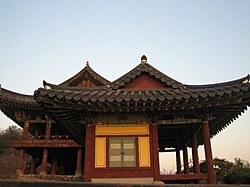
Key Facts
- Capital: Changwon
- Total Area: 10,533 km²
- Population: Approximately 3.45 million (as of 2018)
- Major Industries: Shipbuilding, aerospace, petrochemicals, and automobiles
- Key Landmark: Haeinsa Temple, home to the Tripitaka Koreana
- Administrative Divisions: 8 cities and 10 counties
A Journey Through History
The name "Gyeongsang" carries deep historical roots, derived from the names of two principal cities: Gyeongju (celebrate) and Sangju (append to). This etymology reflects the region's long-standing importance in Korean history.
The Joseon Era and Beyond
During the Joseon dynasty, the administrative landscape was frequently reorganized for military and logistical purposes. In 1407, the original Gyeongsang-do was divided into two parts—Gyeongsangjwa-do (left) and Gyeongsangwu-do (right)—using the Nakdong River as a reference point. The modern boundaries of South Gyeongsang Province began to take shape in 1896, following the merger of the Jinju and Dongnae districts.
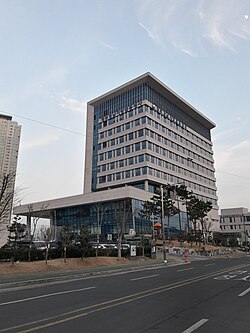
The province's administrative center has shifted over time. While Jinju was the original capital, the seat of government moved to Busan in 1925. Following various administrative changes, including the separation of Busan and Ulsan into independent Metropolitan Cities, the capital was officially moved to Changwon in 1983.
Geography and Natural Resources
The geography of Gyeongnam is defined by its mountains and rivers. The Nakdong River, one of Korea's most significant waterways, drains much of the province and flows through the central lowlands. Near its downstream, the river forms the Gimhae Delta Plain, one of South Korea's most productive agricultural regions.
The landscape is framed by the Taebaek Mountains to the east and the Sobaek Mountains to the west. Notable peaks include Jirisan, Deogyusan, and Bagunsan. This varied terrain supports a wide range of resources:
- Agriculture: Rice, beans, potatoes, barley, cotton, and sesame.
- Fruit & Fisheries: Renowned fruit production along the southern coast and a leading national fishery industry.
Economic Powerhouse: Industry and Innovation
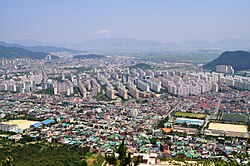
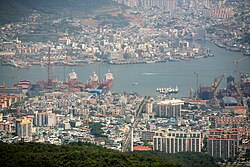
South Gyeongsang is a cornerstone of the South Korean economy. The southern part of the province, stretching from Ulsan through Busan and Changwon to Jinju, is a dense corridor of automobile and petrochemical manufacturing.
Aerospace and Shipbuilding
The province is a leader in high-tech manufacturing. It accounts for 43% of South Korea's national space industry production and is home to major players like Korea Aerospace Industries and Hanwha Aerospace. A new National Aerospace Industrial Complex is currently under development, with a target completion date of June 2025.
On the coast, the shipyards of Geoje stand among the largest in the world, hosting global shipbuilders such as Samsung Heavy Industries.
Culture, Festivals, and Tourism
For travelers, Gyeongnam offers a blend of spiritual serenity and vibrant seasonal celebrations.
Spiritual Heritage
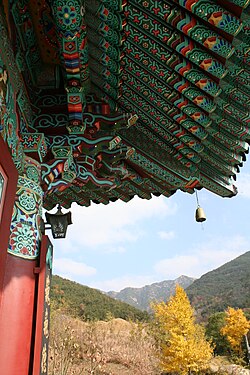
The province is home to Haeinsa, a Buddhist temple built in 802. It is one of Korea's most important religious sites, housing the Tripitaka Koreana—a massive collection of Buddhist scriptures carved into woodblocks. The temple is located within the national park surrounding Jirisan.
Festivals and Music
Gyeongnam's cultural calendar is packed with events that draw visitors from across Asia:
- Tongyeong International Music Festival: A premier spring event for classical music and aspiring composers.
- Jinhae Naval Port Festival: One of South Korea's most famous cherry blossom festivals.
- Haman Water Fireworks Festival: A traditional event held around Buddha's Birthday, originating from the Joseon Dynasty.
Administrative Overview
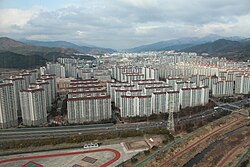
The province is organized into 8 cities (si) and 10 counties (gun). Below is a summary of the major administrative divisions.
| Type | Name (English) | Name (Hangul) | Approx. Population |
|---|---|---|---|
| City | Changwon | 창원시 | 1,001,902 |
| City | Gimhae | 김해시 | 531,966 |
| City | Yangsan | 양산시 | 358,074 |
| City | Jinju | 진주시 | 339,338 |
| City | Geoje | 거제시 | 232,921 |
| City | Tongyeong | 통영시 | 118,896 |
| County | Changnyeong | 창녕군 | 56,246 |
Notable Figures
Gyeongnam has produced several influential leaders and cultural icons, including:
- Political Leaders: Former South Korean Presidents Chun Doo-hwan, Kim Young-sam, Roh Moo-hyun, and Moon Jae-in.
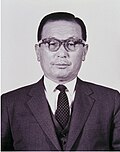
- Business: Koo In-hwoi, the founder of the LG Group.
- K-pop Stars: Winter (Aespa), Jeong Eun-Ji (Apink), and Choi San (Ateez).
Frequently Asked Questions
What is the most famous landmark in South Gyeongsang Province?
Haeinsa Temple is widely considered the most famous landmark. It is a UNESCO World Heritage site that houses the Tripitaka Koreana, a collection of Buddhist woodblocks of immense historical and religious value.
Which industries dominate the Gyeongnam economy?
The province is a major industrial hub, specializing in shipbuilding (particularly in Geoje), the aerospace industry, automobile manufacturing, and petrochemicals.
What are the best festivals to visit in the region?
Popular choices include the Jinhae Naval Port Festival for cherry blossoms, the Tongyeong International Music Festival for classical music, and the Haman Water Fireworks Festival for traditional celebrations.
Is Changwon the capital of Gyeongnam?
Yes, Changwon serves as the provincial capital. It became the capital in 1983 after the administrative seat was moved from Busan.
What makes the Gimhae area important?
Gimhae is home to the Gimhae Delta Plain, which is one of South Korea's most important agricultural areas, serving as a major "granary" for crops like rice and barley.