Exploring Changwon: South Korea's Industrial and Coastal Powerhouse
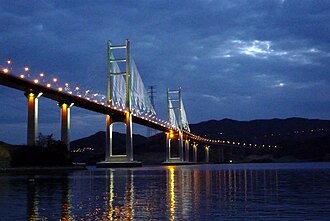
Located on the southeastern coast of the Korean Peninsula, Changwon serves as the capital and largest city of South Gyeongsang Province. As the 11th largest city in South Korea, it is a unique blend of a highly organized planned city and a bustling maritime hub. Bordered by Masan Bay to the south and the major cities of Busan and Gimhae to the east, Changwon offers a diverse landscape ranging from industrial complexes to serene natural reservoirs.

Key Facts
- Status: Capital of South Gyeongsang Province.
- Population: Approximately 1,008,315 (as of February 2026 estimate).
- Economy: Major hub for heavy industry, chemicals, and machinery.
- Urban Design: A planned city featuring a grid-like layout.
- Transportation: Home to the Nubija public bicycle-sharing system.
- Official Slogan: "Bright Changwon" (빛나는 땅 창원).
A Rich Historical Evolution
The history of Changwon dates back to the Joseon period. The name was first recorded in 1408 when King Taejong established Changwon-bu. Over the centuries, the region underwent various administrative reorganizations, including shifts in naming during the King Sunjo period and the reorganization of divisions under King Gojong in 1895.
During the Japanese colonial period, the area was known as Masan-bu, and Masan Port was opened to facilitate maritime trade. However, the modern identity of the city took shape in the mid-20th century. In 1974, Changwon was selected as a provincial capital and an industrial center, leading to the creation of the Changwon National Industrial Complex. A major milestone occurred on July 1, 2010, when the three neighboring cities of Masan, Jinhae, and Changwon merged to form the unified Changwon City we see today.

Post-War Development and Planning
Following the Korean War, the region saw rapid economic shifts. In 1970, the Masan Free Export Zone was opened to attract foreign investment. Changwon itself was developed with a unique urban planning model, drawing inspiration from Canberra, Australia. This resulted in a structured, efficient layout designed to balance industrial needs with residential life. To honor those lost during the conflict, the 47.1-meter-tall Korean War Monument was constructed in the Uichang district in 1985.
Geography and Climate
Changwon is situated on the Nakdong River delta, looking out onto Masan Bay. The city is geographically defined by its surrounding mountains, including Mt. Bulmo (802 m), Mt. Jeongbyeong (567 m), and Mt. Jangbok (582 m). This mountainous perimeter contributes to the city's basin-like structure.
The region experiences a humid subtropical climate (Köppen classification: Cwa), characterized by warm summers and cold winters. Annual precipitation averages around 1,527 mm. While summers can be quite hot, with average temperatures reaching 26.5°C (79.7°F), the city enjoys a variety of seasonal changes throughout the year.

Administrative Structure
The city is organized into five administrative districts, known as Gu, which encompass 54 neighborhoods (dong):
- Uichang District: 211.17 km²
- Seongsan District: 82.20 km²
- Masanhappo District: 240.65 km²
- Masanhoewon District: 90.58 km²
- Jinhae District: 122.52 km²
Economic Engine of the Region
Changwon is a cornerstone of the South Korean economy. The Changwon Industrial Complex is a massive 25.302 km² hub that employs approximately 82,000 people. The complex is dominated by heavy industry, including chemical and heavy machinery sectors. While 97.8% of the tenant companies are small-to-medium-sized businesses, the area also hosts major global corporations such as Samsung Techwin, GM Korea, LG Electronics, and Hyundai Rotem.
The city's economic strength is reflected in its Gross Regional Domestic Product (GRDP) of 21.7 trillion won, outperforming other major Korean cities like Gwangju and Daejeon in certain metrics. In 2008, Changwon's export earnings reached 29 billion dollars.

Culture, Sports, and Lifestyle
Life in Changwon is enriched by a variety of cultural festivals and professional sports. The city hosts events such as the Changwon Sculpture Biennale, the Masan Chrysanthemum Festival, and the Changwon National Folk Bullfighting Festival.
Professional Sports
Sports fans in Changwon can support several professional teams:
- NC Dinos: Baseball (KBO League) at Changwon NC Park.
- Changwon LG Sakers: Basketball (KBL).
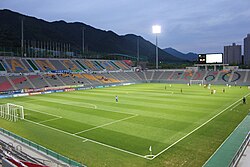
- Gyeongnam FC: Association football (K League 2).
- Changwon FC: Association football (K3 League).
The Nubija Bike-Sharing System
Changwon was the first city in South Korea to declare itself a "cycling city." To reduce car dependency and improve public health, the Nubija bike-sharing system was launched in 2008. The name is a combination of the Korean words nubida (to travel) and jajeongeo (bicycle). The system includes over 100 kilometers of dedicated bike lanes and a vast network of terminals, making it one of the leading public bicycle systems in the world.


Summary of Changwon City Profile
| Category | Details |
|---|---|
| Country | South Korea |
| Established | 1408 (as Changwon-bu) |
| Total Area | 747.12 km² |
| Major Industries | Heavy Machinery, Chemicals, Manufacturing |
| City Symbols | Cherry Blossom (Flower), Black-tailed Gull (Bird), Pine (Tree) |
Frequently Asked Questions
What is the main purpose of the Changwon Industrial Complex?
The complex serves as a major economic hub for South Korea, focusing on heavy industry, chemicals, and heavy machinery. It hosts over 2,000 tenant companies, ranging from small businesses to large global corporations.
How can I use the Nubija bike-sharing system?
Users can access bicycles at various terminals throughout the city using a small chip called a MyBi pass. The system can be managed and searched via the Nubija app.
What are the most popular festivals in Changwon?
Notable festivals include the Changwon Sculpture Biennale, the Masan Chrysanthemum Festival, the Changwon Food Culture Festival, and the National Folk Bullfighting Festival.
Is Changwon a planned city?
Yes, Changwon is a representative planned city in South Korea. It features a well-organized, grid-like urban layout designed for administrative and industrial efficiency, with residential areas typically located to the north of the main Changwon Daero avenue.
What is the climate like in Changwon?
Changwon has a humid subtropical climate. This means the city experiences very warm summers and cold winters, with an average annual precipitation of approximately 1,527 mm.