South Georgia and the South Sandwich Islands Sovereignty Dispute
Located in the remote reaches of the South Atlantic, South Georgia and the South Sandwich Islands are the subject of a long-standing territorial dispute between the United Kingdom and Argentina. While the islands have no indigenous population and currently house only about 30 inhabitants, their strategic location and historical whaling industry have made them a point of contention for nearly a century.
The United Kingdom currently exercises de facto control over the territory, administering it as a British overseas territory. However, Argentina maintains a formal claim, viewing the islands as part of the Tierra del Fuego Province. This tension has historically escalated from diplomatic disagreements to military conflict.
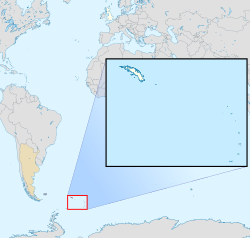
Key Facts
- Current Status: Administered by the UK as a British overseas territory.
- Argentine Claim: Formally integrated into the 1994 Argentine constitution.
- Population: Approximately 30 inhabitants; no indigenous population.
- Key Conflict: Briefly occupied by Argentina during the 1982 Falklands War.
- Initial UK Claim: Established by James Cook in January 1775.
History of the Territorial Claims
Origins of the British Claim
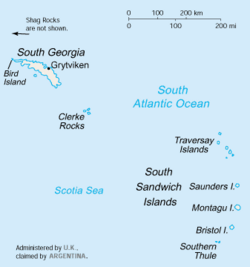
The British claim began in January 1775 when Captain James Cook claimed the South Georgia archipelago for Great Britain, following its discovery by Anthony de la Roché. For several decades, the UK did not actively enforce this claim. This changed in 1843 with the issuance of Letters Patent—legal instruments used to announce a government's intent—which established the islands as a Falkland Islands Dependency.
In 1908, the UK formally annexed the islands to clarify sovereignty following inquiries from the Norwegian government. The 1908 Letters Patent included South Georgia, the South Sandwich Islands, South Orkney, South Shetland islands, and Graham Land. To avoid claiming parts of the South American mainland, the UK refined these boundaries in 1917, excluding all territories north of 58°S and west of 50°W.
Origins of the Argentine Claim
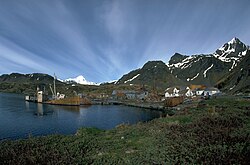
Argentina's connection to the islands grew through commercial activity. In 1904, the Compañía Argentina de Pesca (CAP), a whaling company run by Norwegian Carl Anton Larsen, established the settlement of Grytviken. This marked the beginning of permanent human residency on the island.
While the CAP initially operated under British licenses and leases, and Larsen himself became a British citizen in 1910, the Argentine government began asserting its own rights. Argentina first explicitly claimed sovereignty over South Georgia in 1927, later extending that claim to the South Sandwich Islands in 1938.
Diplomatic Standoffs and the Falklands War
Between 1947 and 1954, the United Kingdom repeatedly offered to resolve the dispute through the International Court of Justice in The Hague. Argentina declined these offers. When the UK attempted to bring the case to the court unilaterally in 1955, Argentina refused to cooperate, arguing that the court lacked jurisdiction.
Tensions escalated in November 1976 when Argentina established a military base, Corbeta Uruguay, on Thule Island. This prompted the UK to launch Operation Journeyman to protect the nearby Falkland Islands.
The 1982 Conflict
The dispute turned into active warfare on March 19, 1982, when 50 Argentines, posing as scrap metal merchants, landed at Leith Harbour and hoisted the Argentine flag. Following the invasion of the Falkland Islands on April 2, Argentine forces seized Grytviken. However, they failed to capture the entire island, as several British Antarctic Survey field camps remained under UK control.
The UK responded with Operation Corporate, which included Operation Paraquet. On April 25, 1982, Royal Marines retook Grytviken in just two hours. Leith Harbour surrendered the following day, and the Corbeta Uruguay base surrendered on June 20, 1982, before being demolished in December.
Current Legal and Political Status
Since 1985, the UK has administered the islands separately from the Falklands. Under the British Overseas Territories Act 2002, the region is officially designated as a British overseas territory.
Conversely, Argentina continues to claim the islands as part of the Islas del Atlántico Sur Department of Tierra del Fuego Province. This claim is a constitutional mandate in Argentina, as codified in their 1994 constitution.
| Feature | United Kingdom Position | Argentina Position |
|---|---|---|
| Basis of Claim | Discovery (1775) and Annexation (1908) | Protests since 1927 and constitutional mandate |
| Administrative History | Legal administration since 1908 | Claims the islands as part of Tierra del Fuego |
| View on 1982 Events | Brief illegal occupation by Argentine forces | Exercise of sovereignty over disputed territory |
| Current Status | British Overseas Territory | Part of Islas del Atlántico Sur Department |
Frequently Asked Questions
Who currently controls South Georgia and the South Sandwich Islands?
The United Kingdom exercises de facto control and administers the islands as a British overseas territory.
When did Argentina first claim the islands?
Argentina first made an explicit claim to South Georgia in 1927 and later extended this claim to the South Sandwich Islands in 1938.
What was the role of the Compañía Argentina de Pesca?
The CAP was a whaling company that founded the settlement of Grytviken in 1904, establishing the first permanent human presence on the islands.
How did the 1982 Falklands War affect the islands?
Argentine forces occupied Leith Harbour and Grytviken, but were eventually expelled by British Royal Marines during Operation Paraquet.
Why did the UK change the boundaries of its claim in 1917?
The UK clarified its Letters Patent to exclude territories north of 58°S and west of 50°W to ensure the claim did not inadvertently include parts of the South American mainland.