South Atlantic Tropical Cyclones: Rare Weather Phenomena and History
Tropical cyclones in the South Atlantic are among the rarest meteorological events on Earth. While the North Atlantic and Pacific oceans are known for frequent hurricane seasons, the South Atlantic has long been considered an unlikely place for such systems to develop. However, historical data and rare occurrences, most notably Hurricane Catarina, have challenged early scientific assumptions about this region.
These systems can develop year-round, though activity typically peaks between November and May. Because they are so infrequent, the infrastructure for tracking and naming them has evolved slowly, primarily led by Brazilian maritime authorities.
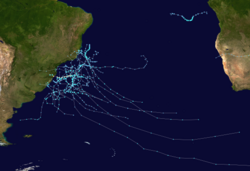
Key Facts
- Hurricane Catarina (2004) is the only officially recorded hurricane in the South Atlantic.
- Strong vertical wind shear (changes in wind speed and direction at different altitudes) is the primary deterrent to cyclone formation.
- The Brazilian Navy Hydrographic Center names systems west of 20°W with sustained winds of at least 65 km/h (40 mph).
- A study published in 2012 identified 63 subtropical cyclones in the region between 1957 and 2007.
- Brazil plans to establish a Tropical Cyclone Advisory Centre (TCAC) in Rio de Janeiro by December 2026.
The Science of Rarity: Why Cyclones Avoid the South Atlantic
For decades, meteorologists believed that tropical cyclones simply could not form in the South Atlantic. This rarity is attributed to three primary environmental factors:
- Wind Shear: The troposphere in this region often experiences very strong vertical wind shear, which disrupts the organized structure necessary for a cyclone to intensify.
- Coriolis Force: The Intertropical Convergence Zone (a belt of low pressure where trade winds meet) typically stays within one to two degrees south of the equator. This proximity means the Coriolis force—the force resulting from Earth's rotation that causes winds to curve—is often too weak to initiate the necessary rotation for a cyclone.
- Ocean Temperatures: Tropical waters in the South Atlantic are generally cooler than those in the North Atlantic, providing less thermal energy to fuel a storm.
Historical Milestones and Hurricane Catarina
Despite the hostile environment, several systems have broken the mold. In April 1991, the U.S. National Hurricane Center reported a tropical cyclone in the Eastern South Atlantic. Other suspected systems were noted in 1994 and early 2004.
The most significant event occurred in March 2004. An extratropical cyclone transitioned into a tropical cyclone and intensified into a Category 2 hurricane on the Saffir–Simpson scale. The storm made landfall in the Brazilian state of Santa Catarina. Originally, the term "Furacão Catarina" was used by local media to mean a hurricane threatening the state, but the name was eventually formally adopted as Hurricane Catarina.
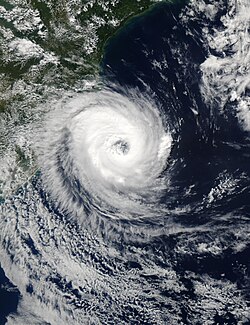
Catarina produced winds up to 160 km/h (100 mph), resulting in 3 to 11 fatalities and millions of dollars in damages, proving that the South Atlantic is capable of producing devastating hurricane-strength storms.
Monitoring and Naming Conventions
Tracking these storms has historically been difficult due to a lack of geostationary satellite imagery prior to 1966. However, modern coordination has improved. In 2011, the Brazilian Navy Hydrographic Center began officially naming tropical and subtropical systems in the western basin (west of 20°W) that reach sustained wind speeds of 65 km/h (40 mph).
Notable named storms include Subtropical Storm Arani (2011), Tropical Storm Iba (2019)—the first fully tropical system from the Brazilian list—and Tropical Storm Akará (2024).
Summary of South Atlantic Cyclone Characteristics
| Factor | Condition in South Atlantic | Impact on Development |
|---|---|---|
| Wind Shear | Very Strong | Disrupts storm formation |
| Water Temperature | Relatively Cooler | Less energy available |
| Coriolis Force | Weak (near equator) | Hinders rotation |
| Peak Season | November to May | Highest probability of activity |
Future Infrastructure: The Rio de Janeiro TCAC
To improve safety and forecasting, the Brazilian government announced intentions during the 42nd Session of the International Civil Aviation Organization (ICAO) Assembly in July 2025 to establish a Tropical Cyclone Advisory Centre (TCAC) in Rio de Janeiro. This center will serve METAREA V, covering the western South Atlantic and the Brazilian coastline. Operated by the Centro Integrado de Meteorologia Aeronáutica (CIMAER) and the navy, the TCAC aims to be fully operational by December 2026 as part of the WMO's Tropical Cyclone Programme.
Frequently Asked Questions
Is it possible for hurricanes to form in the South Atlantic?
Yes, although it is extremely rare. Hurricane Catarina in 2004 is the only officially recorded instance of a hurricane in this basin.
What is the minimum wind speed for a storm to be named in Brazil?
The Brazilian Navy Hydrographic Center assigns names to systems with sustained wind speeds of at least 65 km/h (40 mph).
Why are these storms so rare compared to the North Atlantic?
The primary reasons are strong vertical wind shear, cooler ocean temperatures, and a lack of sufficient Coriolis force near the equator.
How many subtropical cyclones have been identified historically?
A 2012 study concluded that there were 63 subtropical cyclones in the South Atlantic between 1957 and 2007.
What is the purpose of the new TCAC in Rio de Janeiro?
The Tropical Cyclone Advisory Centre is intended to integrate Brazil into the WMO's Tropical Cyclone Programme to improve monitoring and warnings for the western South Atlantic (METAREA V).