South African Republic: The Rise and Fall of the Transvaal
The South African Republic, known in Dutch as the Zuid-Afrikaansche Republiek (ZAR), was a parliamentary republic that existed primarily between 1852 and 1902. Often referred to as the Transvaal—a name derived from its location beyond the Vaal River—the state was a focal point of conflict between Boer settlers and the British Empire, driven by aspirations of independence and the discovery of immense mineral wealth.
From its humble beginnings as a collection of independent farmers to its transformation into a gold-rich powerhouse, the ZAR's history is marked by political volatility, strict social hierarchies, and devastating wars.
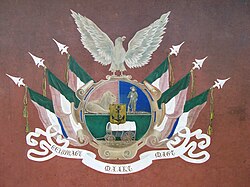
Key Facts
- Established: January 17, 1852, via the Sand River Convention.
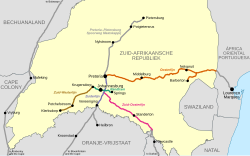
- Capital: Pretoria (also Potchefstroom and Heidelberg).
- Official Language: Dutch (Hooghollands).
- Primary Religion: Dutch Reformed Church.
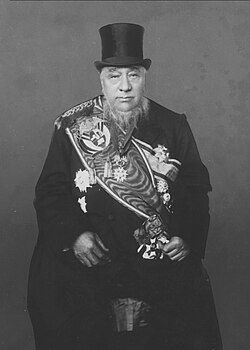
- Key Leader: Paul Kruger, State President from 1883 to 1902.
- Economic Turning Point: The 1886 Witwatersrand Gold Rush.
- Dissolution: Ended by the Treaty of Vereeniging on May 31, 1902.
Establishment and Political Evolution
The ZAR was formally recognized on January 17, 1852, when the British signed the Sand River Convention. This treaty acknowledged the independence of approximately 40,000 Boer people in the region north of the Vaal River, which had previously been under British control as the Orange Rivers Sovereignty.
The republic's identity was closely tied to its name. While the constitution permanently established the name Zuid Afrikaansche Republiek in 1858, the British frequently insisted on the term "Transvaal State." This naming dispute was a recurring point of diplomatic tension, eventually resolved in the 1884 London Convention, which allowed the ZAR to revert to its preferred name and granted it full independence.
Society, Citizenship, and Law
The ZAR was governed by the Volksraad (the people's council) and operated under a strict legal framework. Citizenship was granted by birth or naturalization, with a voting age of 16. However, the republic's laws were explicitly exclusionary.
Under a law passed in 1855, only white people were permitted to hold citizenship or own land. The constitution explicitly stated that the volk (people) would not allow equality between non-white and white inhabitants in either church or state. This exclusionary policy extended to Asian immigrants during the gold rush; Law Number 3 restricted the rights of "Coolies, Chinese, Arabs, and Malays," forbidding them from owning fixed property and requiring them to pay entry fees.
Language and Culture
Dutch was the sole official language of the ZAR, used in courts, education, and trade. The government actively suppressed "impure Dutch"—an early form of Afrikaans—and penalized the use of foreign languages, including English, with fines. Despite these laws, the influx of foreigners during the gold rush meant that English became common in marketplaces and homes by the late 1890s.
Economic Transformation: The Gold Rush
For much of its early existence, the ZAR was an impoverished agrarian state. This changed overnight in 1886 with the discovery of gold on the Witwatersrand. The resulting gold rush led to the founding of Johannesburg, which grew with unprecedented speed to become the largest city in Southern Africa within a decade.
This economic boom created a new social class known as outlanders—foreign immigrants, mostly British, who invested heavily in the goldfields. By 1897, these immigrants had invested over 300 million British Pounds, creating a political rift as the ZAR government resisted granting these foreign nationals voting rights.
Military Conflict and Collapse
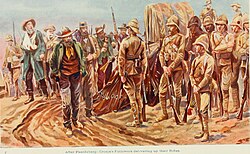
The ZAR's history was defined by its struggle for sovereignty. After a period of British annexation in 1877, the First Boer War (1880–1881) broke out. This conflict is notable for the British Army's transition from the traditional red coat to the khaki uniform.
Tensions peaked again with the Second Boer War (1899–1902). Triggered by the Jameson Raid and disputes over outlander voting rights, the war saw the ZAR and the Orange Free State fight against the British Empire. The conflict was characterized by the British use of concentration camps, where poor conditions led to the deaths of 22,074 children and 4,177 women.
The war ended on May 31, 1902, with the Treaty of Vereeniging. The ZAR ceased to exist as an independent republic and became the Transvaal Colony, eventually becoming a province of the Union of South Africa in 1910.
Summary of the South African Republic
| Category | Details |
|---|---|
| Timeline | 1852–1902 (with brief periods of unrest 1914–1915) |
| Total Area | 191,789 km² |
| Population (1897) | 867,941 (245,397 White; 622,544 Black) |
| Currency | South African pound |
| Government | Parliamentary Republic (Volksraad) |
| Key Treaties | Sand River Convention, London Convention, Treaty of Vereeniging |
Frequently Asked Questions
What was the difference between the ZAR and the Transvaal?
The Zuid-Afrikaansche Republiek (ZAR) was the official name of the state, while "Transvaal" was a common geographical term meaning "across the Vaal River." The British often insisted on using "Transvaal State" to avoid recognizing the republic's full sovereign title.
Who was Paul Kruger?
Paul Kruger was the State President of the South African Republic from 1883 to 1902. He is remembered as a central figure in the Boer struggle for independence against British imperialism.
How did the discovery of gold affect the republic?
The 1886 Witwatersrand Gold Rush transformed the ZAR from a poor farming community into a wealthy economic power. It led to the rapid growth of Johannesburg and caused political instability due to the influx of foreign "outlanders."
What was the significance of the Treaty of Vereeniging?
Signed on May 31, 1902, this treaty ended the Second Boer War. It forced the ZAR and the Orange Free State to surrender their independence and become colonies of the British Empire.
What language was spoken in the ZAR?
The official language was Dutch (specifically a variant called Hooghollands). While an early form of Afrikaans was spoken locally, the government strictly enforced the use of formal Dutch in official capacities.