Snježana Kordić: Contributions to Linguistics and the Study of Language Nationalism
Snježana Kordić is a distinguished linguist whose work spans a vast array of disciplines, including syntax (the arrangement of words and phrases to create well-formed sentences), discourse analysis, and sociolinguistics. With over 150 publications, including textbooks and three influential monographs translated into English, German, and Spanish, Kordić has established herself as a leading voice in the study of the Serbo-Croatian linguistic complex.
Her research is characterized by a rigorous application of quantitative and corpus linguistics, ensuring that her theoretical conclusions are backed by empirical data. Her books on syntactic issues are noted for receiving the most positive international reviews of any linguistic work published in Croatia.

Key Facts
- Academic Scope: Expertise in grammar, syntax, pragmatics, lexicology, and language policy.
- Publication Record: Over 150 linguistic publications, including three major monographs.
- Core Thesis: Argues that the languages of Croats, Serbs, Bosniaks, and Montenegrins are standard variants of a single pluricentric language.
- Impact: Her work on language and nationalism inspired the 2017 Declaration on the Common Language.
- Global Reach: Works translated into English, German, and Spanish with high acclaim in international journals.
Research on Syntax and Lexicology
Relative Clauses in Serbo-Croatian
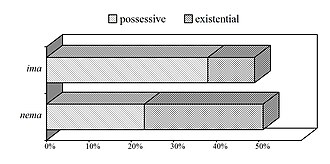
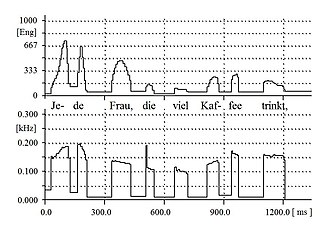
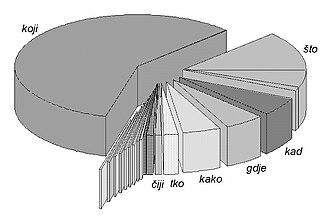
Kordić's first monograph focused on relative clauses, providing a comprehensive study that was praised for its scholarly thoroughness. Experts such as Ian Press and Hans-Peter Stoffel highlighted the work as a model of intellectual balance that filled a long-standing gap in the field of Slavic linguistics.
The Intersection of Lexicon and Grammar
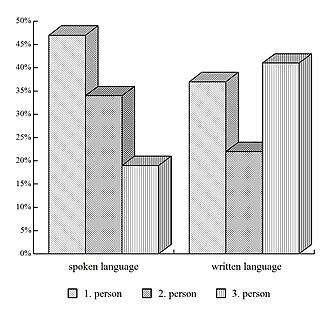
In her second monograph, Kordić examined words that oscillate between lexical status (words with a specific meaning) and functional grammatical status (words that serve a structural purpose). This research addressed the complexities of describing high-frequency lexemes—such as specific pronouns, nouns, and conjunctions—which often confuse lexicographers and grammarians.
American expert Wayles Browne noted that both of Kordić's early works were empirically well-supported, drawing from a diverse range of international scholarship including German, Russian, Polish, Czech, and English-American traditions.
Language, Nationalism, and Policy
Kordić's third monograph, Jezik i nacionalizam (Language and Nationalism), shifted focus toward sociolinguistics and the political manipulation of language. She critically analyzes Croatia's language policy since 1990, arguing that purism (the practice of excluding foreign or "impure" words) and prescriptivism (the imposition of rigid rules on language use) have been used to create an artificial divide between linguistic variants.
![Chapter titles of Kordić's book[30]](/images/5d/5e/5d5ea22b2672e63a30db47cb713bef9c3533f28c1e651e4842e0076711d8505d.jpg)
The Concept of Pluricentric Languages
A central pillar of Kordić's argument is that the languages spoken by Croats, Serbs, Bosniaks, and Montenegrins constitute a pluricentric language. This is a language with several interacting standard forms, similar to how English exists in the US, UK, Australia, and Canada, or how German is spoken in Germany, Austria, and Switzerland.
Kordić emphasizes that while these variants differ slightly, they do not differ enough to be classified as separate languages. Crucially, she notes that pluricentricity does not require political unification; each nation remains free to codify its own standard variant.
![Snježana Kordić as keynote speaker at a conference in Japan (2018)[104]](/images/41/5a/415a960aad0dceab8a862d05bef1c401d70c67bfca9345eae6bac53cb59a63f3.jpg)
Reception and Controversy
The monograph sparked intense debate and significant media coverage, including over sixty interviews. While praised by many intellectuals for its academic rigor and independence, it faced backlash from nationalist circles in both Croatia and Serbia. Some critics viewed the work as "destructive" because it treated language as a neutral communication tool rather than a symbol of national tradition.
In Croatia, the book's sponsorship by the state was challenged in court by the group Hitrec, though the State's Attorney of Zagreb declined to prosecute. Despite the controversy, the work is recognized by reviewers like Zoran Milutinović as a courageous critique of linguistic nationalism.
Summary of Major Works
| Focus Area | Key Contribution | Primary Theme |
|---|---|---|
| Relative Clauses (1995) | Comprehensive syntactic study | Grammatical structures of relative constructions |
| Lexicon vs. Grammar (2002) | Analysis of high-frequency lexemes | Syntax, semantics, and pragmatics of functional words |
| Language & Nationalism (2010) | Sociolinguistic critique | Pluricentricity and the critique of linguistic purism |
Frequently Asked Questions
What is a pluricentric language according to Kordić?
A pluricentric language is a single language that has multiple standard versions used across different countries or regions, such as English or German. Kordić argues that the variants spoken in Croatia, Serbia, Bosnia and Herzegovina, and Montenegro fit this definition.
How does Kordić view the relationship between language and nation?
Kordić rejects the 19th-century romantic notion that a nation and a language must match perfectly. She argues against the idea that linguistic purity is necessary for national identity and opposes political interference in linguistic science.
What was the impact of the book "Jezik i nacionalizam"?
The book generated widespread media attention, sparked legal challenges in Croatia, and served as the inspiration for the 2017 Declaration on the Common Language.
What specific linguistic areas does Kordić research?
Her research is broad, covering syntax, grammar, discourse analysis, text linguistics, textual cohesion, pragmatics, lexicology, corpus linguistics, quantitative linguistics, critical linguistics, sociolinguistics, and language policy.
Why was Kordić's work on relative clauses highly praised?
It was recognized for its scholarly thoroughness, intellectual balance, and its use of a large representative corpus to provide statistical results, filling a gap in existing Slavic linguistic literature.