SloveniaLjubljanaSlovenian historySlovenian geographyAlps

Slovenia: A Comprehensive Overview of Central Europe's Hidden Gem

Exploring the Republic of Slovenia: A Comprehensive Guide Nestled in the heart of Europe, the Republic of Slovenia is a nation defined by its diverse landscapes, rich cultural heritage, a...

Exploring the Republic of Slovenia: A Comprehensive Guide

Nestled in the heart of Europe, the Republic of Slovenia is a nation defined by its diverse landscapes, rich cultural heritage, and strategic position between the Alps and the Mediterranean. From its rugged mountainous peaks to its serene karst plateaus and coastal cliffs, Slovenia offers a unique blend of natural beauty and historical depth. As a unitary parliamentary republic and a member of the European Union, it stands as a prosperous and highly developed nation with a high Human Development Index (HDI).
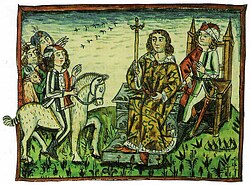
A depiction of an ancient democratic ritual of Slovene-speaking tribes, which took place on the Prince's Stone in Slovene until 1414
: A depiction of an ancient democratic ritual of Slovene-speaking tribes, which took place on the Prince's Stone in Slovene until 1414

Key Facts

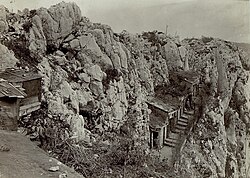
The Battles of the Isonzo took place mostly in rugged mountainous areas above the Soča River.
  • Capital: Ljubljana
  • Official Language: Slovene (with Hungarian and Italian recognized regionally)
  • Currency: Euro (€)
  • Population: Approximately 2.1 million (2025 estimate)
  • Government Type: Unitary parliamentary republic
  • Major Landscapes: The Alps, the Dinaric plateaus, and the Slovene Littoral

Geography and Natural Wonders
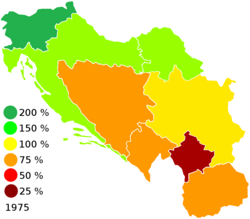
Average strength of Yugoslav economy as a deviation from the main (Yugoslavia = 100 %) indicator 1975. SR Slovenia (dark green) was, along with SR Croatia and SAP Vojvodina (light green), the richest entity of SFR Yugoslavia.

Slovenia's geography is remarkably varied for its size. The country is characterized by several distinct natural regions, including the Alps, the subalpine landscapes, the Dinaric plateaus, and the subpannonian regions. This diversity allows for a wide range of ecosystems and climates.

Mountains and Lakes

The Julian Alps provide some of the most breathtaking scenery in the country. Mount Mangart, located in the Julian Alps, stands as the third-highest peak in Slovenia, following Triglav and Škrlatica.
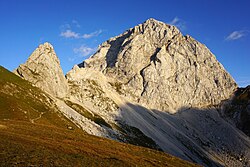
Mount Mangart, in the Julian Alps, is the third-highest peak in Slovenia, after Triglav and Škrlatica.
: Mount Mangart, in the Julian Alps, is the third-highest peak in Slovenia, after Triglav and Škrlatica.

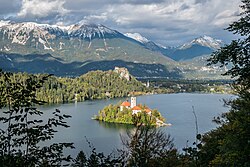
Water is a central feature of the Slovenian landscape. The country is home to stunning bodies of water, such as Lake Bohinj—the largest Slovenian lake and one of the two headwaters of the Sava River—and the iconic Lake Bled, famous for its picturesque island.
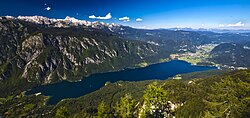
Lake Bohinj, the largest Slovenian lake and one of the two headwaters of the Sava River
: Lake Bohinj, the largest Slovenian lake and one of the two headwaters of the Sava River
Lake Bled
Lake Bled with its island
: Lake Bled with its island

Karst and Coastal Features

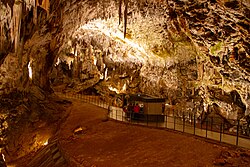
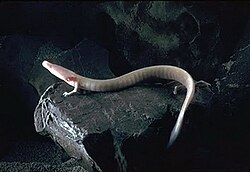
The Karst region is a geological phenomenon characterized by soluble rocks, such as limestone, which create unique landforms. One such feature is the rillenkarren, or solution runnels, found on the Karst Plateau. This region is also home to incredible cave systems, including the famous Postojna Cave, which houses unique fauna like the Olm, a cave-dwelling salamander.
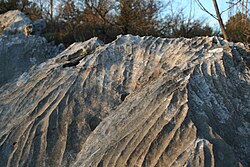
Solution runnels (also known as rillenkarren) are a karst feature on the Karst Plateau, as in many other karst areas of the world.
: Solution runnels (also known as rillenkarren) are a karst feature on the Karst Plateau, as in many other karst areas of the world.
Olm can be found in the Postojna cave and other caves in the country.
: Olm can be found in the Postojna cave and other caves in the country.
Postojna Cave
Postojna Cave
: Postojna Cave

To the southwest, the landscape shifts toward the Slovene Littoral, where the mountains meet the sea. The Slovenian coast is defined by its striking cliffs and Mediterranean influence.
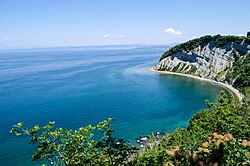
Slovenian coast with cliffs
: Slovenian coast with cliffs

History and Political Evolution

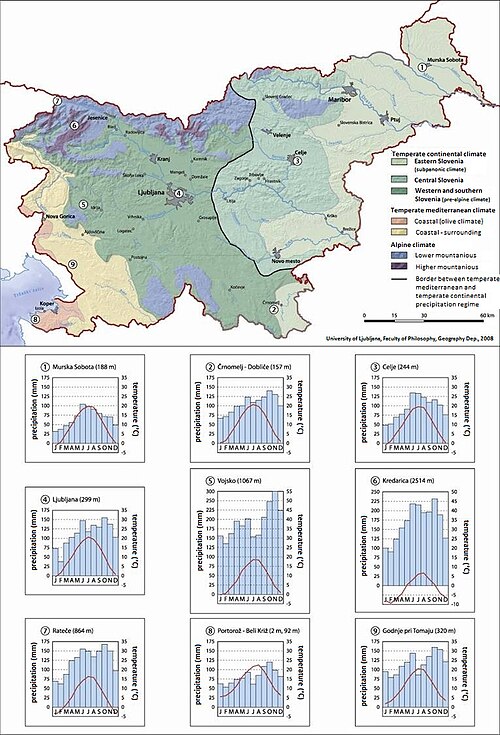
Climate types of Slovenia 1970–2000 and climographs for selected settlements

Slovenia's history is a complex tapestry of shifting borders and political transitions. From ancient Slavic settlements and the Roman era through the Middle Ages, the region has been a crossroads of European powers.

From Empires to Independence

The modern political identity of Slovenia began to take shape in the early 20th century. Following World War I, the State of Slovenes, Croats and Serbs was proclaimed in 1918, eventually becoming part of the Kingdom of Yugoslavia. After the period of the Socialist Federal Republic of Yugoslavia, Slovenia moved toward sovereignty, eventually declaring independence on June 25, 1991.
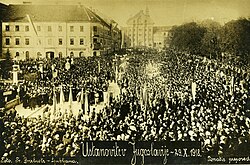
The proclamation of the State of Slovenes, Croats and Serbs at Congress Square in Ljubljana on 29 October 1918
: The proclamation of the State of Slovenes, Croats and Serbs at Congress Square in Ljubljana on 29 October 1918
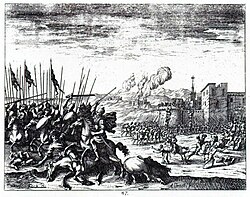
The Ottoman army battling the Habsburgs during the Great Turkish War in the area that would later become Slovenia.
: The Ottoman army battling the Habsburgs during the Great Turkish War in the area that would later become Slovenia.

The path to independence involved significant historical milestones, including the Brioni Agreement in July 1991 and the subsequent establishment of the current constitution in December 1991. The nation's resilience was notably demonstrated during the Ten-Day War in 1991.
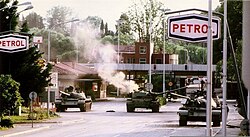
Slovenian Territorial Defense Units counterattacking a Yugoslav People's Army tank which entered Slovenia during the Ten-Day War, 1991
: Slovenian Territorial Defense Units counterattacking a Yugoslav People's Army tank which entered Slovenia during the Ten-Day War, 1991

Economy and Infrastructure

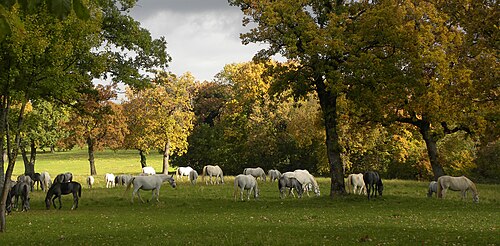
Modern Lipizzaner grazing

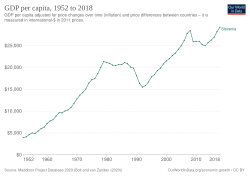
Slovenia boasts a strong, developed economy. As of 2026 estimates, the nation's GDP (PPP) is projected at $129.498 billion, with a high per capita GDP that reflects its status as a high-income economy. The country maintains low income inequality, as indicated by its Gini coefficient.

Energy and Transport

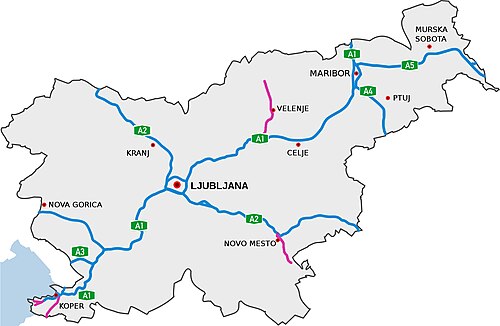
The economy is supported by robust infrastructure and energy production, including the 696 MW Krško Nuclear Power Plant. Transport is facilitated by an extensive network of motorways and railways that connect the country to the rest of Europe.
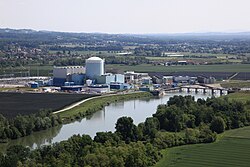
Krško Nuclear Power Plant, 696 MW
: Krško Nuclear Power Plant, 696 MW
Motorways in Slovenia in August 2020
: Motorways in Slovenia in August 2020

Culture, Arts, and Traditions

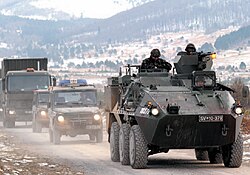
(SAF), Slovenian KFOR contingent in Kosovo

Slovenian culture is a vibrant mix of Alpine, Mediterranean, and Central European influences. This is reflected in its literature, music, and culinary traditions.

Literature and Music

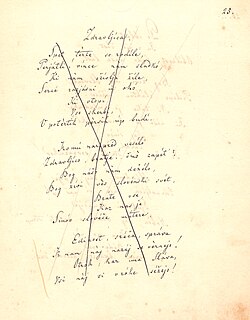
The nation takes great pride in its literary figures, such as the renowned poet France Prešeren. His work, including "Zdravljica" (A Toast), has deep national significance; the music of this poem now serves as the Slovenian national anthem.
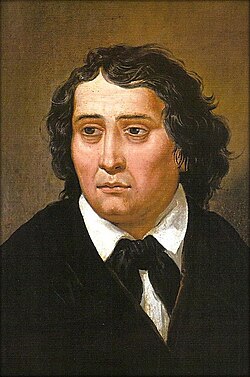
France Prešeren, best-known Slovenian poet
: France Prešeren, best-known Slovenian poet
"Zdravljica" (A Toast; part) with rejection mark from Austrian censorship (due to potential revolutionary content); the music of Zdravljica is now the Slovenian national anthem
: "Zdravljica" (A Toast; part) with rejection mark from Austrian censorship (due to potential revolutionary content); the music of Zdravljica is now the Slovenian national anthem

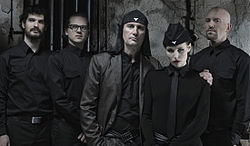
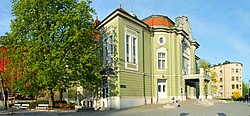
The arts also flourish through various mediums, from the Impressionist paintings of Ivan Grohar to the modern industrial sounds of groups like Laibach. The National Theatre in Ljubljana serves as a central hub for performing arts.

The Sower (1907), by the Impressionist painter Ivan Grohar, became a metaphor for Slovenes[275][276] and was a reflection of the transition from a rural to an urban culture.[277]
: The Sower (1907), by the Impressionist painter Ivan Grohar, became a metaphor for Slovenes and was a reflection of the transition from a rural to an urban culture.
The industrial group Laibach
: The industrial group Laibach
The National Theatre in Ljubljana
: The National Theatre in Ljubljana

Traditions and Cuisine

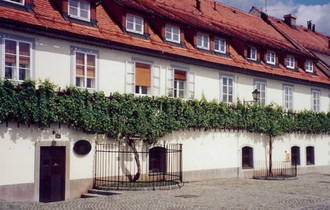
Food plays a vital role in Slovenian social life. Traditional dishes like Potica (a rolled nut roll cake) are staples of celebrations, such as Easter breakfast. Slovenia also has a deep connection to viticulture, evidenced by ancient vines like the Žametovka in Maribor.
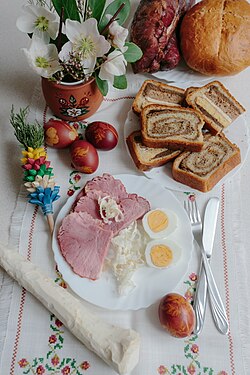
Potica as part of a traditional Slovenian Easter breakfast
: Potica as part of a traditional Slovenian Easter breakfast
The more-than-400-year-old Žametovka vine growing outside the Old Vine House in Maribor. To the right is a daughter vine propagated from a cutting of the original vine.
: The more-than-400-year-old Žametovka vine growing outside the Old Vine House in Maribor. To the right is a daughter vine propagated from a cutting of the original vine.

Summary of Key National Data

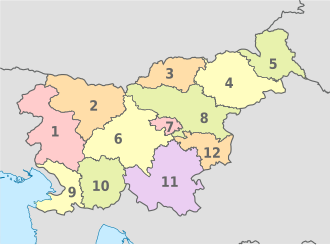
Statistical regions: 1. Gorizia, 2. Upper Carniola, 3. Carinthia, 4. Drava, 5. Mura, 6. Central Slovenia, 7. Central Sava, 8. Savinja, 9. Coastal–Karst, 10. Inner Carniola–Karst, 11. Southeast Slovenia, 12. Lower Sava
Slovenia: Essential Statistics
Category Details
Capital City Ljubljana
Official Language Slovene
Population (2025 Est.) 2,135,107
GDP per capita (2026 Est. Nominal) $40,630
HDI (2023) 0.931 (Very High)
Currency Euro (€)

Frequently Asked Questions

GDP per capita development in Slovenia
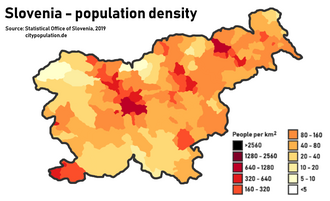
Population density in Slovenia by municipality. The four main urban areas are visible: Ljubljana and Kranj (centre), Maribor (northeast) and the Slovene Istria (southwest)
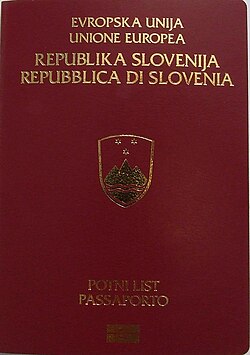
Front cover of a bilingual passport in Slovene and Italian
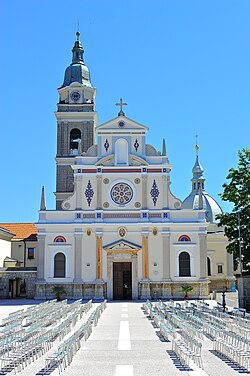
The National Shrine Mary Help of Christians at Brezje
Ptuj City Cinema (from 3 March 1897) is the oldest still active commercial (tickets) movie theatre in the world.[292][293][294]
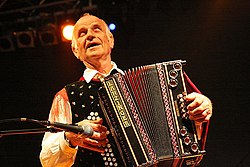
Folk musician Lojze Slak
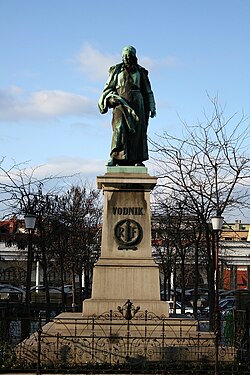
The sculpture of the poet Valentin Vodnik was created by Alojz Gangl in 1889 as part of Vodnik Monument, the first Slovene national monument.
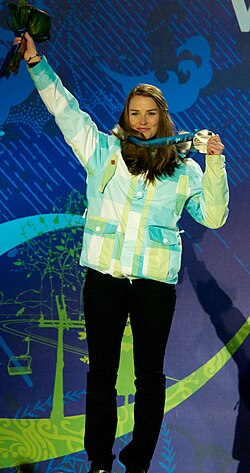
Alpine skier Tina Maze, a double Olympic gold medalist and the overall winner of the 2012–13 World Cup season

What are the official languages of Slovenia?

The official language is Slovene. However, Hungarian and Italian are also recognized as regional languages in specific areas.

What is the main religion in Slovenia?

As of 2018/2019 data, Christianity is the predominant religion, with Catholicism being the largest denomination (approximately 72-73%). About 18% of the population identifies as having no religion.

What are the largest cities in Slovenia?

The largest settlement is the capital, Ljubljana. Other major cities include Maribor, Kranj, Celje, and Koper.

How is the Slovenian economy performing?

Slovenia has a highly developed economy with a high Human Development Index. It is characterized by strong services and industry, and it maintains a relatively low level of income inequality.

What makes the Slovenian landscape unique?

Slovenia is unique because it contains diverse geographical features in a small area, ranging from the high Alpine mountains to the Mediterranean coast and the specialized karst landscapes featuring extensive cave systems.