Slash-and-Burn Agriculture: History, Techniques, and Environmental Impact
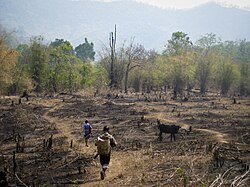
Slash-and-burn agriculture, also known as shifting cultivation, is an ancient farming method where forests or woodlands are cleared to create temporary fields called swiddens. By cutting down vegetation and burning the remains, farmers create a nutrient-rich environment for crops. While this method has supported millions of people for millennia, its interaction with modern population growth has created complex ecological challenges.
The process is cyclical. It begins with the "slashing" of trees and woody plants, which are left to dry. Once dry, the biomass is burned, leaving behind a layer of ash that acts as a natural fertilizer, boosting soil fertility while temporarily eliminating pests and weeds. After three to five years of use, the soil nutrients are depleted, and the plot is abandoned to recover—a process that can take anywhere from five to over twenty years before the cycle begins again.
Key Facts
- Global Reach: Estimated 200–300 million people worldwide utilize these techniques.
- Soil Enrichment: The primary benefit is the nutrient-rich ash produced by burning biomass.
- Cycle Duration: Plots are typically farmed for 3–5 years and recover for 5–20+ years.
- Regional Names: Known as jhum or jhoom in India and Bangladesh, and svedjebruk in Scandinavia.
- Environmental Risk: While historically sustainable, high population density now leads to accelerated deforestation and loss of carbon reservoirs.
The Evolution of Shifting Cultivation
Long before the invention of formal agriculture, hunter-gatherers used fire to manage landscapes, promoting the growth of edible plants and attracting game animals. During the Neolithic Revolution, as humans began domesticating plants and animals, slash-and-burn became a vital tool for clearing dense forests to make land suitable for livestock and crops.
In European prehistory, extended families often lived in wandering societies, moving from one swidden plot to another. This traditional approach to land management relied on usufructuary rights—the right to use and profit from land without owning it—meaning land was rarely bought or sold on an open market.
Regional Variations and Techniques
Asia and the "Jhum" System
In the northeastern Indian states (such as Nagaland and Mizoram) and parts of Bangladesh, the practice is called jhum or podu. Farmers clear forested hillsides to grow upland rice, maize, and vegetables. While the ash provides initial fertility, the removal of treetops and subsequent burning can leave slopes vulnerable to soil erosion. In response, some regional governments, such as in Mizoram, have introduced policies to phase out the method.
The Americas and the Amazon
Ancient civilizations, including the Maya, utilized slash-and-burn for centuries. In the Amazon basin, groups like the Yanomami continue to use this method because the region's naturally leached soils are otherwise too poor for traditional agriculture. Similarly, indigenous peoples in Brazil used these techniques in the Atlantic Forest prior to European colonization.
European Traditions: Portugal and Scandinavia
In Portugal, the practice was known as roças and queimadas, supporting the growth of rye, wheat, and barley until the 19th century. However, the rise of the modern state and the 1938 Afforestation Law eventually marginalized the practice in favor of state forests and monocultures.
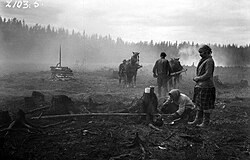
In Northern Europe, specifically Sweden and Norway, the technique is called svedjebruk. Originating in Russia's Novgorod region, it spread through Finland and Sweden. Farmers would strip bark from coniferous trees (pine or spruce) to kill them, let them dry, and then burn them to plant rye. This method was so effective that it was later carried by settlers to North America.
Benefits and Ecological Drawbacks
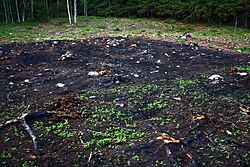
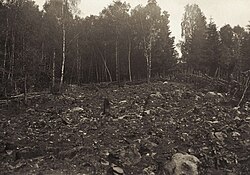
For many, slash-and-burn is the only viable way to farm in tropical regions with nutritionally poor soil. Because farmers typically plant a variety of crops rather than a single species (monoculture), the practice can create a mosaic of habitats that supports biodiversity.
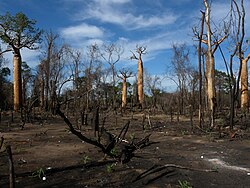
However, the system requires vast amounts of land and low population densities to remain sustainable. When too many people use the same area, the forest cannot recover, leading to permanent deforestation and habitat loss.
| Feature | Traditional/Sustainable Use | Modern/Unsustainable Use |
|---|---|---|
| Population Density | Low | High |
| Recovery Time | Sufficient (10–30 years) | Insufficient/Shortened |
| Crop Diversity | High (Mosaic habitats) | Low (Cash crop focus) |
| Environmental Impact | Temporary local patches | Widespread deforestation |
Modern Research and Alternatives
To mitigate the environmental impact, researchers have proposed several alternatives:
- Slash-and-char: Instead of burning vegetation completely, charcoal is ploughed into the soil to boost long-term yields.
- Inga Alley Cropping: Planting crops like cacao, citrus, and black pepper between Inga trees to maintain soil health.
- Slash-and-cover: Planting leguminous shrubs as a fallow crop to restore nitrogen to the soil after it is exhausted.
Frequently Asked Questions
Why is burning necessary in this type of farming?
Burning the "slash" (cut vegetation) converts organic biomass into ash, which provides a concentrated burst of nutrients like potassium and phosphorus to the soil, making it fertile enough for crops in areas where the soil is naturally poor.
Is slash-and-burn agriculture always harmful to the environment?
Not necessarily. Historically, in areas with low population density, it was ecologically sustainable and created diverse mosaic habitats. It becomes harmful when population growth forces farmers to clear new land faster than the old plots can recover.
What are the main crops grown using this method?
Common staples include rice, maize, cassava, rye, and various vegetables like eggplant and cucumber, depending on the region.
How does svedjebruk differ from tropical slash-and-burn?
While the principle is the same, svedjebruk specifically targeted coniferous forests in Northern Europe, often involving the girdling (stripping bark) of pine or spruce trees before burning to plant rye.
What happens when a swidden plot is abandoned?
The plot is left to fallow, meaning trees and shrubs are allowed to regrow. This period of recovery allows the soil to naturally replenish its nutrients before the land can be used for farming again.