Cocoa Beans: From Ancient Origins to Global Production
Cocoa beans are the essential raw material for the world's chocolate industry, derived from the seeds of the Theobroma cacao tree. From its beginnings in the rainforests of South America to its current status as a multi-billion dollar global commodity, cocoa has evolved from a sacred ancient beverage into a complex international trade involving millions of farmers and sophisticated futures markets.
Key Facts
- Global Production: Reached 5.8 million tonnes in 2024.
- Leading Producer: Ivory Coast accounts for 38% of total global production.
- Ancient Roots: Evidence suggests cultivation by the Mayo-Chinchipe people as far back as 5,300 years ago.
- Yield Efficiency: Approximately 400 dried beans are required to produce one pound (450 g) of chocolate.
- Market Hubs: London focuses on West African cocoa, while New York focuses on Southeast Asian cocoa.
The History and Domestication of Cacao
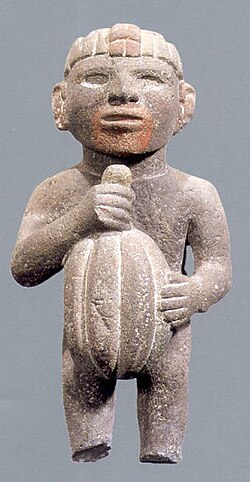
Current evidence indicates that cacao was first domesticated in equatorial South America. Roughly 1,500 years later, it was domesticated in Central America. Archaeological findings at Santa-Ana-La Florida in Ecuador suggest that the Mayo-Chinchipe people were cultivating the plant as early as 5,300 years ago.
Interestingly, the seeds were not the initial draw. Early inhabitants of the Americas were first attracted to the sweet, mucilaginous pulp of the fruit, which was used to create a fermented beverage with approximately 5.34% alcohol. Later, the consumption of cocoa products became established in regions like Honduras, with chemical residues in pottery from Puerto Escondido dating between 1500 and 1400 BC.
Botanical Characteristics and Varieties
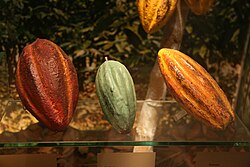
The cocoa pod is a rough, leathery fruit measuring between 17 to 20 cm in length with a rind 2 to 3 cm thick. Inside, the pod contains 30 to 50 large seeds embedded in a sweet, lemonade-like pulp known in South America as baba de cacao. These seeds range in color from pale lavender to dark brownish purple.
There are three primary traditional varieties of cocoa: Forastero, Trinitario, and Criollo, each offering different flavor profiles and resilience levels.
Cultivation and Harvesting Process
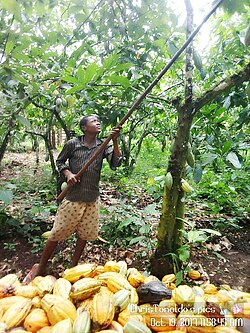
Harvesting is a labor-intensive process. A typical pod weighs an average of 400 g and yields 35 to 40 g of dried beans, representing a yield of 9–10% of the pod's total weight. A single worker can separate beans from approximately 2,000 pods per day.
Processing the Beans
Once extracted from the pod, the beans must undergo several stages of processing to develop the characteristic chocolate flavor. This includes fermentation and drying, which are critical for quality control.
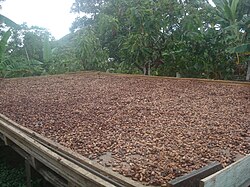
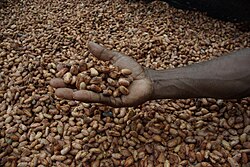
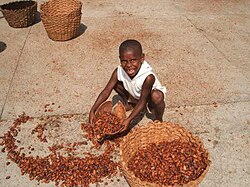
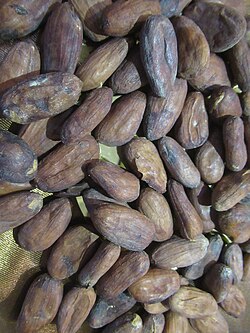
After drying, the beans are roasted to further refine the flavor and prepare them for grinding into cocoa mass.
Global Production and Economics
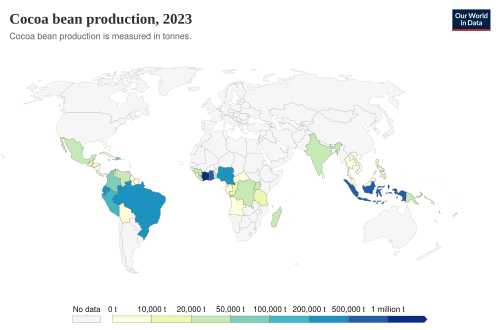
Cocoa is a vital cash crop for many nations, particularly in West Africa. In 2024, global production hit 5.8 million tonnes. The industry is heavily concentrated, with Ivory Coast, Ghana, and Indonesia serving as the primary suppliers.
| Country | Production Volume |
|---|---|
| Ivory Coast | 2.23 |
| Ghana | 1.10 |
| Indonesia | 0.68 |
| Ecuador | 0.34 |
| Cameroon | 0.30 |
| Nigeria | 0.28 |
| Brazil | 0.27 |
| World Total | 5.2 |
The economic impact is significant; for example, cocoa is a cornerstone of Nigeria's economy. Demand for cocoa products has maintained a growth rate of over 3% annually since 2008.
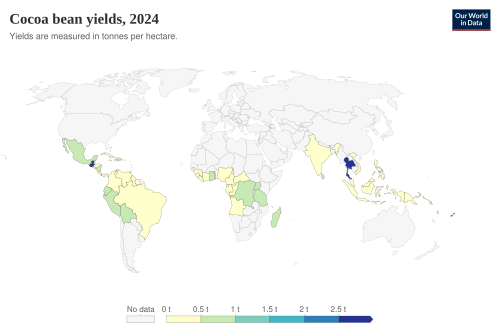
Sustainability and Ethical Challenges
The industry faces severe ethical and environmental hurdles. Deforestation, particularly in West Africa, remains a critical concern. To combat this, agroforestry—the practice of integrating trees and shrubs into crop areas—is being promoted to conserve biodiversity while maintaining yields.
Labor practices have also come under intense scrutiny. Child labor has been a persistent issue in West Africa. In Ivory Coast, estimates showed child labor increasing from 819,921 children in 2008–09 to 1,303,009 by 2013–14. During the same period, Ghana reported approximately 957,398 children working on cocoa farms.
To address these issues, several initiatives have emerged:
- SWISSCO: Swiss Platform for Sustainable Cocoa.
- GISCO: German Initiative on Sustainable Cocoa.
- Beyond Chocolate: A Belgian sustainability initiative.
- Rainforest Alliance: Focuses on forest protection, rural livelihoods, and human rights.
Chemical Composition
Cocoa contains various phytochemicals, including flavonoids such as catechin and epicatechin. One of the most notable compounds is theobromine (IUPAC name: 3,7-dimethyl-1H-purine-2,6-dione), an alkaloid that contributes to the physiological effects of chocolate.

Frequently Asked Questions
How many cocoa beans are needed for one pound of chocolate?
Approximately 400 dried cocoa beans are required to produce one pound (450 g) of chocolate.
Which countries produce the most cocoa?
Ivory Coast is the world leader, producing 38% of the global total, followed by Ghana and Indonesia.
What is the difference between the London and New York cocoa markets?
The London futures market primarily focuses on cocoa originating from West Africa, while the New York market focuses on cocoa from Southeast Asia.
What is agroforestry in the context of cocoa?
Agroforestry is a sustainable agricultural practice that integrates cocoa trees with other forest species to prevent deforestation and protect biodiversity.
Where did cocoa originate?
Evidence suggests cacao was first domesticated in equatorial South America, with cultivation occurring as early as 5,300 years ago by the Mayo-Chinchipe people.