Theobroma cacao: The Botanical History and Science of the Chocolate Tree
The world of chocolate begins with a single, remarkable species: Theobroma cacao. Often referred to as the cacao or cocoa tree, this small evergreen belongs to the Malvaceae family and serves as the biological foundation for chocolate liquor, cocoa powder, cocoa butter, and the chocolate we enjoy today. While it is native to the tropical regions of the Americas, its journey from ancient ritual beverage to a global commodity is a fascinating tale of biology, history, and complex cultivation.
It is important to distinguish Theobroma cacao from the coca species of the Erythroxylaceae family, as they are entirely unrelated botanical entities.
Key Facts
- Scientific Name: Theobroma cacao
- Tree Height: 6–12 meters (20–39 feet)
- Primary Use: Seeds (cocoa beans) are used for chocolate production
- Top Producer (2022): Côte d'Ivoire
- Major Cultivar Groups: Forastero, Criollo, and Trinitario
- Genome Status: Diploid with 10 chromosome pairs
Botanical Characteristics and Fruit
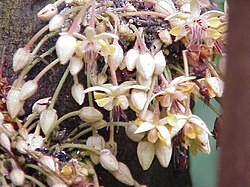
The cacao tree is a small evergreen that reaches heights of 6 to 12 meters. Its reproductive cycle is quite specialized; a mature tree may produce as many as 6,000 flowers in a single year, yet it typically yields only about 20 pods.
The Cacao Pod
The fruit of the tree is known as a cacao pod. These ovoid structures measure between 15–30 cm in length and 8–10 cm in width. When ripe, they turn a yellow to orange hue and weigh approximately 500 g. Inside each pod, between 20 and 60 seeds—commonly called "beans"—are embedded in a white pulp.
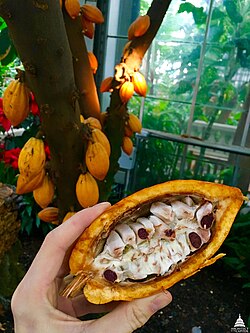
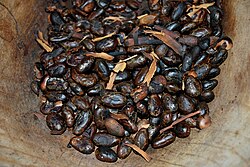
Once these seeds are harvested, they undergo drying and fermentation processes to become the cocoa beans used in industrial chocolate making. It takes roughly 1,200 seeds (the equivalent of 40 pods) to produce just 1 kg of cocoa paste.
The History of Domestication and Ancient Use
For decades, scientists debated whether cacao was domesticated in two separate locations: the Lacandon Jungle in Mexico and the lowlands of South America. However, recent DNA diversity studies have refined this view. Research suggests a single domestication event occurred approximately 3,600 years ago, likely in an area encompassing modern-day Ecuador, the Brazil-Peru border, and the southern Colombian-Brazilian border.
Interestingly, early humans may have originally domesticated the tree for its pulp rather than its beans. The pulp is edible as a snack and can be fermented into a mildly alcoholic beverage. This area served as a biological refugium, maintaining genetic diversity even during the peak of the last ice age 21,000 years ago.
Cacao in Mesoamerican Civilizations
In pre-Columbian societies, cacao was far more than food; it was a ritualistic beverage and a vital currency system. Archaeological evidence, such as ceramic vessels found at Olmec sites in Mexico, suggests cacao preparation dates back as early as 1750 BC. In the Aztec Empire, cacao beans were so valuable they were used to pay tributes and purchase goods; for example, 80–100 beans could purchase a new cloth mantle. The high value of these beans even led to the emergence of counterfeiters.
Global Cultivation and Production
Today, cacao is grown on approximately 11,650,000 hectares worldwide. While large agroindustrial plantations exist, the majority of the world's cocoa is produced by millions of small-scale farmers working on small plots of land. A tree typically begins to bear fruit when it is four or five years old.
Cultivar Groups
Chocolate makers generally recognize three main groups of cacao beans:
- Forastero: A widely grown group.
- Trinitario: A hybrid group.
- Criollo: The rarest and most expensive group. Used by the ancient Maya, Criollo beans are highly aromatic and less bitter. Only about 10% of the world's chocolate is made from this group.
Global Production Statistics (2023)
| Country | Production (Metric Tonnes) | Approximate Share of World Total |
|---|---|---|
| Ivory Coast | 2,377,442 | 42.5% |
| Ghana | 653,700 | 11.7% |
| Indonesia | 641,741 | 11.5% |
| Ecuador | 375,719 | - |
| Brazil | 296,145 | - |
| Cameroon | 295,819 | - |
| Nigeria | 284,232 | - |
| World Total | 5,600,100 | 100% |
The Science of the Cacao Genome
The sequencing of the cacao genome has provided deep insights into the plant's complex chemistry. The genome is diploid, consisting of 10 chromosome pairs (2n=20). In 2010, two major sequencing projects provided a draft and a detailed analysis of the Criollo cacao genome.
The cacao genome contains 28,798 protein-coding genes, which is more than the roughly 23,000 genes found in the human genome. A significant portion of these genes code for metabolites that define chocolate's quality, including flavonoids, aromatic terpenes, and theobromine. Additionally, polyphenols—which contribute to flavor and quality—can constitute up to 8% of the dry weight of cacao pods.
Challenges in Cacao Farming
Cultivating cacao is a delicate process subject to various biological threats. Farmers must contend with several types of pests and diseases:
- Insects: Including the cocoa pod borer in Southeast Asia and various species in West and South America.
- Fungi: Such as frosty pod rot, witches' broom, and black pod disease.
- Viruses: Notably the cacao swollen shoot virus.
- Vertebrates: Rats, squirrels, and woodpeckers.
Frequently Asked Questions
What is the difference between cacao and coca?
They are entirely different plants. Cacao (Theobroma cacao) is used to make chocolate, while coca belongs to the Erythroxylaceae family.
Which type of cacao bean is the highest quality?
The Criollo group is considered the most prized, rare, and expensive due to its aromatic and less bitter flavor profile.
How much cocoa is needed to make 1 kg of chocolate paste?
It requires approximately 1,200 seeds, which is roughly the amount found in 40 cacao pods.
Why was cacao used as money in ancient times?
In Mesoamerican civilizations like the Aztec Empire, cacao beans were so valuable and standardized that they functioned as a major currency system for trade and tribute.
Which country produces the most cocoa in the world?
As of 2023, Côte d'Ivoire is the leading producer, accounting for approximately 42.5% of the world's total production.