Sister Groups in Phylogenetics: Defining Evolutionary Relationships
In the study of phylogenetics—the science of developing evolutionary relationships among biological entities—researchers use specific terminology to describe how different organisms are related. One of the most fundamental concepts is the sister group (also known as a sister taxon or adelphotaxon). A sister group consists of the closest relative or relatives of a given unit within an evolutionary tree.
Understanding Sister Group Relationships
The concept of a sister group is most clearly visualized using a cladogram, a branching diagram used to show the relationship between a number of species. In a cladogram, when two lineages split from a single node, the resulting groups are sister groups to one another.
For example, if Taxon A and Taxon B share a most recent common ancestor (MRCA) that is not shared by any other group in the analysis, they are sister groups. Together, Taxon A, Taxon B, and all descendants of their MRCA form a monophyletic group, referred to as a clade (in this case, Clade AB). This clade can then be viewed as a sister group to another taxon, such as Taxon C. Together, A, B, and C form a larger clade (Clade ABC).
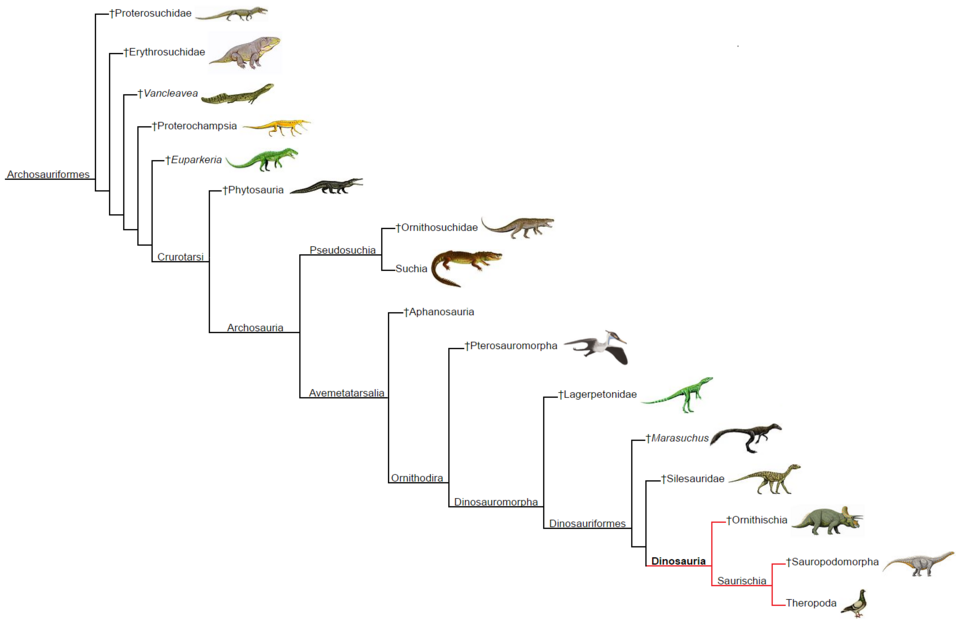
This hierarchical structure continues upward. Clade ABC is a subtree of a larger tree, which contains further sister group relationships among both individual leaves (species) and larger, more deeply rooted clades. Ultimately, this structure connects back to the root of the universal tree of life.
Taxonomic Flexibility
In cladistic standards, the units labeled as A, B, or C are flexible. They may represent individual specimens, species, genera, or any other taxonomic units. When the sister groups exist at the same taxonomic level, scientists use more specific terms such as sister species or sister genera.
The Relative Nature of Sister Groups
It is critical to understand that the designation of a "sister group" is relative to the specific groups included in a phylogenetic analysis. A group is only labeled as a sister group if it is the closest relative among the taxa being studied.
A prime example of this is the relationship between birds and crocodiles. When analyzing only extant (currently living) organisms, crocodiles are often cited as the sister group to birds. However, this relationship changes when extinct groups are included in the analysis. Because the bird family tree is rooted in the dinosaurs, and other extinct groups like pterosaurs branched off the line leading to dinosaurs after the last common ancestor of birds and crocodiles, the relationship between birds and crocodiles appears more distant in a comprehensive tree.
Key Facts
- Definition: A sister group (adelphotaxon) is the closest relative of another unit in an evolutionary tree.
- Clades: A sister group and its counterpart, along with all descendants of their most recent common ancestor, form a monophyletic group called a clade.
- Relativity: Sister group status depends entirely on which taxa are included in the specific analysis.
- Scalability: The term can apply to various levels of taxonomy, including specimens, species, or genera.
- Visualization: These relationships are typically mapped using cladograms to simplify the complex process of evolution.
| Term | Definition | Context |
|---|---|---|
| Sister Group | The closest relative(s) of a given unit | Evolutionary Tree/Cladogram |
| MRCA | Most Recent Common Ancestor | The node where two lineages diverge |
| Clade | A monophyletic group including an ancestor and all descendants | Grouping of sister taxa |
| Extant | Still in existence; not extinct | Living organisms |
Frequently Asked Questions
What is the difference between a sister group and a clade?
A sister group refers to the relationship between two closest relatives. A clade is the resulting monophyletic group that encompasses both sister groups and all the descendants of their most recent common ancestor.
Can a sister group be an extinct species?
Yes. While some analyses focus only on living (extant) species, comprehensive phylogenetic trees include extinct taxa, which can change which group is identified as the sister group.
Why is the term "sister group" considered relative?
It is relative because it only identifies the closest relative among the groups included in the study. If a closer relative is discovered or added to the analysis, the sister group designation will shift.
What is an adelphotaxon?
Adelphotaxon is simply a technical synonym for a sister group or sister taxon in phylogenetics.
How do scientists determine sister groups?
Scientists use phylogenetic analysis to construct cladograms, identifying the most recent common ancestor shared between taxa to determine which groups are most closely related.